What Does Open Ear Headphones Mean
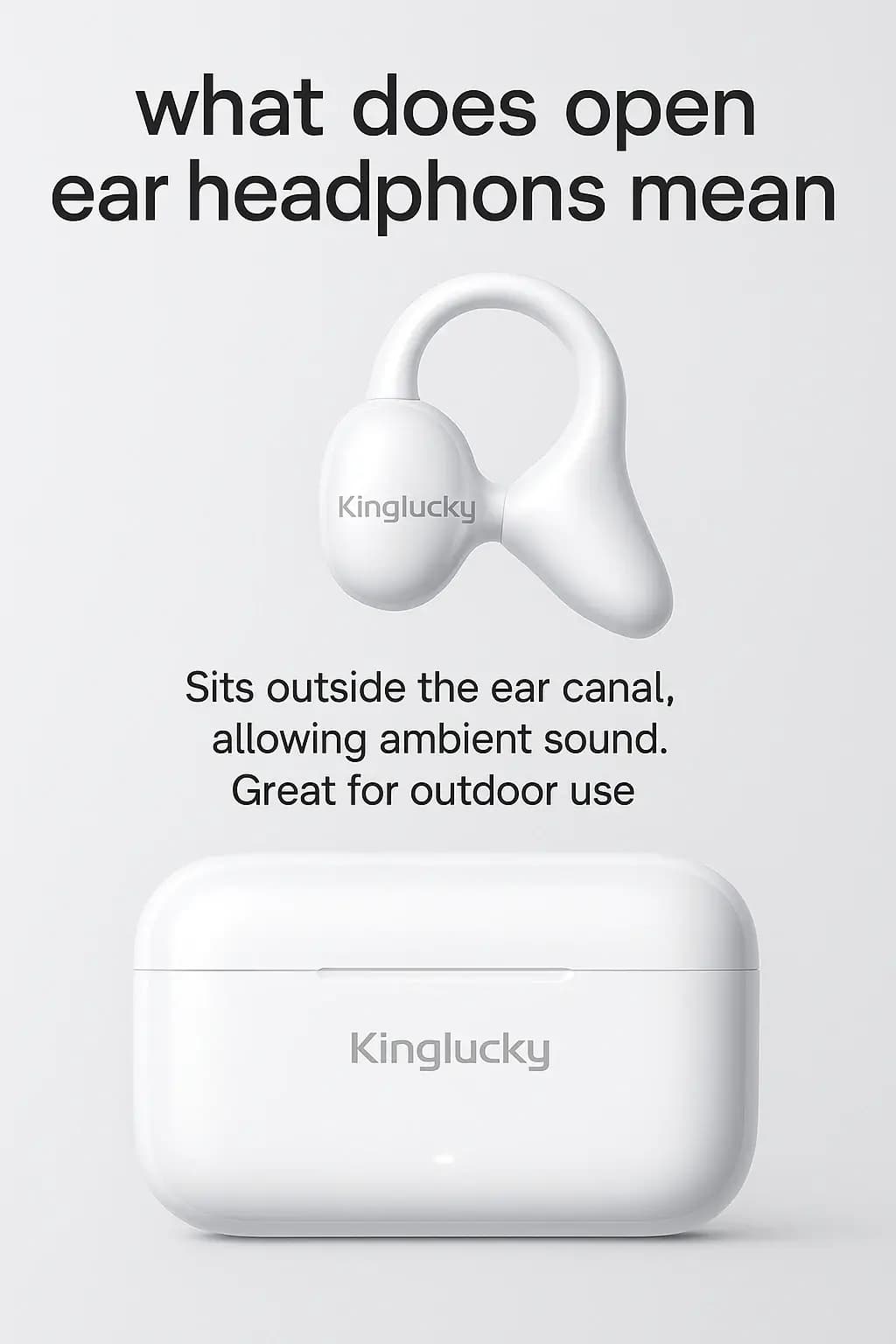
What Does Open Ear Headphones Mean? Rethinking How We Listen
In a world filled with noise, headphones have long served as a personal escape. But what if the goal isn’t to escape, but to stay engaged—with your music and your environment at the same time?That’s the promise of open ear headphones—a category growing in popularity yet often misunderstood. So let’s start by asking the key question:
What does open ear headphones mean?
This article unpacks the meaning behind the term—not just its technical aspects, but its implications for how we think about sound, comfort, safety, and everyday interaction. You’ll also discover how these headphones differ from others, and why models like the Kinglucky A9 ear clip headphones exemplify a new audio philosophy centered on freedom, not isolation.
The Meaning Behind “Open Ear”: More Than Just a Design
The term “open ear headphones” refers to any headphone system that allows your ear canals to remain physically unobstructed while still delivering audio effectively. But it’s more than a product category—it's a design mindset.- Open implies you’re not sealing off the ear from the world.
- Ear emphasizes that sound is still being directed toward your natural hearing organs.
- Headphones here are not worn “in” the ears but “around” them, typically by clipping or hanging outside the ear.
Want to explore various open ear headphone types in more depth?
👉 What Are Open Ear Headphones
Rethinking Listening: From Isolation to Integration
Historically, headphones were about creating a private bubble—blocking out the world, immersing you in music or media. But that isolation comes at a cost: missed conversations, safety concerns while walking or biking, and long-term ear fatigue.Open ear headphones challenge this legacy. They’re designed to be transparent, both literally and figuratively. They acknowledge that you’re not just a listener—you’re a human in a social, physical world.
With open ear technology, sound becomes part of your surroundings—not a barrier between you and them.
The Real-World Impact: Sensory Load and Cognitive Ease
This type of design has neurological and cognitive benefits that many users don’t initially consider:- Reduced auditory fatigue: Your ears aren’t working overtime to balance sealed sound and environmental input.
- Lower cognitive switching cost: You don't have to “tune out” of your music to “tune in” to real life. You’re always ready.
- Natural spatial orientation: Hearing ambient cues helps your brain map your environment more accurately.
Case Insight: What Open Ear Means Through Kinglucky A9
The Kinglucky A9 ear clip headphones offer a textbook example of the “open ear” concept—not through technical gimmicks, but through natural human-centric design.Rather than plugging into your ear, they clip lightly around it, letting your ear canal breathe. The sound is projected toward your ear using smart acoustic angles, and thanks to its reversed-wave structure, you hear your audio clearly without overwhelming your surroundings—or being overwhelmed by them.
Here, “open ear” doesn’t just mean physically open, but mentally unburdened.
Situations Where Open Ear Headphones Truly Shine
Let’s step away from the specs and focus on context—where this type of headphone shines:- Parents at Home: Keep track of your kids while taking work calls.
- Wellness & Meditation: Hear calming sounds without losing contact with your space.
- Students in Libraries: Quietly follow learning modules while being mindful of surroundings.
- Cyclists & Joggers: Listen to voice navigation while remaining alert to cars and people.
- Tutors or Educators: Engage with media and students simultaneously.
How to Wear Open Ear Headphones the Right Way
Because they don’t go in your ears, many users wonder: how do you actually wear them?👉 Check our full guide: How to Wear Open Ear Headphones
But here’s a quick tip set:
- Find the right alignment: Place the speaker just outside your ear canal.
- Secure gently: Use clips or loops to maintain a stable position, especially when moving.
- Adjust for clarity, not volume: When aligned properly, you’ll hear clearly at moderate levels.
Open Ear ≠ Compromise: Debunking Common Myths
Let’s tackle a few misconceptions people have when they first hear about “open ear” audio:| ❌ Myth | ✅ Reality |
|---|---|
| They sound weak or distant | Directional drivers offer clear sound for personal use |
| Everyone can hear your music | Good models reduce sound leakage |
| They’re only for sports | They’re just as valuable at home, work, or while commuting |
| Open ear is less premium | In fact, many high-end models are pivoting to this design |
Open Ear Is Not a Trend—It’s an Evolution
The headphone industry has followed a clear arc:- 1970s–1990s: Big over-ear studio headphones (maximum immersion)
- 2000s–2015: In-ear buds (portability)
- 2016–2020: Wireless in-ear with ANC (isolation and convenience)
- 2021 onward: Open ear for awareness, health, and hybrid life
FAQ: Understanding the True Meaning of Open Ear
❓ Q1: Is “open ear” a type or a feature?
A: It’s both. Some headphones are fully open ear by design, while others (like open-back over-ears) offer partial openness but don’t keep your ear canal exposed.❓ Q2: Are they good for calls?
A: Yes, especially for video conferencing or multitasking, since you can hear yourself naturally without being sealed off.❓ Q3: Can I wear them with glasses?
A: Clip-based models like Kinglucky A9 are compatible with most eyewear, thanks to soft materials and smart design.❓ Q4: Is the sound “less immersive”?
A: Open ear offers a different kind of immersion—one that integrates rather than isolates. It’s about realism, not just loudness.❓ Q5: Are they safe for kids?
A: Absolutely. Since they don’t go into the ear, they reduce pressure and volume risks when used properly.Final Thoughts: Openness Is the Future of Audio
So—what does open ear headphones mean?It means a redefinition of how we connect to sound: accessible, comfortable, and situationally aware. It means giving your ears space, your brain relief, and your attention the ability to stay flexible.
Whether you're trying to multitask at work, jog safely through the city, or simply unwind without sealing yourself off, open ear headphones offer a thoughtful solution for a busy, layered life.
And in this evolving soundscape, models like Kinglucky A9 prove that openness doesn’t mean compromise—it means choice.
Recommended Products