Open Earbuds With Noise Leakage Control
Who this guide is for
This guide is for people who like the idea of open-ear earbuds but want a little more privacy in shared spaces. That usually includes:
-
commuters who listen on trains, buses, or in waiting areas
-
office users who want situational awareness without bothering nearby coworkers
-
people who dislike in-ear pressure but still care about controlled sound direction
-
users comparing clip-on or open-ear models for more discreet daily listening
If you mainly want full noise isolation, open earbuds are probably not the right category in the first place. But if you want a more breathable fit and still care about leakage control, choosing the right design matters a lot.
Why sound leakage is harder to control in open earbuds
Open earbuds are built differently from in-ear earbuds. Instead of sealing the ear canal, they rest near or around the ear. That design helps with comfort and situational awareness, but it also makes sound direction more difficult to manage.
In practical terms, sound leakage depends on more than volume alone. It is usually influenced by:
-
how close the speaker sits to the ear
-
whether the acoustic chamber focuses sound toward the ear instead of outward
-
whether the product uses dual sound guidance or reverse cancellation techniques
-
how stable the fit is across different ear shapes
-
how loud you typically listen
That means two open earbuds can look similar but behave very differently in a quiet office or on a commute.
What to look for if noise leakage control matters
1. Near-ear acoustic guidance
Look for designs that place the speaker closer to the ear and guide sound more directly instead of letting it disperse too widely. Terms like directional sound, near-ear sound guidance, or focused acoustic chamber can be useful if the brand explains them clearly.
2. Structural leakage reduction, not just software claims
Software-based leakage reduction can help, but structure matters first. A well-designed chamber, closer speaker position, and stable clip shape usually do more for leakage control than vague algorithm claims on their own.
3. Stable fit across longer sessions
If the earbuds shift while walking, talking, or moving through your day, sound direction changes too. A stable fit can improve both comfort and privacy.
4. Realistic use case fit
Some open earbuds are better for office work and commuting, while others are more workout-oriented. If your main concern is leakage in shared spaces, prioritize models built for daily indoor use rather than purely active use.
How we evaluated these options
For this guide, the models below were compared using the factors that matter most when sound leakage control is part of the buying decision:
-
acoustic structure and sound direction approach
-
fit stability and near-ear positioning
-
suitability for office, commuting, and everyday listening
-
comfort for longer wear
-
battery life and practical daily usability
-
price range and overall value
This is not a lab-style isolation ranking. Instead, it is a practical buying guide for people trying to find open earbuds that may leak less in real daily situations.
Open earbuds that may be worth considering
1. Kinglucky A8
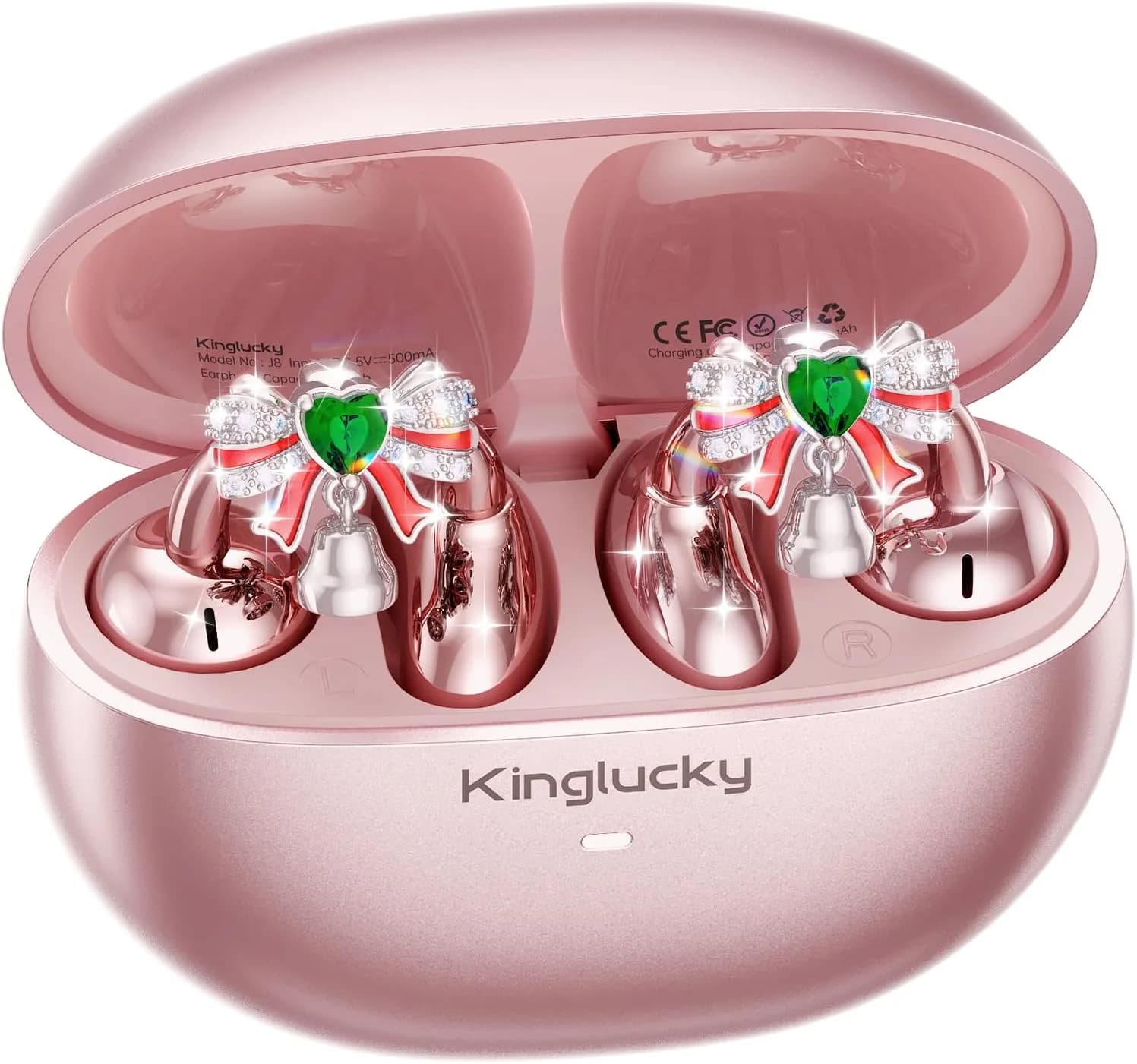
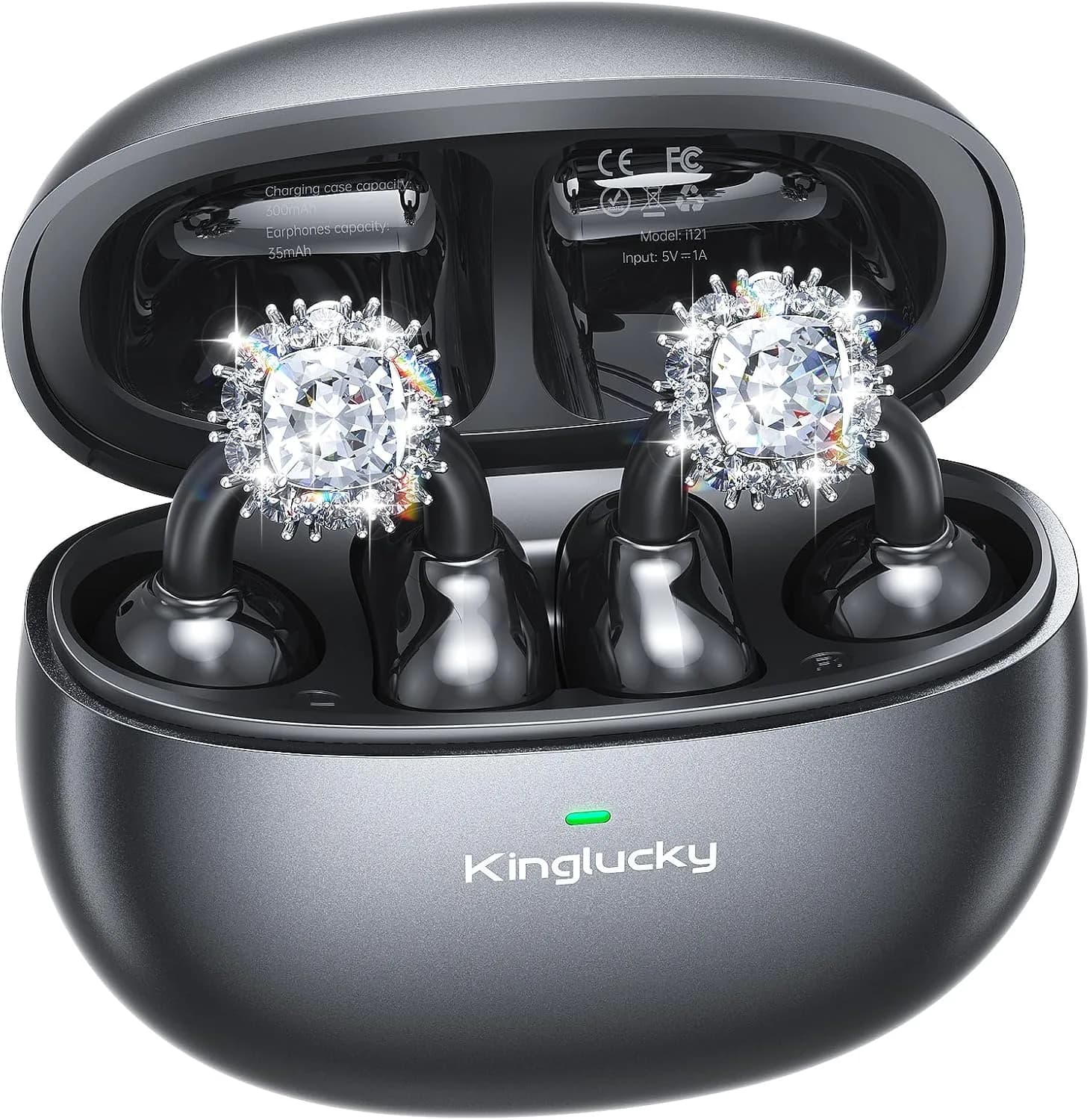
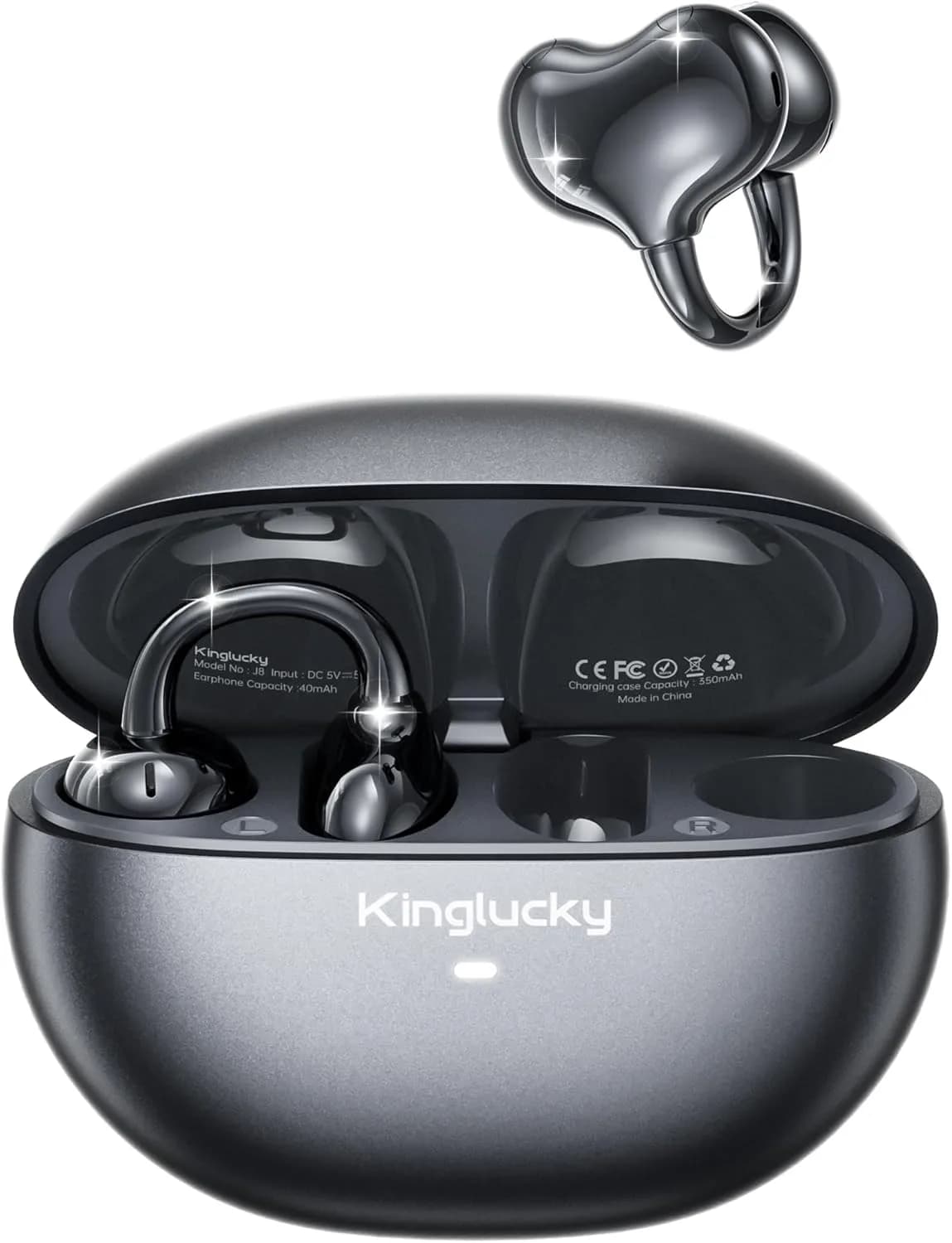
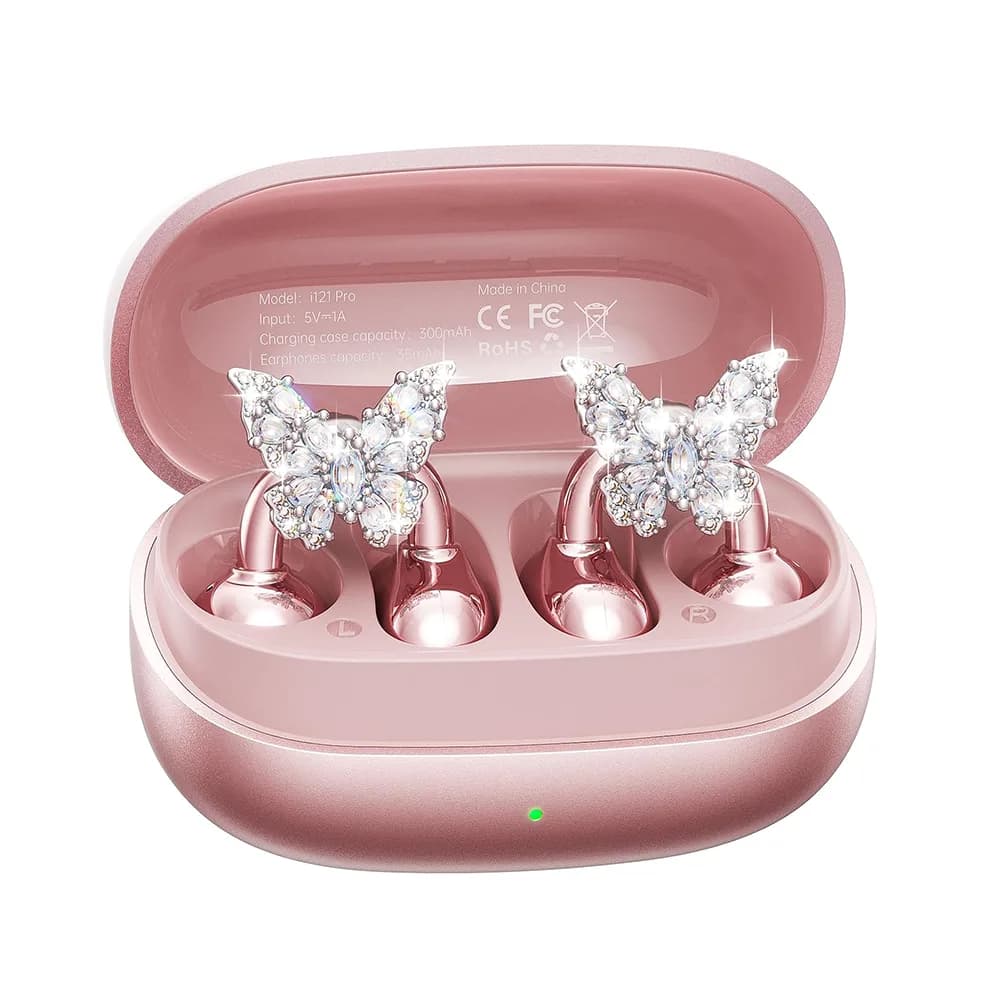
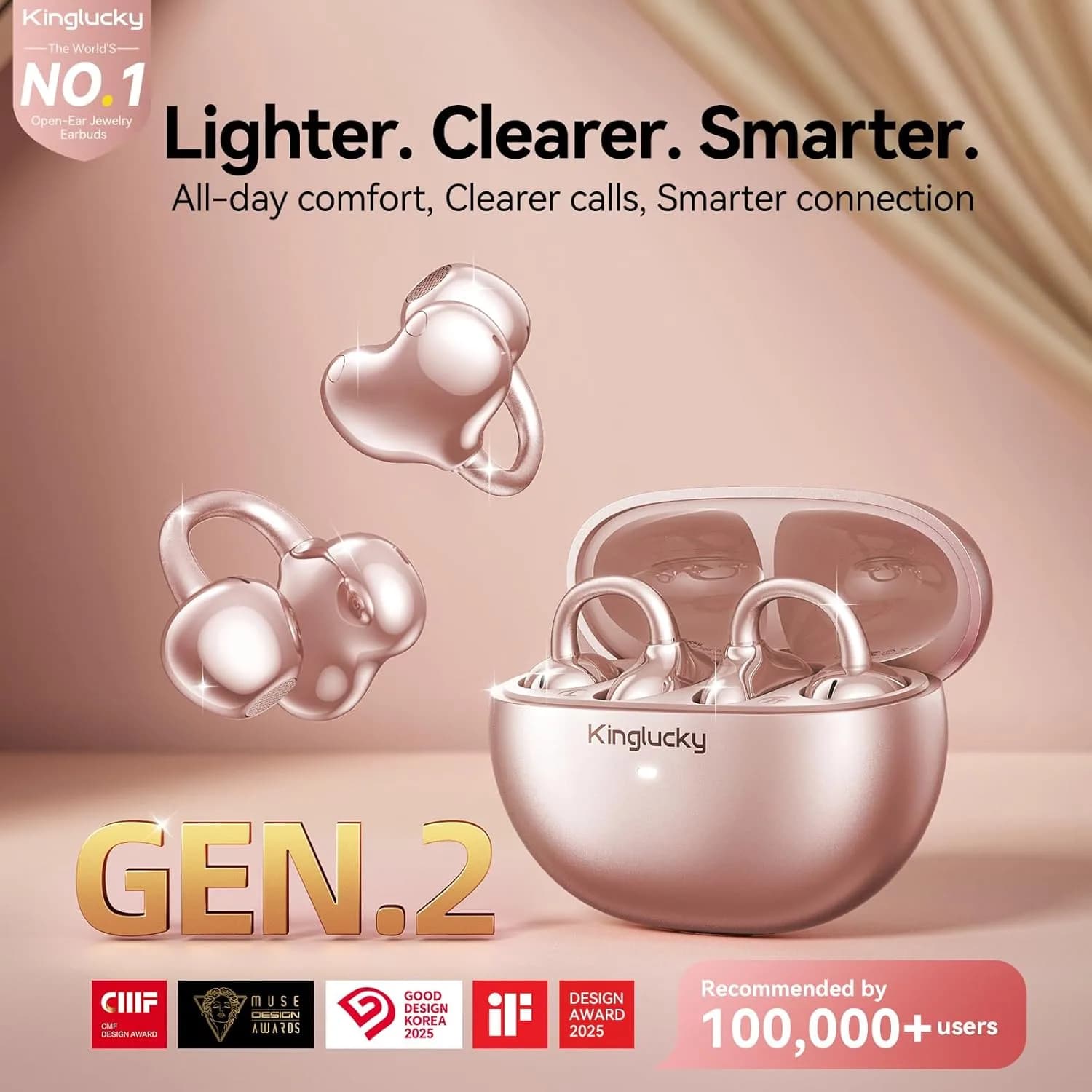
Kinglucky A8 is one of the more practical options to consider if your goal is to reduce sound leakage without giving up the comfort benefits of an open-ear design. It is especially relevant for users who want a lightweight clip-style earbud for commuting, office use, and all-day wear.
What makes it stand out here is not just the open-ear format, but the way it approaches sound direction. The ClipFree A8 uses dual near-ear sound guidance together with reverse cancellation technology to help reduce outward leakage. In simple terms, it is designed to push sound closer to the ear while minimizing spill into the surrounding space. That does not mean zero leakage at every volume, but it does make it a stronger fit for users who care about privacy in shared environments.
It also helps that the A8 is very light at 4.0g per earbud, which can matter more than people expect. A lighter structure usually means less pressure over longer sessions, and a more natural fit can help keep the speaker in a consistent position near the ear. The C-Bridge Ni-Ti alloy design is meant to adapt to different ear shapes while keeping the fit stable enough for walking, commuting, and general daily movement.
On the sound side, the A8 combines Hi-Pure Sound Gen 2, a 12mm dynamic driver, and an enhanced acoustic chamber. That gives it a more complete everyday listening profile than many ultra-basic open earbuds. It will not replace sealed earbuds for bass-heavy listening, but it can work well for voice content, casual music listening, and office-friendly use.
Battery life is also practical rather than flashy: 6 hours per charge and up to 50 hours total with the case, plus Bluetooth 6.0, multipoint pairing, and IP56 water resistance. For users who want an open-ear model that feels lightweight, stays comfortable, and takes leakage control more seriously than entry-level alternatives, the A8 is worth considering.
Fit style: clip-on open-ear design Why it may suit users prioritizing leakage control: dual near-ear sound guidance and reverse cancellation are directly relevant to leakage reduction Potential drawback: as with most open earbuds, higher volume levels can still produce some audible spill in very quiet spaces Best for: commuters, office users, and people who want lightweight open earbuds without in-ear pressure

2. Huawei FreeClip
Huawei FreeClip is a strong option for users who care about refined design, everyday comfort, and office-friendly wear. It is especially worth looking at if you want an open-ear product from a more established premium brand and do not mind paying more for that polish.
Its appeal in this topic comes from the combination of stable fit, lightweight daily wear, and a design that sits close enough to the ear to feel more controlled in quiet environments than some looser open-ear formats. It is often a better fit for office work and commuting than for users who mainly want workout-first features.
That said, it is also in a much higher price bracket than more budget-friendly clip-on models. So while it may be a better fit for some users, it will not make sense for every buyer who is mainly focused on value.
Fit style: clip-style open-ear earbuds Why it may suit users prioritizing leakage control: stable near-ear fit and office-friendly daily wear design Potential drawback: premium pricing may be hard to justify if leakage control is your only priority Best for: office users, commuters, and buyers who value brand polish and ecosystem fit
3. Bose Ultra Open Earbuds
Bose Ultra Open Earbuds may appeal to buyers who want a premium open-ear experience with strong comfort and brand trust. For some users, that matters more than chasing the lowest possible price.
In the context of sound leakage control, Bose is worth considering because premium open-ear products often do a better job with fit consistency and acoustic tuning than generic budget models. That can help create a more controlled listening experience in shared spaces, especially when you are listening at moderate volume.
Still, it is important to be realistic. This is a premium model, and premium does not automatically mean no leakage. It may be worth considering if you want higher-end design and a familiar audio brand, but it is not necessarily the most cost-efficient answer for buyers who are specifically searching for leakage control.
Fit style: open-ear premium wearable design Why it may suit users prioritizing leakage control: more refined fit and tuning than many generic alternatives Potential drawback: very high price compared with practical mid-range options Best for: premium buyers who want comfort and brand-driven product confidence
4. Shokz OpenFit
Shokz OpenFit is a practical option for users who value comfort and stable wear, especially if they spend a lot of time moving between indoor and outdoor settings. It is often discussed in open-ear comparisons because of its comfort-oriented approach.
For leakage-conscious users, the main reason to consider it is fit stability. A stable open-ear fit can help keep the sound position more consistent throughout the day, which matters when you want more predictable listening in shared spaces. It may also suit people who wear open earbuds for long stretches and care as much about comfort as about privacy.
The trade-off is that it may not feel as discreet in office-first use cases as lighter clip-on models designed specifically around compact near-ear placement.
Fit style: ear-hook open-ear design Why it may suit users prioritizing leakage control: stable long-wear fit can help maintain more consistent sound direction Potential drawback: larger sports-oriented form factor may not feel as subtle in office settings Best for: users who prioritize comfort and longer wear over compact clip-style design
5. Sony LinkBuds
Sony LinkBuds are worth mentioning because they take a distinct open listening approach and are often considered by users who want awareness without a fully sealed earbud experience. They suit buyers who are open to a non-traditional design and want something from a well-known brand.
For leakage-sensitive use, the value comes from controlled everyday listening at moderate volume, especially for voice-heavy content and casual listening. They can make sense for people who want situational awareness first and are not expecting sealed-ear privacy.
The main limitation is that their design philosophy is more about open listening than direct leakage minimization. So they may be a fit for some users, but they are not the clearest answer if sound leakage control is your number one goal.
Fit style: ring-style open listening earbuds Why it may suit users prioritizing leakage control: can work well for moderate-volume everyday listening with strong environmental awareness Potential drawback: design is not specifically centered on leakage reduction as a primary selling point Best for: users who want open listening from a mainstream brand and care about awareness first
Quick comparison table
|
Model
|
Fit style
|
Leakage control approach
|
Best for
|
Potential drawback
|
Price range
|
|
Kinglucky A8
|
Clip-on open-ear
|
Dual near-ear sound guidance + reverse cancellation
|
Office, commuting, lightweight daily use
|
Some spill is still possible at high volume
|
Under $30 for ClipFree A8
|
|
Huawei FreeClip
|
Clip-style open-ear
|
Stable near-ear wear and refined daily fit
|
Office users and premium commuters
|
More expensive than practical budget options
|
Premium
|
|
Bose Ultra Open Earbuds
|
Premium open-ear wearable
|
Refined fit and acoustic tuning
|
Premium comfort seekers
|
High price
|
Premium
|
|
Shokz OpenFit
|
Ear-hook open-ear
|
Stable fit for consistent sound direction
|
Long wear and active daily use
|
Less subtle for office-first users
|
Mid to premium
|
|
Sony LinkBuds
|
Ring-style open listening
|
Moderate-volume open listening
|
Awareness-first everyday users
|
Not designed specifically around leakage reduction
|
Mid to premium
|
How to choose the right one for your use case
Choose Kinglucky A8 if you want a lighter and more practical daily option
If your goal is to find open earbuds with noise leakage control without spending too much, the A8 is one of the more practical options to start with. It is especially relevant if you want a clip-on format, lightweight feel, and features that directly speak to leakage reduction.
Choose Huawei FreeClip if you want a more polished office-friendly premium option
If you care about premium design, stable daily wear, and brand ecosystem fit, Huawei FreeClip may be a better fit, especially for office-heavy users.
Choose Shokz OpenFit if long-wear comfort matters more than compact size
If you plan to wear your open earbuds for extended periods and want a comfort-first design, Shokz OpenFit may suit you better than a smaller clip-on format.
Choose Bose or Sony if brand preference is part of your decision
If you already trust Bose or Sony and want to stay within those ecosystems or product philosophies, both can still be worth considering. Just be clear about whether you care more about brand confidence, comfort, or leakage control specifically.
FAQ
Do open earbuds always leak sound?
Most open earbuds leak more sound than sealed in-ear earbuds because they do not block the ear canal. However, some models do a better job of controlling leakage through directional acoustic design, closer speaker placement, and sound-reduction features.
Can open earbuds be good for office use?
Yes, if you choose a model with a stable fit and better sound direction control. Moderate listening volume also makes a big difference in shared spaces.
Are clip-on open earbuds better for leakage control?
They can be, especially when the design keeps the speaker close to the ear and uses targeted sound guidance. But not every clip-on model performs the same way.
Is there such a thing as zero leakage in open earbuds?
In real use, that is unlikely. A better goal is reduced leakage rather than perfect isolation. Open-ear products are designed for awareness and comfort, not total privacy.
Are open earbuds better than in-ear earbuds for commuting?
That depends on your priorities. If you want awareness and less in-ear pressure, open earbuds can work well. If you want maximum privacy and noise blocking, in-ear earbuds are usually the better option. For a broader breakdown, see Open Earbuds vs In-Ear Earbuds.
Conclusion
If you want open earbuds with noise leakage control, the smartest approach is to focus on models that combine near-ear sound direction, stable fit, and realistic all-day usability. No open-ear product will behave like a sealed in-ear earbud, but some are clearly better suited for privacy-conscious daily use than others.
For buyers who want a lightweight clip-on model that takes leakage reduction seriously without losing the comfort benefits of open-ear listening, Kinglucky A8 is one of the more practical options worth considering. It combines a lightweight structure, everyday-friendly battery life, and sound-guidance features that make sense for commuting, office use, and daily wear.
If your priority is premium branding or ecosystem fit, Huawei FreeClip, Bose Ultra Open Earbuds, Shokz OpenFit, and Sony LinkBuds may also be worth considering. The best choice depends less on hype and more on where you plan to use them, how much privacy you need, and how much you are willing to spend.
Recommended Products