Bluetooth Headphones Open Ear
Bluetooth Headphones Open Ear: A Complete Buyer’s Guide to Wireless Comfort, Awareness, and Performance
Consumers searching for bluetooth headphones open ear want more than a definition—they’re looking for credible buying guidance that blends wireless technology with the distinct advantages of open-ear comfort. This long-form guide explains how Bluetooth features (version, codecs, latency, multipoint) intersect with open-ear design (fit, awareness, durability), so you can compare brands and models with confidence before you buy.
What Are Bluetooth Open Ear Headphones?
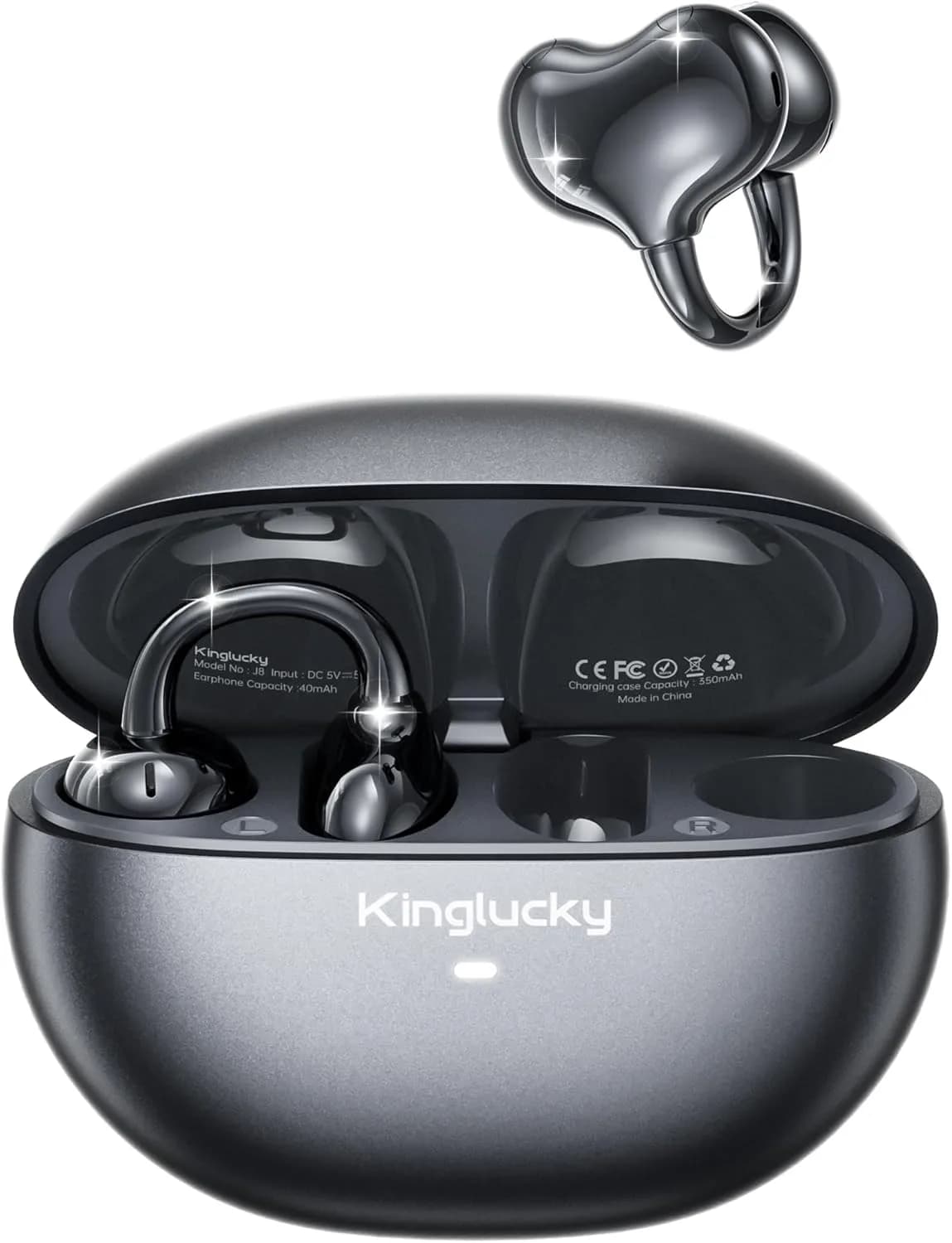
Bluetooth open ear headphones are wireless headsets that deliver audio without sealing the ear canal. Unlike traditional in-ear earbuds, open-ear designs place the driver or transducer near (not inside) the ear—via clip-on, ear-hook, headband/off-ear, or bone conduction styles—so you can hear music and calls while staying aware of your surroundings. Add modern Bluetooth, and you get cable-free freedom across phones, laptops, watches, and tablets.
This differs from wired open-ear models (no Bluetooth) and from sealed Bluetooth earbuds that isolate your environment. With Bluetooth open-ear, the goal is a natural mix of audio + ambient awareness—ideal for running, cycling, commuting, and any situation where safety and social interaction matter.
Benefits of Bluetooth + Open Ear Combination
- Wireless freedom: Train, commute, and work hands-free, without cable snags. Bluetooth also enables quick device switching and broad compatibility.
- Comfort for long wear: No in-ear pressure means less fatigue across multi-hour sessions. Many users can wear open-ear all day for podcasts, calls, and music.
- Situational awareness: Hear traffic, bikes, announcements, coworkers, and family without pausing audio—crucial for outdoor safety and social convenience.
- Multipoint convenience: Many Bluetooth open-ear headsets connect to two devices at once (e.g., laptop + phone), making workdays smoother.
- Lifestyle flexibility: Designs range from sporty wrap-around bands to minimalist clips that pair with everyday outfits.
Key Features Buyers Should Look For
A great open-ear experience depends on both the acoustics and ergonomics and the Bluetooth stack. Use this checklist to evaluate any product page:
1) Bluetooth Version and LE Audio
- Bluetooth 5.x (5.0–5.3): Newer versions usually mean better stability, longer range, and improved energy efficiency.
- LE Audio & LC3: The emerging Bluetooth LE Audio standard and its LC3 codec aim for efficient, robust connections at lower bitrates, improving battery life and performance in busy RF environments. If future-proofing matters, look for LE Audio readiness or roadmap mentions.
2) Codecs, Latency, and Stability
- Baseline support: SBC is universal; AAC is common on iOS. Some headsets add aptX/LDAC for higher bit-rate music on compatible devices.
- Latency: For video calls and streaming, lower latency improves lip-sync. Vendor “low-latency modes” can help; so can LE Audio as it matures.
- RF stability: Outdoor running and metro commutes stress Bluetooth radios. Reviews often mention dropouts; prioritize models with a reputation for solid connections.
3) Battery Life and Charging
- Per-charge hours: Match single-charge stamina to your longest use (long runs, commutes, or an entire workday).
- Total system life: If there’s a charging case or band-style cradle, check total recharges for multi-day coverage.
- Fast top-ups: Quick-charge features add meaningful playback from short plugs—handy before a workout.
- Ports & convenience: USB-C is standard on modern models and plays nicely with your existing chargers.
4) Fit and Comfort
- Geometry: Clip-on, ear-hook, off-ear headband, and bone conduction frames behave differently when you sprint, turn, or wear glasses/hats.
- Pressure points: Soft-touch materials and flexible alloys reduce hotspots on long sessions.
- Stability: Seek designs that stay put at tempo pace but avoid excessive clamping.
5) Durability and Water Resistance
- IP rating: IPX4 handles sweat/light rain; IP55+ adds dust and spray resistance. For heavy weather or trail grit, higher is better.
- Build materials: Memory-metal frames and reinforced hinges help headsets keep shape after months of workouts.
Best Bluetooth Open Ear Headphones by Category
Rather than a single ranking, the picks below are organized by use case. Pair your priority with the feature set that matters most, then compare brands that match the profile.
Best for Sports & Running — Stable Fit + Sweatproof
For road miles and mixed-use paths, awareness and stability are crucial. Sport-first open-ear designs usually feature a wrap-around band (bone conduction) or secure hooks that resist jostle at pace. Look for:
- IPX4–IP55: Enough protection for sweat and light rain.
- Physical buttons: Easier mid-run than tiny touch areas, especially with gloves.
- Battery: Aim for single-charge stamina that outlasts your longest planned run, plus fast top-ups.
- Bluetooth stability: Outdoor RF is messy; models with reliable connection and quick reconnection reduce frustration.
Who it’s for: Runners, cyclists, and hikers who train near traffic or share paths and want audio without isolation.
Best for Office & Calls — Clear Mic + Multipoint Pairing
If you wear your headset from standup to supper, prioritize Bluetooth features built for work:
- Multipoint: Seamless switching between laptop and phone.
- Mic arrays + noise reduction: Beamforming + AI filtering keeps your voice intelligible in cafés and open offices.
- Comfort geometry: Clip-on or off-ear designs minimize pressure for all-day use and play nicely with glasses.
- Latency control: Low-latency modes help with video calls and streaming.
Who it’s for: Hybrid workers and students who want ambient awareness while staying conversation-ready.
Best for All-Day Comfort — Lightweight with Long Battery
Open-ear excels at “wear and forget.” Choose models with featherweight housings, soft contact points, and practical battery strategy:
- 7–10 hours per charge: A sweet spot for most users; more is a bonus.
- Compact charging cradle/case: Top up during breaks without hunting wall outlets.
- Smooth controls: Touch or physical—choose what you won’t misfire while adjusting hair or glasses.
Who it’s for: Listeners who keep audio on throughout the day for podcasts, focus music, and casual calls.
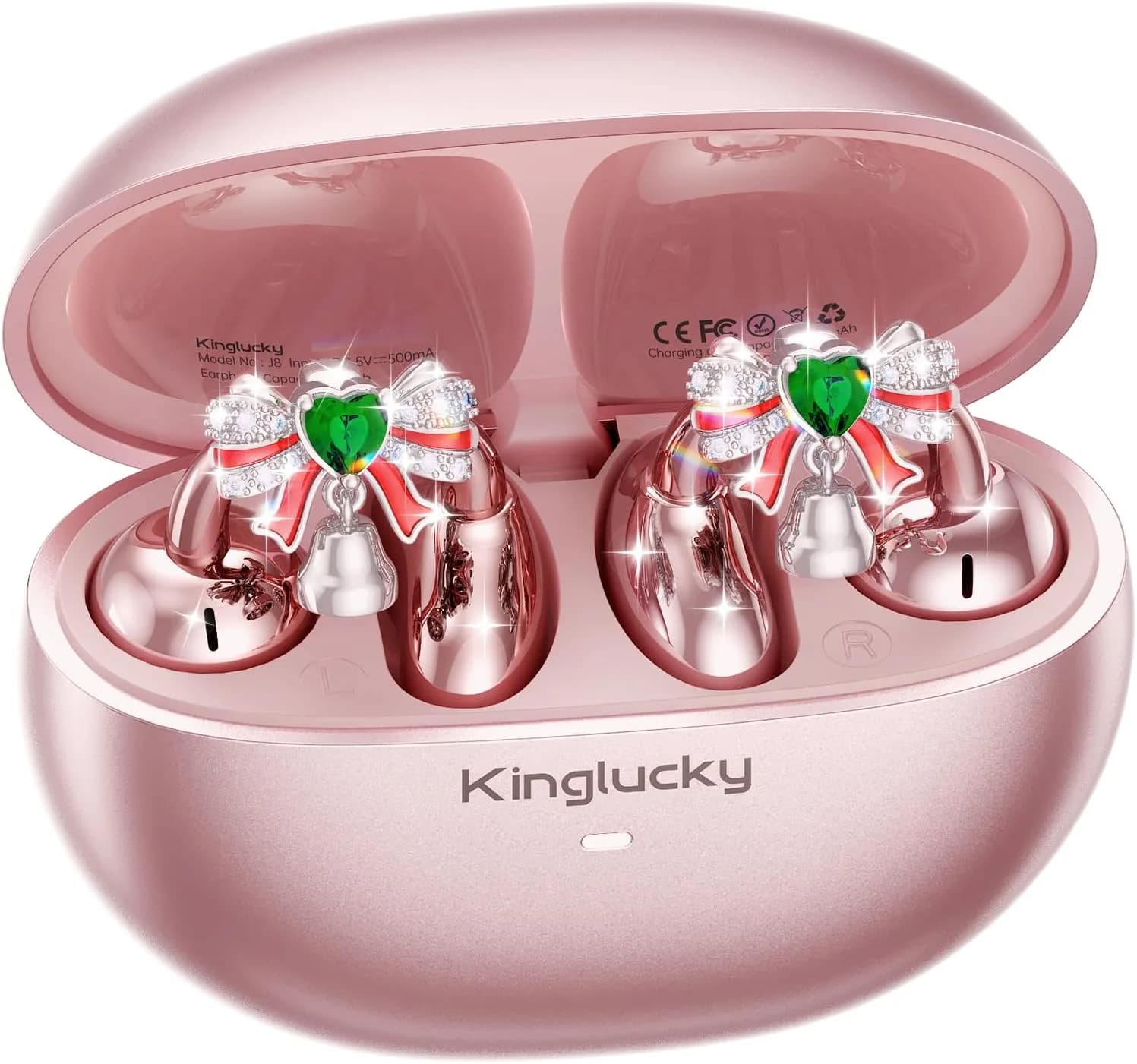
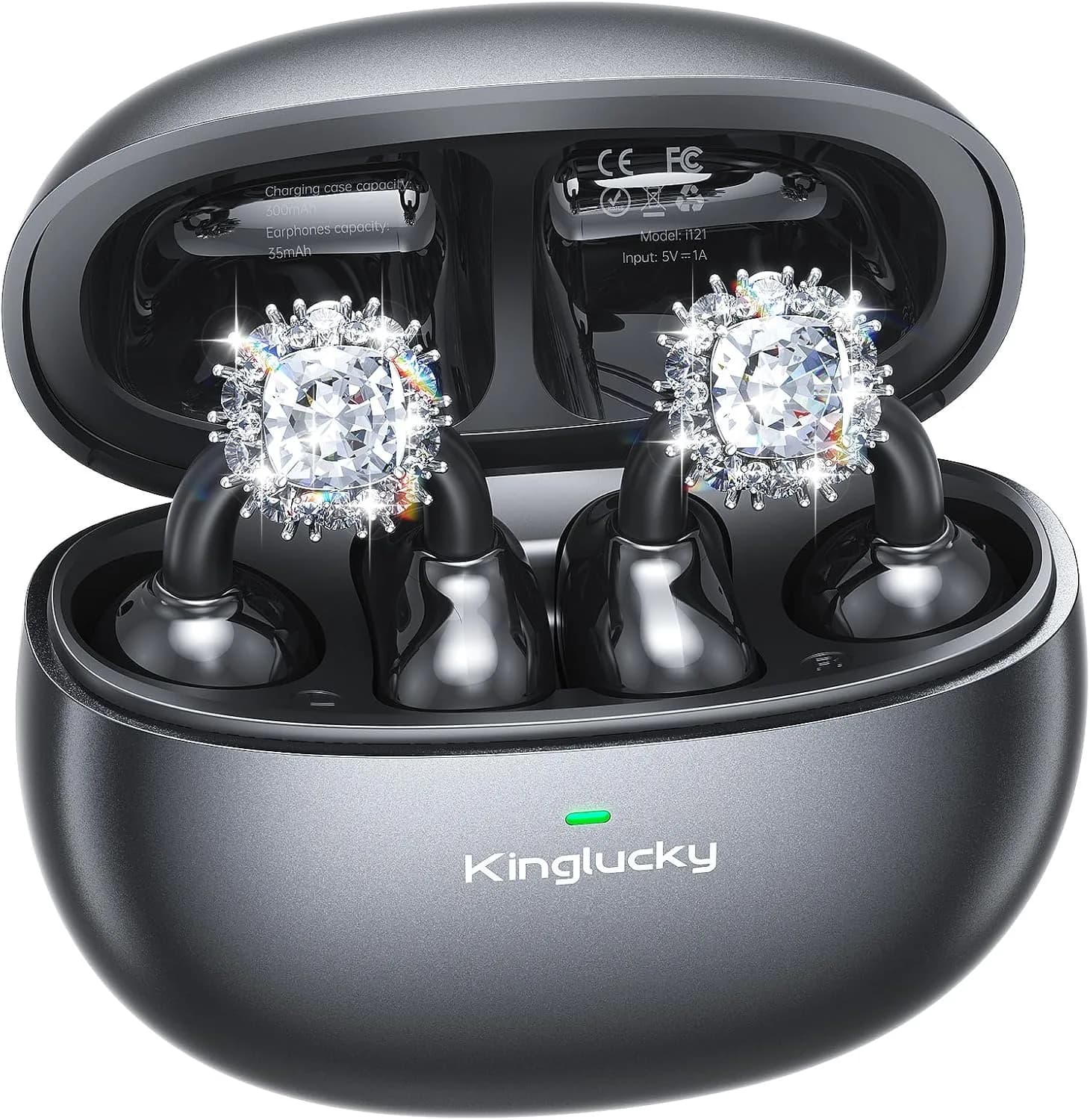
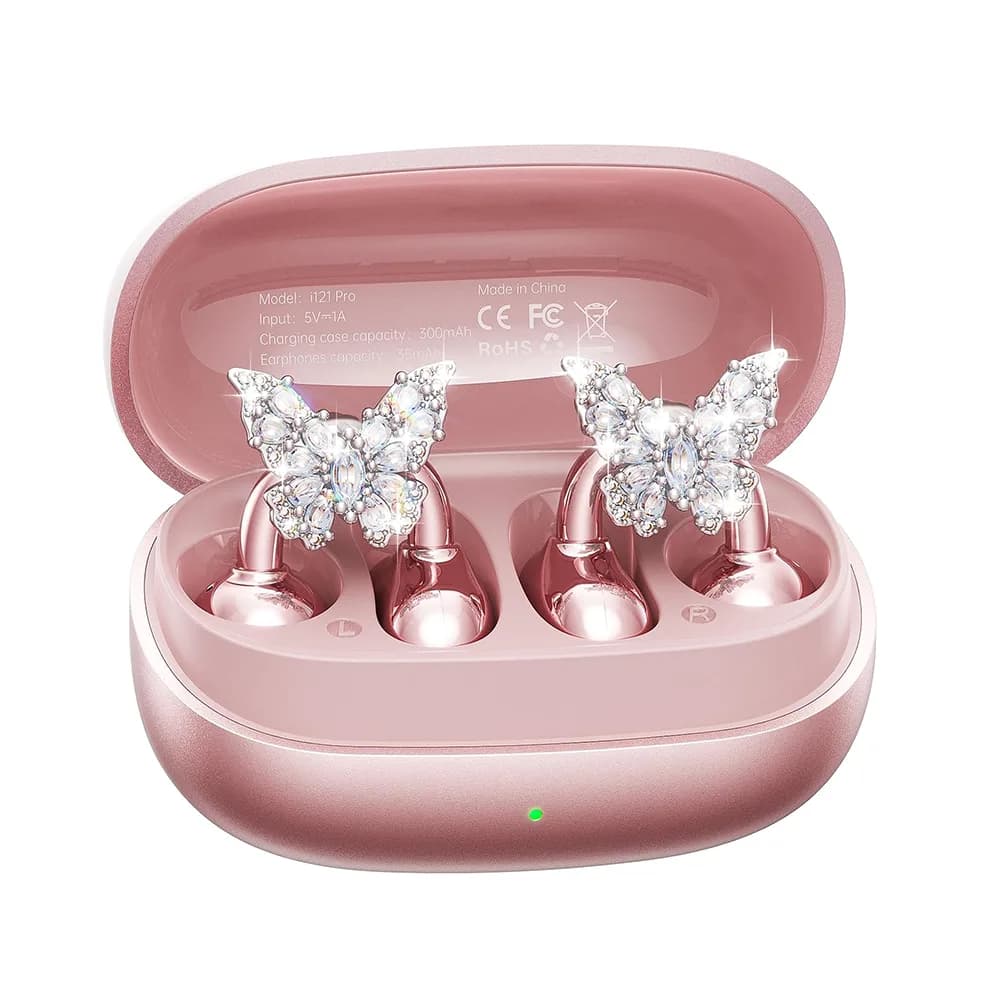
Best Stylish Lifestyle Option — Kinglucky A9 (Clip-On, Open-Ear, Bluetooth)
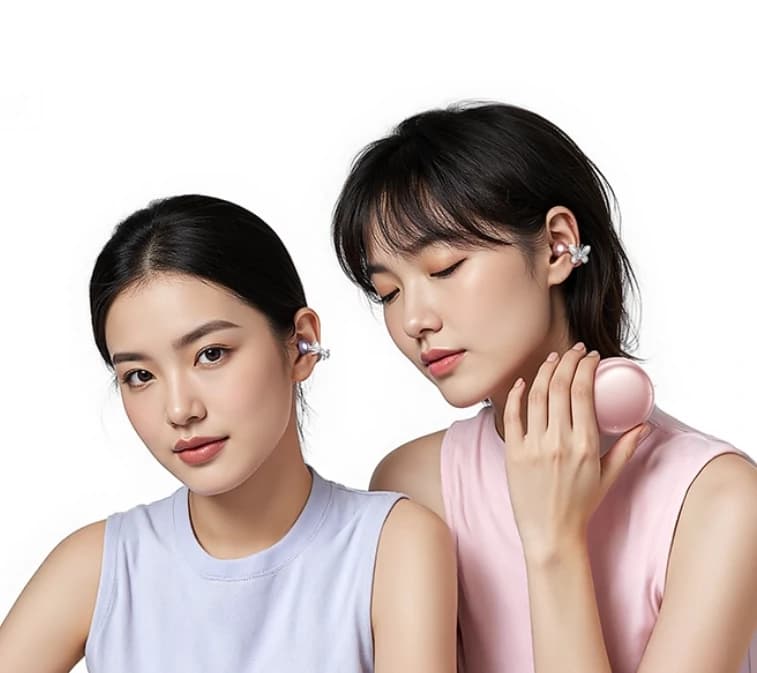
Some buyers want a headset that transitions from workout to workday without the “gym gear” look. Kinglucky A9 represents that stylish lane: a clip-on, open-ear Bluetooth design with soft-touch contact points and shape-friendly earclips that stabilize the driver near (not in) the canal. The accessory-like silhouette pairs easily with daily outfits, while the open-ear path preserves awareness on city walks and light runs. Expect the key Bluetooth conveniences (quick pairing, stable connection, and practical battery plan) alongside open-ear comfort and a fashion-forward profile for lifestyle wear.
Who it’s for: Style-minded users who want awareness and comfort in a design that fits meetings, errands, and casual training.
Best Value Choice — Budget-Friendly but Reliable
You don’t need every premium feature to enjoy Bluetooth open-ear audio. Value models should still cover essentials:
- Stable fit: Hook or band geometry that stays put during brisk walks and easy runs.
- IP rating: At least IPX4 for sweat protection.
- Battery: Enough per-charge time for a full commute or a few workouts.
- Baseline codecs: SBC/AAC for mainstream phone compatibility.
Who it’s for: Casual listeners and weekend warriors who want open-ear awareness at an approachable price.
Bluetooth Open Ear vs Traditional Bluetooth Earbuds
Both are wireless, but they serve different priorities:
- Awareness vs isolation: Open-ear keeps the world audible—ideal for roads, offices, and family spaces. Traditional sealed earbuds deliver stronger isolation and deeper bass.
- Comfort profile: Open-ear avoids canal pressure, reducing fatigue during long wear. Sealed earbuds can feel more “present,” which some users prefer for short, focused sessions.
- Sound signature: Open-ear emphasizes clear mids and natural presence; sealed earbuds tend to offer heavier sub-bass and immersive staging.
- Use case split: Many buyers use both: open-ear for outdoor/office, sealed in-ears for flights, gyms, or noisy commutes.
Buying Guide — How to Pick the Right Model
Match your daily routine to a clear feature set using the grid below:
1) Running, Cycling, Fitness
- Must-haves: Stable geometry (hook/band), IPX4+, long enough battery for peak workouts, physical buttons.
- Nice-to-haves: Quick-charge, low-latency mode for trainer apps and form videos.
2) Commuting & Office
- Must-haves: Multipoint Bluetooth, strong mic performance, comfortable open-ear geometry for all-day wear.
- Nice-to-haves: Case or cradle that fits pockets, easy pairing across platforms.
3) Leisure & Casual Listening
- Must-haves: Featherweight design, smooth controls, practical per-charge hours.
- Nice-to-haves: Style-forward finishes and accessories that match your wardrobe.
Price-to-Value Considerations
- Spend where it matters: Fit stability, mic clarity, battery life, and IP rating deliver noticeable benefits. Only pay for advanced codecs if you’ll truly hear or use them.
- Longevity: Check warranty length and replaceable accessories (bands, tips, cables) to maximize total value.
- Brand trust: Look for transparent specs, consistent firmware support, and responsive customer service.
Market Trends & Future Outlook
- Bluetooth LE Audio + LC3: Expect broader adoption, improving efficiency and robustness in busy environments.
- Auracast-style broadcast audio: Public venues may offer shared audio streams in the future—open-ear could be a natural fit for awareness-friendly listening.
- AI-assisted voice pickup: Smarter microphone processing improves call clarity outdoors and in open offices.
- Refined open-ear acoustics: Larger, more efficient drivers and better acoustic waveguides increase clarity while keeping ears open.
- Lifestyle design momentum: Clip-on silhouettes and minimalist finishes push open-ear beyond sports, into everyday wear.
Conclusion
The promise of bluetooth headphones open ear is simple: wireless freedom plus comfort and awareness. Pick a sport-ready model for road safety and stability, an office-friendly design for calls and multipoint pairing, an all-day option for podcasts and focus music, or a style-forward clip-on like Kinglucky A9 if you want seamless transitions from commute to coffee to casual runs. Evaluate Bluetooth features (version, codecs, latency, multipoint) alongside open-ear fundamentals (fit, battery, IP rating), and you’ll land on a headset that disappears—so your life can take center stage.
FAQ
Are Bluetooth open ear headphones good for running?
Yes. They preserve awareness of traffic and other runners while delivering coaching cues and music. Choose a stable hook/band geometry, IPX4+ protection, and enough battery for your longest run.
Do Bluetooth open ear headphones have noise cancelling?
Most do not emphasize active noise cancelling because the design goal is awareness. Some models offer call-focused noise reduction (for your voice) rather than environmental cancellation for your ears.
Which brands make the best Bluetooth open ear headphones?
Sports-oriented brands lead in bone conduction and wrap-around stability, while others focus on off-ear and clip-on designs for lifestyle use. Compare by fit, IP rating, mic quality, Bluetooth features, and battery life rather than logo alone.
How long does the battery last on Bluetooth open ear headphones?
Typical per-charge figures range from about a workday for office-centric models to multi-hour training blocks for sport designs. Many include quick-charge top-ups and a cradle/case for extended total runtime.
Are Bluetooth open ear headphones comfortable with glasses?
Generally yes. Clip-on and off-ear designs are glasses-friendly, but geometry matters. Look for soft, contoured contact points and test where frames touch the clip or hook to avoid hotspots.
Recommended Products