Best Open Ear Bone Conduction Headphones

Best Open Ear Bone Conduction Headphones: A Sports + Lifestyle Buying Guide
Shoppers searching for best open ear bone conduction headphones are usually past the “what is bone conduction” stage. You’re here to compare real models, understand trade-offs, and pick gear that fits your routine—road running, cycling, pool sessions, office calls, or everyday wear. This professional guide focuses on which options are best across key scenarios, with concrete criteria you can apply to any brand or model.
Why People Search “Best Open Ear Bone Conduction Headphones”
Open-ear listening has gone mainstream for two reasons. First, athletes want audio without losing awareness—hearing cars, bikes, race officials, and training partners while staying in rhythm. Second, everyday listeners value comfort and ear health: keeping the ear canal unsealed reduces pressure and moisture build-up during long wear. Bone conduction, a flagship open-ear approach, sits at this intersection of safety, comfort, and practicality—and that’s why choosing the right model matters.
What Are Open Ear Bone Conduction Headphones?
Bone conduction is one branch of the open-ear family. Instead of sealing your ear canal and moving air toward the eardrum, bone-conduction transducers rest on the cheekbone and vibrate sound directly to the inner ear. Your ear canal stays fully open, so you can hear the world while your audio plays. This is different from open-ear air-conduction models (often clip-on, hook, or off-ear designs) that still move air toward the eardrum but avoid an in-ear seal.
Why Choose Bone Conduction Headphones?
- Situational awareness for outdoor sports: Hear traffic, bikes, and cues without removing your headset or toggling modes.
- Comfort for sensitive ears: No in-ear tips; less canal pressure and heat build-up on high-mileage days.
- Health-oriented listening: The eardrum is bypassed; the canal remains open, which some users prefer for comfort and hygiene. (Always keep volumes responsible.)
Criteria for the Best Open Ear Bone Conduction Headphones
To decide which models are “best” for you, weigh the following six pillars according to your routine:
- Sound quality & clarity: Expect lighter sub-bass than sealed in-ears; prioritize clean mids for voice cues, coaching prompts, podcasts, and steady, non-fatiguing highs.
- Fit & stability: Look for wraparound or hook designs with flexible, resilient frames (e.g., memory metals) that stay put during sprints, corners, and hill repeats without creating hot spots with glasses.
- Battery life & charging: Endurance runners should check single-charge stamina; quick-charge is useful for “forgot to charge” mornings. If you wear them all day, total system life (with case/charging accessories) matters.
- Water/sweat resistance (IP rating): IPX4 covers sweat/light rain; IP55+ adds robustness for heat, humidity, and dusty routes; specific swim models offer swim-grade waterproofing.
- Bluetooth connectivity: Seek solid outdoor stability, quick reconnection with watches/phones, and multipoint if you juggle devices.
- Price-to-performance: Spend where you feel improvements: stable fit, call clarity, battery, or higher IP—skip features you won’t use.
Best Open Ear Bone Conduction Headphones — Category Picks
Below are category-based picks designed for real-world running, cycling, swimming, daily wear, and budgets. Use the criteria above to finalize your shortlist.
Best for Running & Cycling — Road-Safe Stability
For outdoor miles, the winning combination is secure wraparound geometry, a balanced, non-fatiguing tuning for voice and pace cues, and at least IPX4–IP55 durability. Models in this lane typically feature physical buttons you can press with gloves, plus frames that keep transducers firmly on the cheekbone at tempo pace. If you train in variable weather, lean toward higher IP ratings and frames with flexible alloys that hold shape after months of sweat and heat.
- What to prioritize: Stability at pace, easy on-run controls, non-fatiguing mids for coaching cues, robust sweat resistance.
- Nice to have: Quick-charge for last-minute sessions; multipoint if you bounce between watch and phone.
Best for Swimming & Water Sports — Swim-Grade Protection
Dedicated swim models are built for submersion and often support on-device music storage (MP3/AAC) because Bluetooth is unreliable underwater. Look for an integrated headband that fits cleanly under caps or goggles, secure cheekbone placement that resists drag, and swim-rated waterproofing with clear manufacturer guidance on depths/time. Post-swim, a quick fresh-water rinse keeps seals and materials in good condition.
- What to prioritize: Swim-grade waterproofing, stable headband geometry, onboard storage for pool sessions.
- Nice to have: Audible lap cues/voice prompts and physical buttons you can operate with wrinkled fingers.
Best for Office Calls & Daily Use — Voice Clarity + Multipoint
If you spend hours on calls, choose a bone-conduction set with beamforming mics and AI/algorithmic noise reduction that keeps your voice intelligible in cafés and open offices. Multipoint Bluetooth streamlines switching between laptop and phone; a comfortable clamp force and soft contact points are essential for all-day wear. You’ll trade some isolation and bass for awareness and conversation-friendly behavior—exactly what many workers want.
- What to prioritize: Microphone performance, multipoint, long single-charge stamina.
- Nice to have: A compact charging accessory for top-ups between meetings.
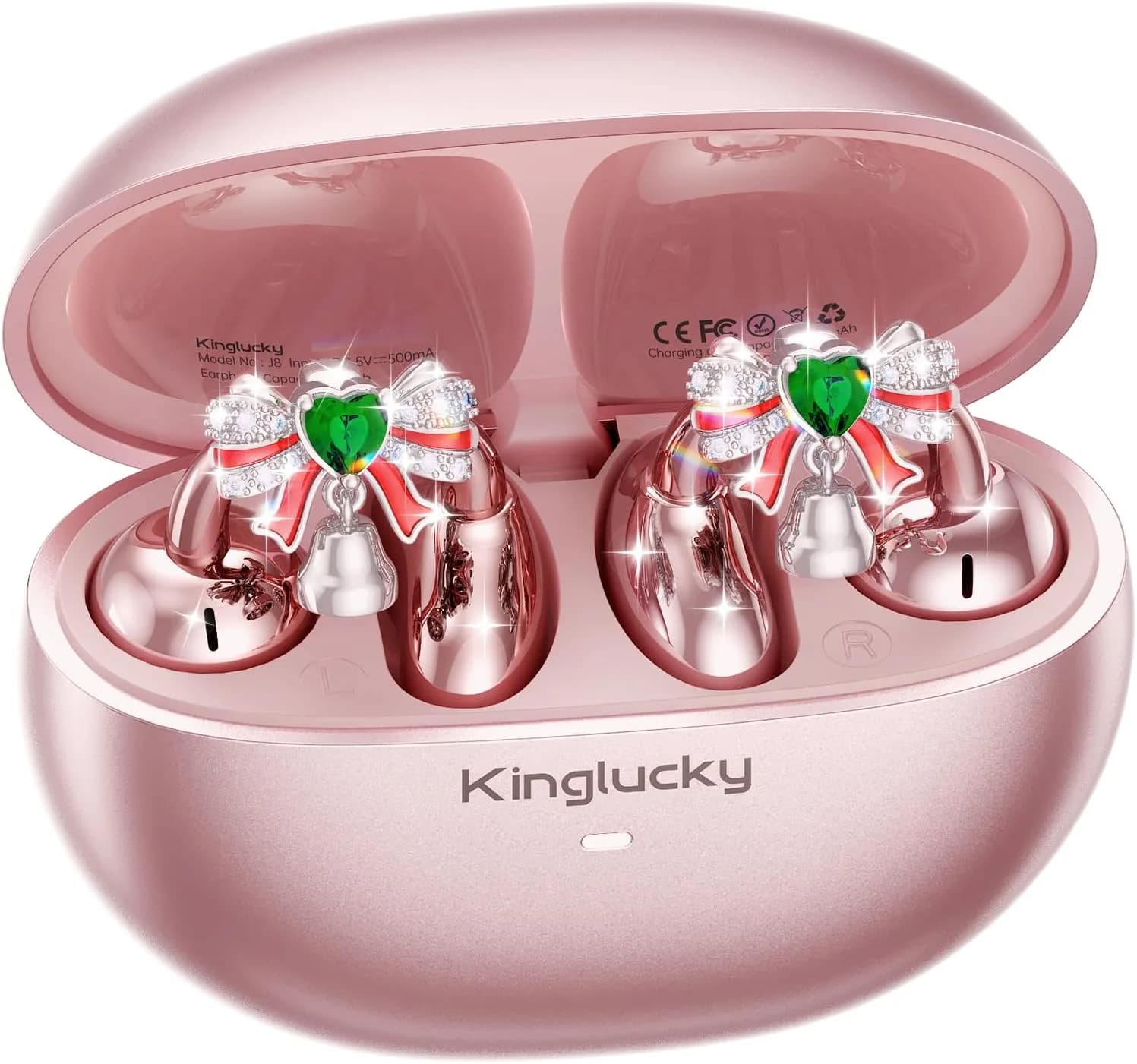
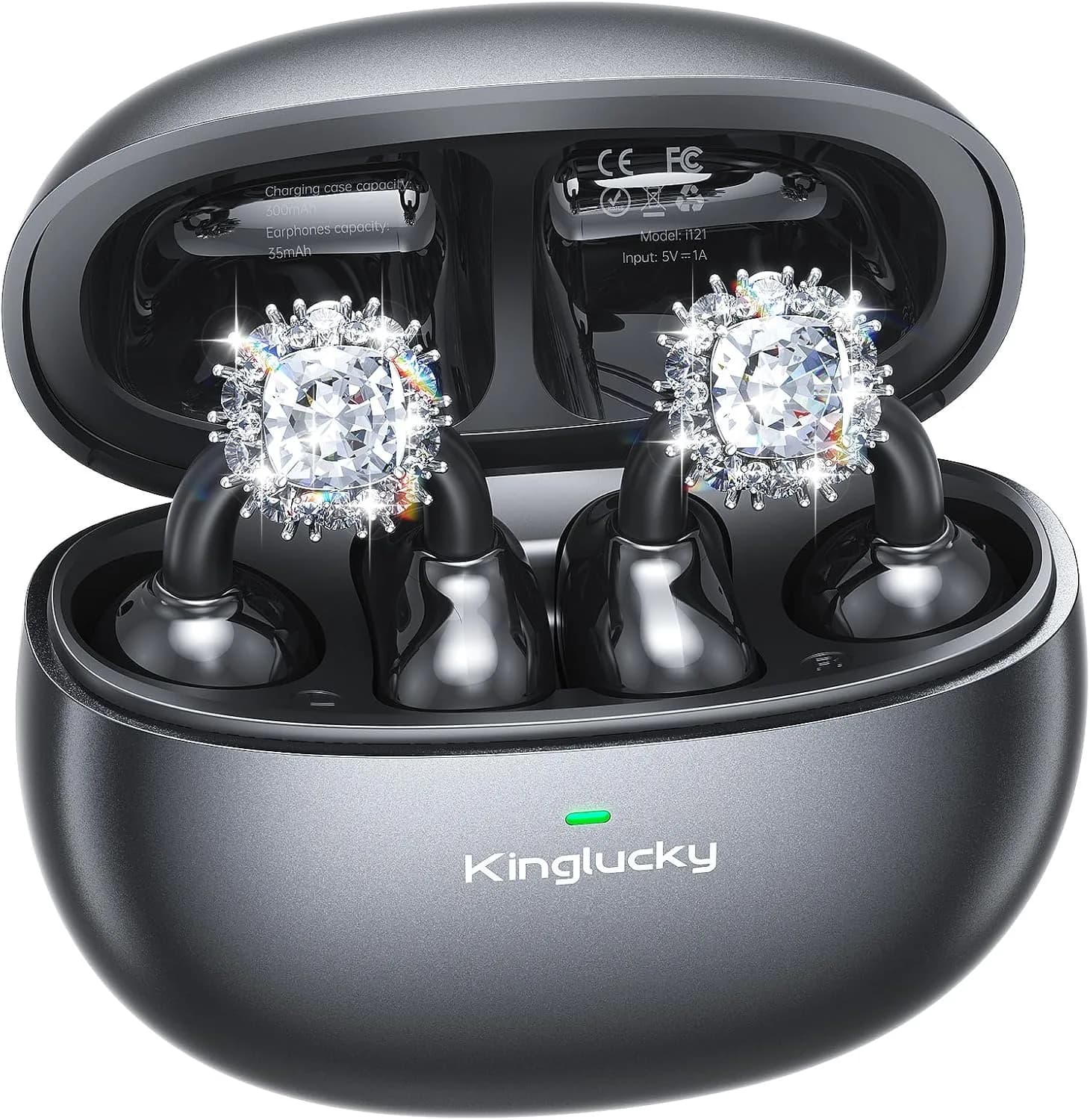
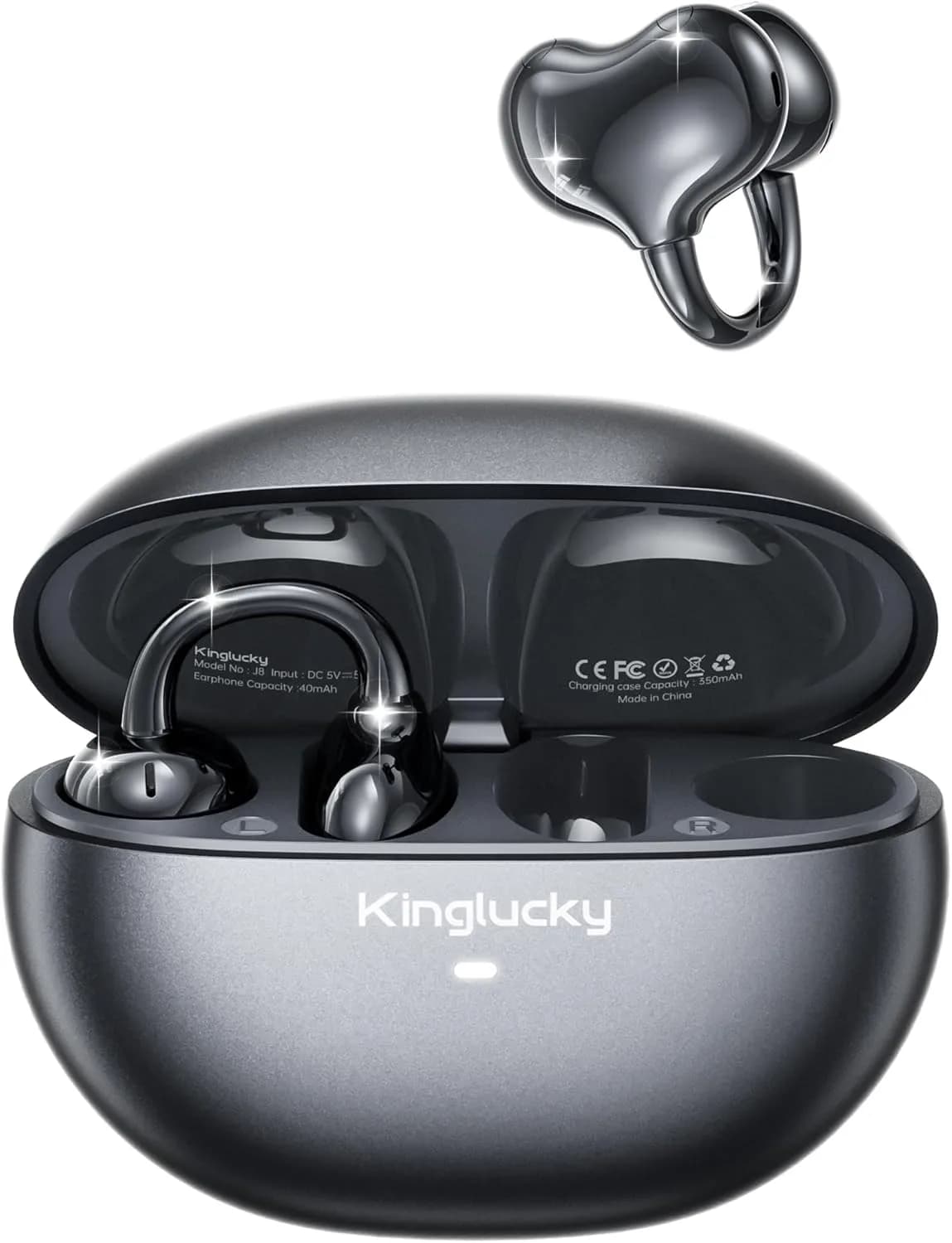
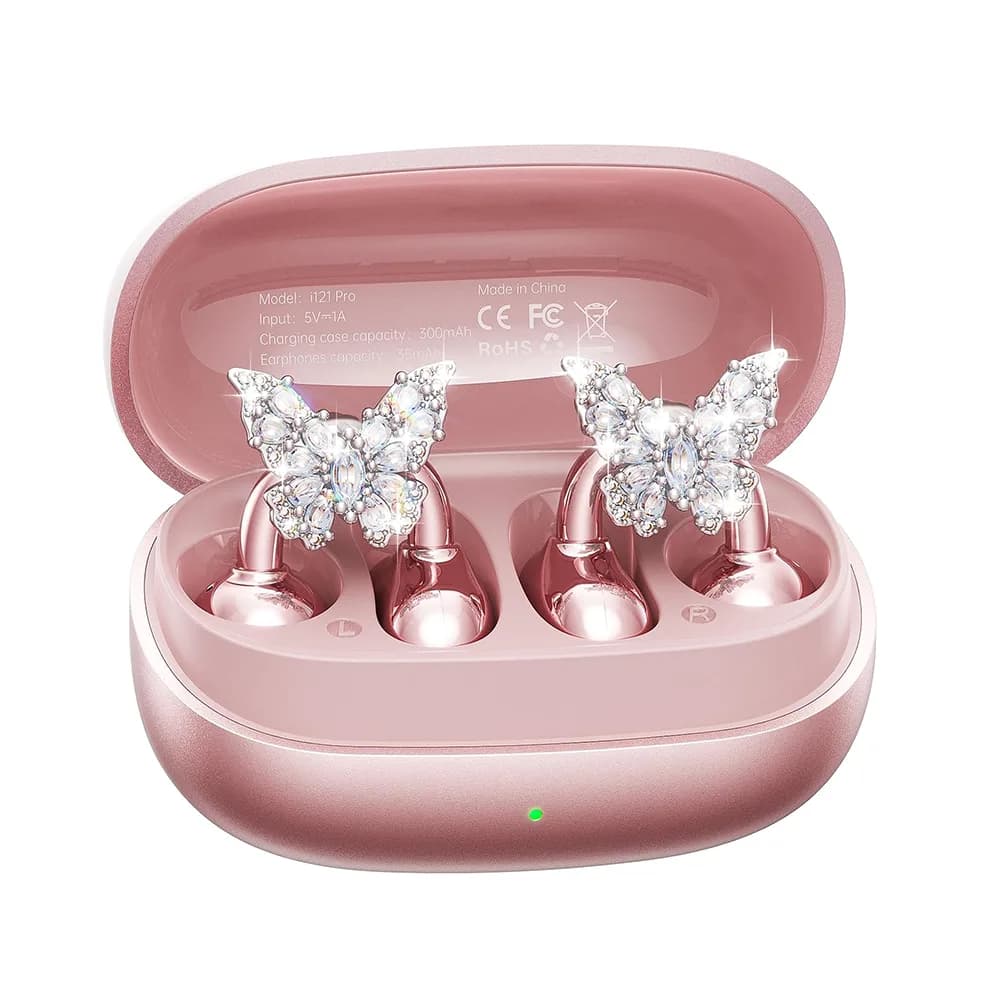
Best Stylish & Innovative Choice — Kinglucky A9 (Open-Ear, Clip-On)
While not a bone-conduction product, Kinglucky A9 is a standout open-ear, air-conduction alternative for shoppers who want lifestyle design plus running-capable stability. Its clip-on silhouette uses soft-touch contact points and shape-friendly clips to position an open-ear driver near (not inside) the canal, preserving awareness for urban miles and daily errands. A directed acoustic path helps focus sound toward the ear, while an elevated water-resistance rating and long total system battery support training blocks and commutes. If your priority is a set that blends seamlessly into everyday outfits but still feels secure on a jog, A9 is a compelling cross-over choice for the lifestyle/fashion category of open-ear wear.
Best Budget-Friendly Model — Essential Features, Smart Price
Casual joggers and new adopters don’t need every premium feature. A good budget set covers the essentials: reliable wraparound fit, sweat resistance, stable connection, and enough single-charge hours for your typical run plus a podcast commute. If calls matter, test mic clarity in a quiet room; if you train outside frequently, prioritize an IP rating you trust. Budget doesn’t mean “basic”—it means you’re spending where performance is most noticeable for your routine.
- What to prioritize: Stable geometry, dependable Bluetooth, baseline IP protection.
- Nice to have: Quick-charge and a storage pouch for gym bags.
Open Ear Bone Conduction vs Other Open-Ear Headphones
Bone conduction and open-ear air-conduction have the same goal—keep you aware—yet they differ in execution and feel. Here’s the quick comparison:
- Awareness: Both preserve ambient sound; bone conduction keeps the canal totally open, which some runners and cyclists prefer for road awareness.
- Sound signature: Bone conduction typically has lighter sub-bass; open-ear air-conduction can sound a touch fuller in the low-mids because it still moves air toward (but not inside) the canal.
- Comfort: Bone conduction removes canal pressure entirely; air-conduction open-ear avoids tips but rests near the canal with clips/hooks/off-ear frames.
- Use cases: Choose bone conduction for maximal awareness and reliable cheekbone coupling; choose air-conduction open-ear if you want a more “speaker-near-the-ear” presentation and wider design variety (clip, hook, lifestyle silhouettes).
Buying Guide — How to Choose the Right Model
Not every runner or commuter needs the same feature mix. Use this checklist to match a headset to your life:
- Intended use: Roads and bike lanes demand awareness and a secure wrap; pools require a swim-rated model with onboard storage; office days call for great mics and multipoint.
- Comfort & fit: If you wear glasses, check for hot spots where frames meet the band. If you run in caps/headbands, confirm the transducers maintain cheekbone contact.
- Battery plan: Align single-charge stamina with peak workouts; if you’ll wear the same set all day, consider total system endurance and fast top-ups.
- Durability/IP: Hot, humid climates and long mileage weeks justify higher IP ratings and materials that hold shape after sweat exposure.
- Connectivity: If you train with a GPS watch and a phone, multipoint and quick reconnection smooth out handoffs; stable outdoor links are essential for pace prompts and coaching cues.
- Budget: Spend where you feel it: fit security, battery, and mics. Skip codecs or features you won’t use in motion.
Market Trends & Future Outlook
- Growing sports adoption: As more athletes favor safety-first listening, bone-conduction lines continue to broaden—especially at higher IP ratings and stabilized frames.
- Improved vibration drivers: New transducer materials and tuning techniques aim to deliver clearer mids and more satisfying low-end without compromising awareness.
- AI-assisted calling: Mic arrays and algorithmic noise filtering are becoming standard, making mid-run and on-commute calls more practical.
- Hybrid open-ear ecosystems: Expect more cross-over designs—bone conduction for max awareness, plus lifestyle-oriented open-ear air-conduction (like clip-ons) for office-to-track flexibility.
Conclusion
The best open ear bone conduction headphones are the ones that balance safety, comfort, stability, and sound for your lifestyle. Road runners and cyclists should focus on secure wraparound frames, dependable controls, and weather-ready IP ratings. Swimmers need submersion-rated models with onboard storage. Office and hybrid users benefit from strong mics and multipoint. And if you want a style-forward open-ear that still works for a jog, consider innovative designs like Kinglucky A9 alongside sports-focused leaders. Choose the category that fits your day, match the features to your routine, and you’ll land on a set that disappears—so your training and life can take center stage.
FAQ
Are bone conduction headphones good for running?
Yes—especially for road and mixed-use paths where awareness is critical. You’ll hear traffic, bikes, and course cues while keeping coaching prompts and music playing. Look for stable wraparound frames and an IP rating that matches your climate.
Do bone conduction headphones work underwater?
Bluetooth isn’t reliable underwater, so swim-ready bone-conduction headsets typically include onboard music storage. Choose a model with explicit swim-grade waterproofing and follow the manufacturer’s depth/time guidance.
Are bone conduction headphones safe for ears?
Bone conduction bypasses the eardrum and leaves the ear canal open, which many people find comfortable for long wear. As with any audio device, keep volumes at responsible levels to protect hearing over time.
Which brands make the best bone conduction headphones?
Sports-focused brands lead in road-safe frames and high IP ratings, while other companies offer swim-specific models or office-ready variants with stronger microphones. If you prefer a lifestyle look with open-ear comfort (air-conduction), consider clip-on designs like Kinglucky A9 as a stylish alternative for daily wear and light runs.
Recommended Products