Best Open Ear Headphones for Running

Best Open Ear Headphones for Running: A Runner’s Buying Guide to Safety, Fit, and Battery
Runners searching for best open ear headphones for running usually want something more specific than a generic gadget list. On the road or trail, you need a headset that stays put at pace, keeps you aware of traffic and other runners, and survives sweat, rain, and long miles. This guide is built entirely around the running scenario—no detours—so you can choose the right open ear running headphones for your goals, terrain, and training block.
What Runners Need from Open Ear Headphones
Open-ear designs rest on or near the ear without sealing the ear canal. That single choice changes everything for runners: better awareness, less ear fatigue, and a more natural feel over long sessions. To pick wisely, use this run-specific checklist:
- Secure, movement-proof fit: The frame (clip, hook, or band) should lock in without pinching. You want zero wobble on corners, strides, and hill repeats, and no hot spots where glasses rest.
- Sweat & water resistance (IP rating): For training in variable weather, IPX4 is the functional minimum; many athletes prefer IP55 or higher for seasonal heat and summer storms.
- Lightweight design: On tempo runs or long slow distance, “barely there” is the feeling to chase. Soft contact points and balanced geometry reduce fatigue.
- Battery life for endurance: Aim for enough single-charge time to cover your longest run, with quick-charge for forgetful mornings. If you stack doubles, a higher total system battery (earbuds + case) is a bonus.
- Bluetooth stability outdoors: Parks and city blocks can generate interference. Look for fast reconnection, steady signal with GPS watches, and smooth handoffs between phone and watch if you use both.
Why Open Ear Headphones Are Ideal for Running
Runners value awareness—and for good reason. With open-ear, you can hear bikes, cars, dogs, race officials, and training partners while listening to coaching cues, metronome beats, or a favorite playlist. Because there’s no ear-canal seal, you also avoid pressure and moisture buildup that can make long efforts uncomfortable. The practical outcome: safer outdoor running, less fiddling, and a more sustainable listening habit across high-mileage weeks.
Best Open Ear Headphones for Running — Category Picks
Instead of a single ranked list, these picks are grouped by running use case. Choose the lane that matches your priorities, then compare secondary features like controls, case size, and finish.
Best for Marathon Training — Long Stamina + All-Day Comfort
Marathoners need a headset that can go long when you do. Favor models known for extended single-charge stamina, quick top-ups, and a fit that stays consistent when your form changes late in the run. A stable open-ear frame that doesn’t pinch earns big points here. Prioritize:
- Single-charge endurance that outlasts your longest long run.
- Quick-charge that adds meaningful playback in minutes.
- Contact points that won’t create pressure hot spots during 2–3 hour sessions.
Runner’s note: If you sync structured workouts to a watch, check that your headphones reconnect quickly after brief signal interruptions (e.g., tunnel sections, water stops).
Best for Outdoor Safety — Maximum Situational Awareness
If your routes mix traffic lights, bike lanes, and busy paths, maximum awareness trumps everything. Look for designs that keep ears fully open, use a wraparound or hook geometry for consistent placement, and offer physical buttons you can press with winter gloves. For city runners and pre-dawn miles, this category is often the most confidence-inspiring.
- Ears remain unobstructed to preserve ambient sound.
- Stable band or hook that resists jostle at pace.
- Physical controls you can hit reliably under sweat or cold.
Best Lightweight Design — “Barely There” for Speedwork
Interval days and progression runs ask for a headset that disappears. Off-ear (air-conduction) designs that float near the canal can feel exceptionally light while preserving awareness. You sacrifice some sub-bass compared to sealed earbuds, but you gain comfort that makes it easier to focus on form, cadence, and breathing.
- Minimal clamp and featherweight housings.
- Stable geometry that won’t shift during strides.
- IP rating sufficient for sweat and light rain.
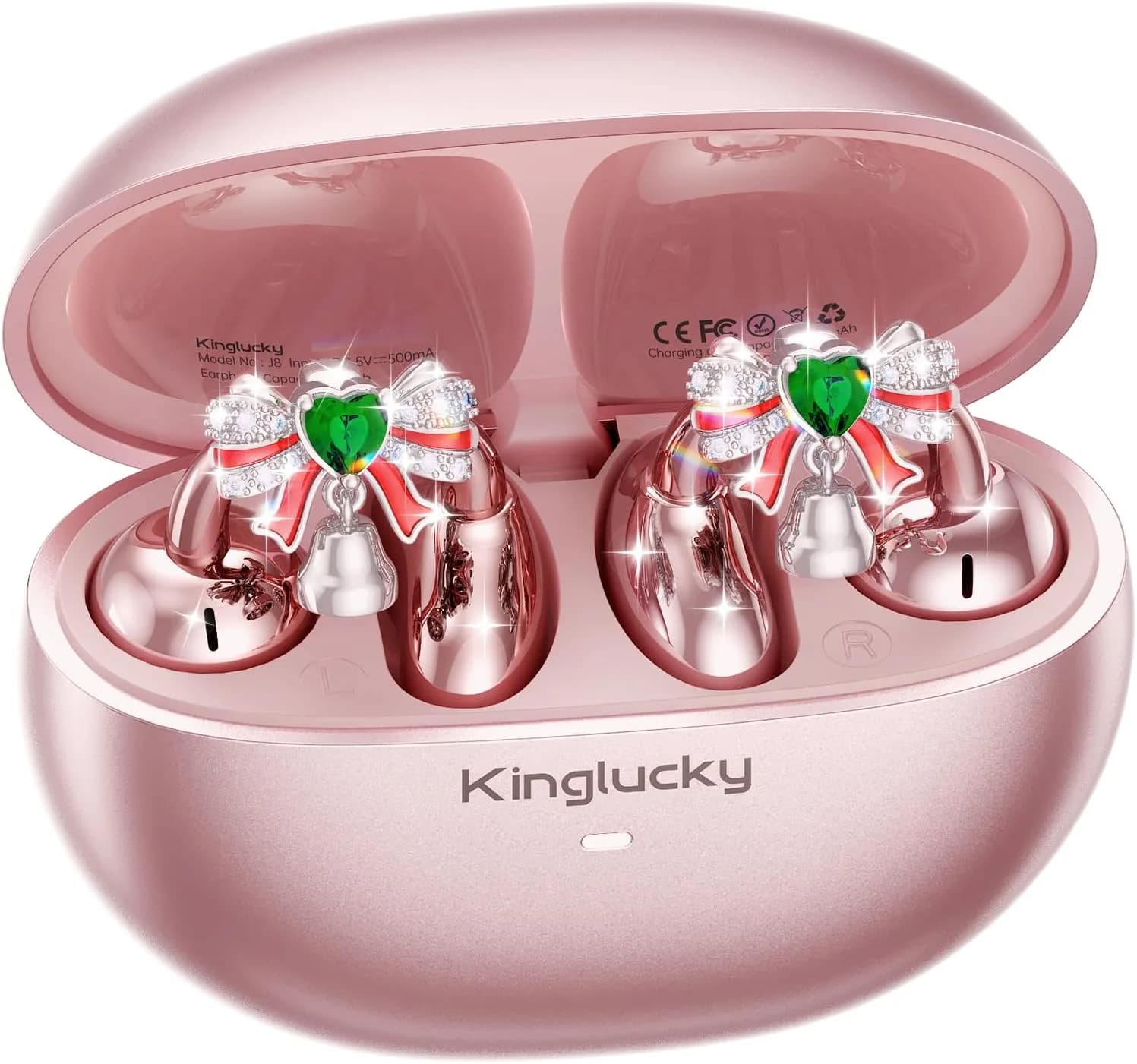
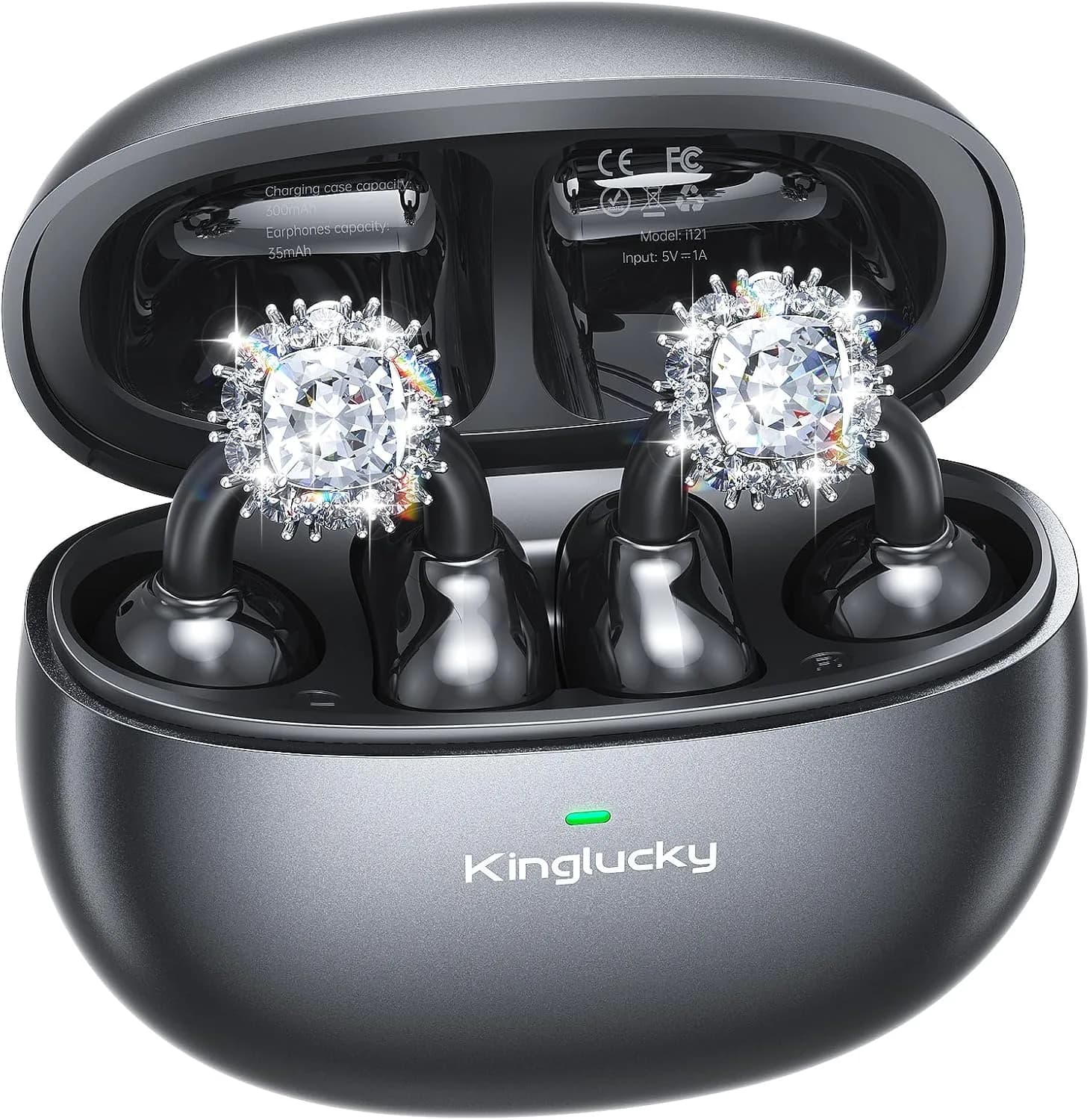
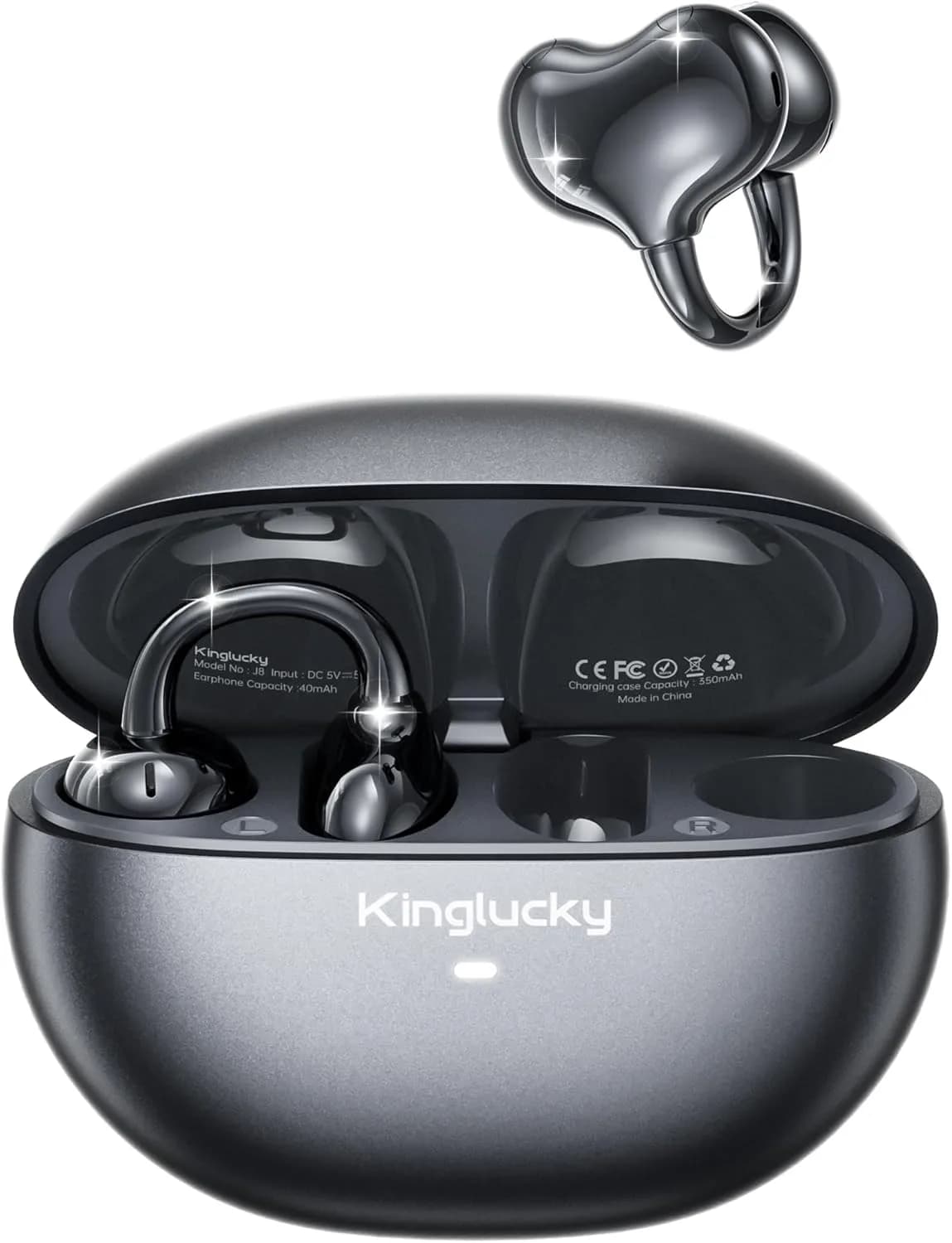
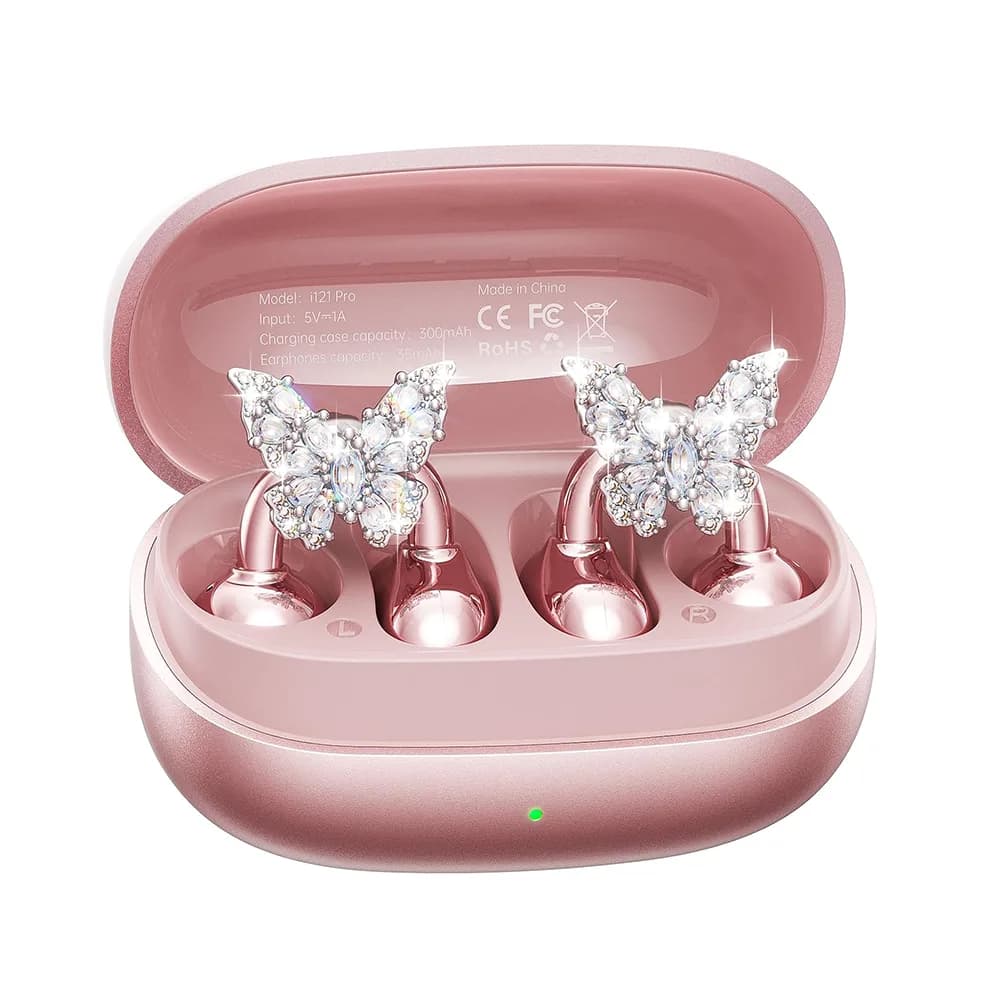
Best Stylish Running Choice — Kinglucky A9 (Secure Clip-On + Fashion-Forward)
Not every runner wants an overtly “sporty” look. Kinglucky A9 takes a clip-on, open-ear approach that blends a secure hold with an accessory-like silhouette for seamless transitions from track to street. The earclips use soft-touch materials with shape-memory flexibility to stabilize the driver near the ear without sealing the canal. A directed acoustic path helps keep audio focused toward you, maintaining awareness on busy routes.
- Secure, glasses-friendly clips: Designed to stay put through tempo efforts and easy to wear with frames.
- Open-ear comfort: No canal pressure, less fatigue on longer runs.
- Daily-life versatility: A design that fits morning miles and the rest of your day without shouting “gym gear.”
- Runner-ready protection & endurance: A high water resistance rating and long total system battery (earbuds + case) support training blocks and commutes alike.
Runner’s note: As with most air-conduction open-ear models, aligning the clip so the driver faces the canal improves clarity and low-end presence. Take a minute to micro-adjust before your warm-up.
Best Budget Pick for Casual Joggers — Affordable, Reliable, Aware
If you run a few times a week or mainly on treadmills, a budget-friendly open-ear set can cover essentials without the premium price. Look for a simple, stable fit, straightforward controls, and enough battery to handle your typical run plus a commute or two. A pocketable case that tops up quickly adds a lot of convenience for weekend warriors.
- Solid baseline IP rating (IPX4 or above) for sweat protection.
- Enough single-charge time for your longest routine run.
- Reliable connection with phones and common running watches.
Open Ear vs In-Ear for Running
Many athletes move from sealed in-ears to open-ear once they start running outdoors regularly. With in-ears, you gain isolation and bass but lose awareness—less than ideal around cars, cyclists, and intersections. Open-ear flips the trade-off: you keep the world audible, which often feels safer and more natural when pacing with a partner or listening for course cues.
- Awareness vs immersion: Open-ear preserves street sound; in-ear delivers heavier bass and isolation.
- Comfort profile: Open-ear avoids canal pressure and tends to stay comfortable longer on high-mileage days.
- Use case split: Many runners prefer open-ear outside and may still use sealed in-ears for gym strength sessions or travel.
How to Choose the Right Model for Your Running Style
The “best” choice is the one that fits your specific training pattern. Use this quick decision grid to narrow the field:
Distance & Duration
- Short to mid-distance (5K–10K): Prioritize light weight and secure geometry (clip, hook, or small band). If you do frequent intervals, favor physical buttons over touch to avoid mis-taps.
- Half to full marathon: Target extended single-charge stamina or fast top-ups. Check that the headset stays comfortable as posture shifts late in the run.
Route & Environment
- Urban/outdoor: Put safety first—choose the most open designs for maximal awareness. Higher IP ratings help in variable weather.
- Treadmill/indoor track: Awareness is less critical; you can favor comfort and tuning. Battery and IP become secondary concerns.
Fit & Ergonomics
- Glasses wearers: Look for soft, contoured clips that don’t create pressure where frames sit.
- Hair & headwear: If you wear caps or headbands, ensure the frame shape still aligns the drivers correctly.
- Controls: Physical buttons are glove-friendly; touch controls are lighter and sleeker but can misfire when adjusting fit mid-run.
Battery Strategy
- Single-charge needs: Match battery to your longest planned run plus a buffer for cool-down and commute.
- Total system life: If you’ll wear the same headset all day, a case that adds several recharges keeps you out of the red.
Market Trends — Open-Ear Sports Audio
The open-ear category has grown quickly as more runners adopt safety-first listening. Several trends are shaping the gear you’ll see in the next training cycle:
- Longer battery & faster top-ups: Endurance-focused models continue to push single-charge times and offer quick boosts before a workout.
- Refined acoustics: Air-conduction designs are getting better at directing sound toward the canal for clearer mids and improved low end without sacrificing awareness.
- Higher IP ratings & durable materials: Heat and sweat are a reality for runners; water resistance and flexible alloys are improving comfort across seasons.
- Style-forward silhouettes: Clip-on designs—like the Kinglucky A9—blur the lines between fitness gear and daily accessories, encouraging all-day wear from commute to track.
- Smarter call noise handling: Multi-mic arrays and algorithmic filtering make it easier to take mid-run calls without wind dominating the conversation.
Conclusion
The best open ear headphones for running are the ones that balance safety, comfort, stability, and battery life for your training. If marathon-length stamina is the priority, choose a long-running model with quick-charge insurance. For city routes and pre-dawn miles, pick the safest, most open design you can wear confidently at pace. If you want a barely-there feel for speedwork, chase lightweight off-ear geometry. And if you’d like a set that doubles as a style piece, Kinglucky A9 offers a secure clip-on fit, open-ear comfort, and everyday aesthetics that move from morning miles to the rest of your day. With the right match, your headphones will disappear—and your running will take center stage.
FAQ
Are open ear headphones safe for running outdoors?
Yes. Open-ear designs keep the ear canal unsealed so you can hear traffic, bikes, course officials, and training partners. Responsible volume still matters, but awareness is the main reason runners choose them over sealed in-ears outside.
Do open ear headphones fall off while running?
Good running sets shouldn’t. Look for secure clips, hooks, or a wraparound band. The goal is a locked-in feel without hot spots. Micro-adjust driver alignment before your warm-up to improve stability and sound.
What IP rating is best for running headphones?
For most runners, IPX4 handles sweat and light rain. If you train in heat, humidity, or variable weather, IP55 or higher provides extra protection and peace of mind.
Are open ear headphones good for marathon training?
They can be excellent if you pick a model with enough single-charge stamina and a fit that stays comfortable late into long runs. Quick-charge support is useful when stacking workouts during peak weeks.
How do open ear running headphones sound compared to in-ears?
Expect a more natural, airy presentation with clear mids for coaching cues and vocals. You’ll trade some sub-bass and isolation for awareness and comfort—often a smart swap on outdoor routes.
Recommended Products