What Are Open Ear Headphones? Definition, Types & Uses

What Are Open Ear Headphones? A Clear, Authoritative Guide to Definition, Design, Types, Benefits, and Drawbacks
If you’ve ever searched “what are open ear headphones”, you’ve likely noticed two patterns. First, many pages answer the question with product lists rather than a true explanation. Second, the terminology can be confusing—especially when bone conduction gets mixed in with open-ear designs that still use air to carry sound. This article fixes both problems. It is a neutral, in-depth resource that explains the open ear headphones meaning, the open ear headphones definition, how they work, the types of open ear headphones, and when they make sense for everyday life.Open-ear listening has grown popular as people look for ways to enjoy audio while staying aware of the world: runners hearing traffic, commuters catching platform announcements, parents listening for a child, or professionals who need quick conversations without constantly removing earbuds. Below, we unpack the “why” and the “how” so you can evaluate this category on its own terms rather than through the lens of traditional in-ear or over-ear gear.

Definition – What Are Open Ear Headphones?
At the simplest level, open ear headphones are headphones or earphones designed to deliver sound without sealing the ear canal. Instead of inserting a tip deep into your ear (like most in-ear models) or clamping a cup around your ear (like over-ears), open ear products rest on or near the outer ear and allow ambient sound to mix naturally with your music or calls.Key traits that define open ear headphones:
No occlusive seal: The ear canal remains open to outside sound.Ambient awareness by design: Hearing your surroundings isn’t a side effect; it’s the core philosophy.
Comfort-first ergonomics: Because there’s no in-ear pressure, many people can wear them longer with less fatigue.
Directed sound path: Most designs still use air conduction (more on that below), guiding sound toward the eardrum while minimizing leakage to bystanders.
This open ear headphones definition is distinct from “open-back” over-ear headphones used by audiophiles. Open-back models are still over-ear and can be quite isolating physically; they’re “open” because of perforated earcups that vent the driver chamber. Open ear is about leaving the ear canal itself unsealed.
How Do Open Ear Headphones Work?
Most open ear models use air conduction—the same basic principle as traditional headphones. A small driver (usually a dynamic driver) vibrates, pushing air in a directed path toward your ear. Instead of relying on a sealed tip to trap sound in your canal, the design shapes and aims the audio so it reaches your eardrum while the ear remains open.How air-conduction open ear designs guide sound:
Driver placement: Near the tragus, concha, or just outside the ear canal.Acoustic channels and baffles: Small ducts or waveguides funnel sound toward your ear while reducing spill to the sides.
Ergonomic geometry: Clips, hooks, or frames keep the driver consistently aligned with your ear anatomy.
How This Differs from Bone Conduction
Bone conduction headphones are sometimes grouped with open ear products because they also leave the ear canal unsealed. But the underlying physics differ:Air conduction: Vibrates air, which travels into the ear canal to the eardrum (most open ear designs).
Bone conduction: Vibrates bone (typically the cheekbone) to transmit sound directly to the inner ear, bypassing the eardrum.
Bone conduction maximizes awareness because it leaves the canal completely unobstructed, but it often delivers less bass and a different timbre than air-conduction designs. In other words, bone conduction is related to open ear (similar wearing intent) yet distinct in how it produces and delivers sound.
Types of Open Ear Headphones
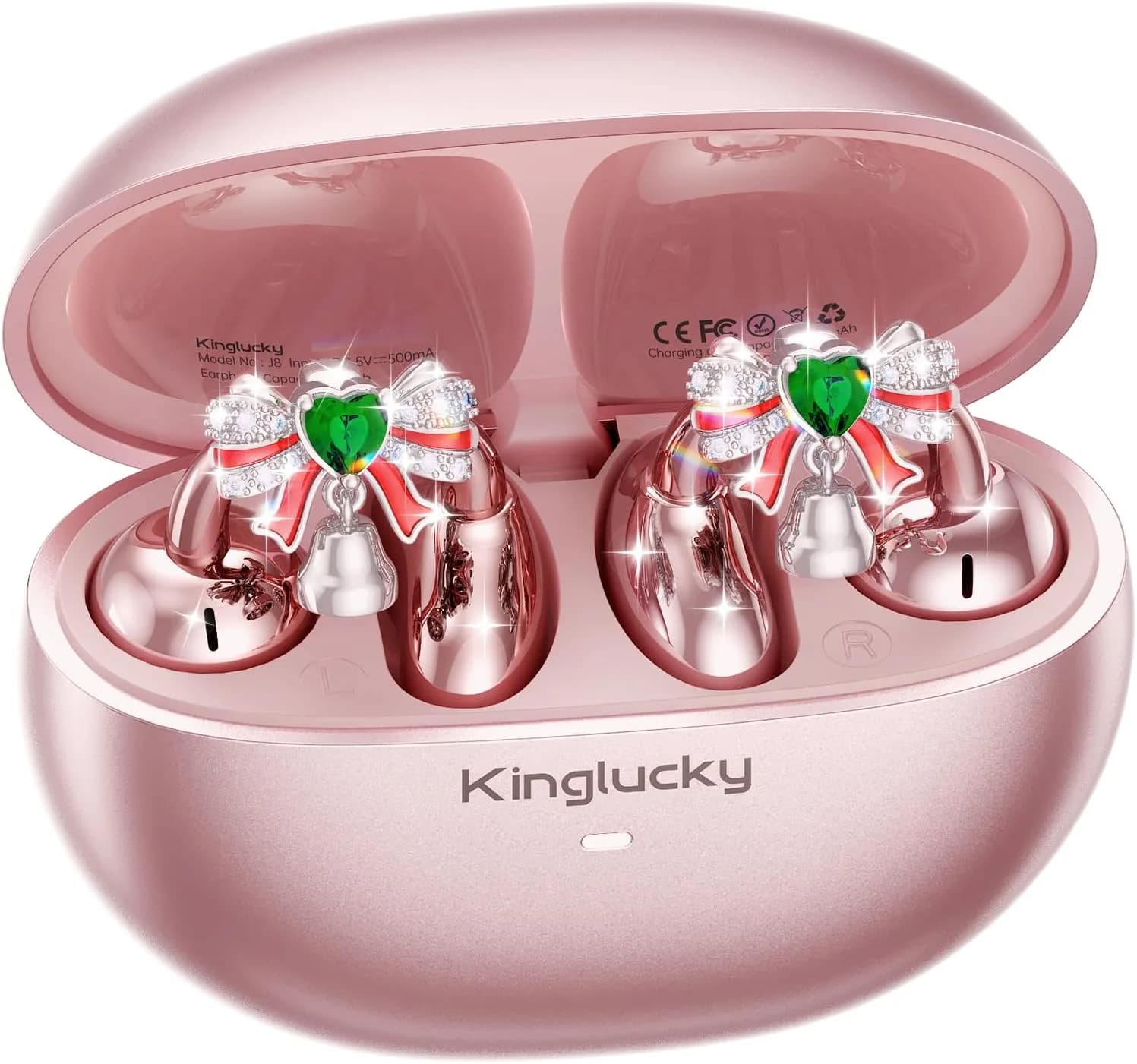
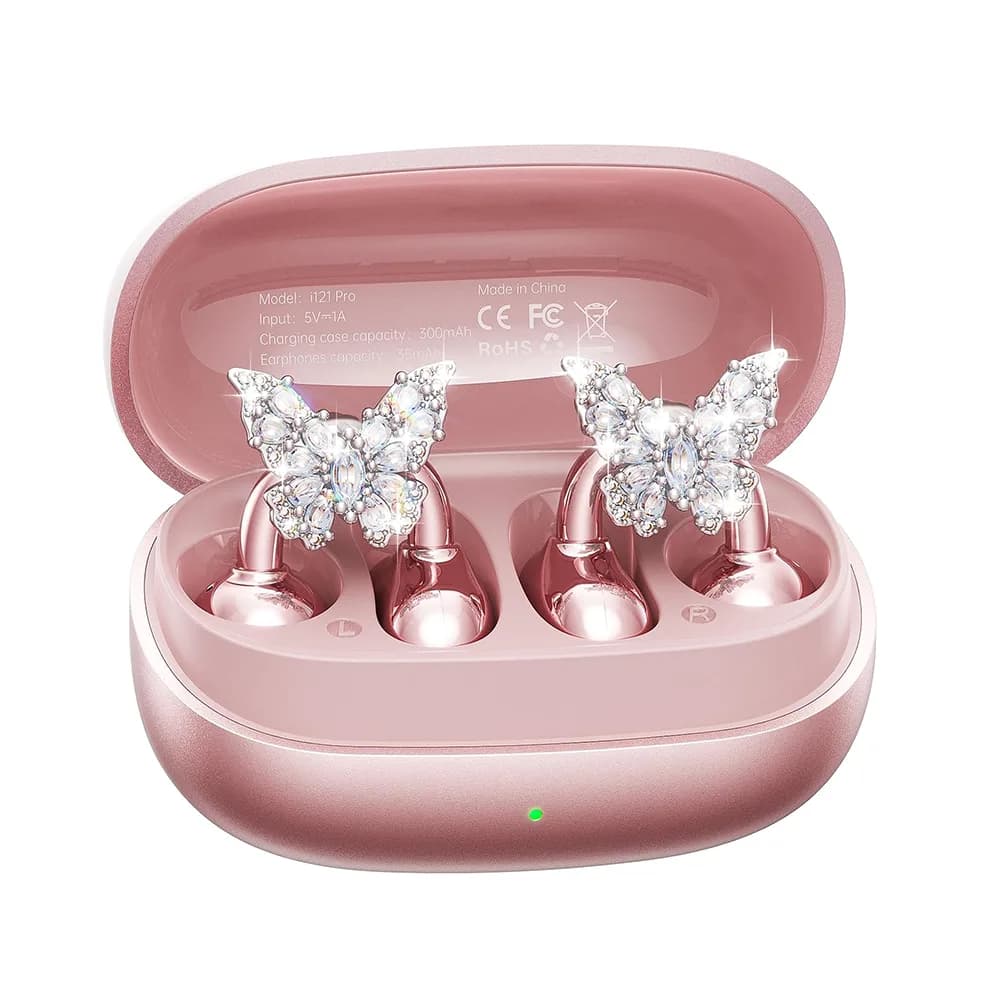
The category includes multiple form factors. Understanding the types of open ear headphones helps you match ergonomics and behavior to your daily routine.1) Clip-On / Ear-Clip Style
Design: A lightweight driver housing attaches to a soft clip that hugs the outer ear’s cartilage (often the antihelix or earlobe area).Fit philosophy: Minimal pressure, designed for all-day comfort and easy on/off during conversations.
Use cases: Office and hybrid work, casual listening, walking in the city, errands, and style-oriented wear where you don’t want “gym gear” aesthetics.
Pros: Discreet, glasses-friendly, and easy to pair with hairstyles. The open fit greatly reduces ear-canal fatigue.
Trade-offs: Because they sit slightly away from the canal, bass is lighter than sealed in-ear earbuds; wind can affect perceived clarity outdoors.
2) Over-Ear Hook Style
Design: A hook wraps behind the ear, holding a driver near the canal entrance without sealing it.Fit philosophy: Security + comfort, good for light workouts and commuting.
Use cases: Running on predictable routes, gym sessions, daily travel, hands-free calls.
Pros: More secure than simple clips; generally better stability when moving quickly.
Trade-offs: The hook can conflict with glasses arms for some people; fit quality depends on the hook’s flexibility and padding.
3) Headband Open-Ear Models
Design: A band wraps behind the head or neck, positioning drivers near each ear without sealing.Fit philosophy: Locked-in alignment for consistent sound direction—popular with runners and cyclists.
Use cases: Sports, outdoor commuting, hiking; activities where even pressure and balance help.
Pros: Very stable; tends to preserve driver placement even during vigorous movement.
Trade-offs: The band is more visible; under helmets, hats, or long hair, the geometry may require adjustment.
4) Bone Conduction (Related but Distinct)
Design: Pads press on the cheekbone, vibrating bone to transmit sound to the inner ear.Fit philosophy: Maximum awareness, ears fully unobstructed.
Use cases: Road running, cycling on traffic-heavy routes, swimmers (for waterproof variants), some accessibility scenarios.
Pros: Ears remain completely open; situational awareness is excellent.
Trade-offs: Bass and overall fidelity are typically less immersive than air-conduction. Some users experience tickling or vibration sensations at higher volumes.
Benefits of Open Ear Headphones
Open ear listening solves problems that traditional earphones can’t always address. Below are the primary benefits, regardless of style.1) Comfort for Long Wear
Because there’s no in-ear seal, open ear designs avoid pressure buildup and the “plugged” sensation some people dislike. The result is lower fatigue over long sessions—ideal for people who keep audio on throughout the day for podcasts, calls, or lo-fi background music.2) Awareness of Surroundings
Open ear is built for situational awareness. You can hear traffic, bicycles, alarms, doorbells, platform announcements, or a coworker calling your name—all while listening. For many runners and urban commuters, that awareness is the primary reason to choose open ear.3) Reduced Ear-Canal Fatigue and Moisture
Sealed tips can trap heat and moisture in the canal during exercise or hot weather, which may feel uncomfortable for some users. Open ear designs reduce these issues, making them appealing for daily wear and sweaty conditions alike.4) Natural Social Interaction
Because you can keep hearing the room, it’s easier to converse without removing your headphones—useful in offices, kitchens, classrooms, or retail environments where quick exchanges are frequent.5) Glasses and Accessories Friendly
Many open ear shapes—especially clip-on and flexible hooks—can coexist with eyeglasses and sunglasses more comfortably than over-ear headbands or tightly sealed in-ear models, depending on your anatomy.Drawbacks and Limitations
Open ear headphones aren’t perfect for every context. Recognizing the inherent trade-offs ensures you evaluate them fairly.1) Possible Sound Leakage
Because the ear remains open, some sound can leak outward, especially at higher volumes or in very quiet rooms. Directional acoustic channels reduce this, but open ear will never be as private as sealed in-ear sets.2) Less Immersive Bass than In-Ear
A sealed canal reinforces low-frequency response. Open ear gives you awareness and comfort at the expense of sub-bass weight and isolation. For bass-heavy tracks or cinematic immersion, traditional in-ear or over-ear designs may be preferable.3) Not Ideal for Noisy Environments
Open ear lets noise in—that’s the point. In loud trains, busy cafés, or construction zones, your music shares space with the environment. Some users appreciate this; others find it distracting.4) Wind Susceptibility Outdoors
Open designs can pick up wind noise on fast runs or rides. Proper driver alignment and wind-screened mic systems help, but physics limits total mitigation.5) Fit Security Varies by Anatomy
Ear shapes differ. What feels ultrasecure to one person may feel loose to another, especially with clip-ons. Trying different styles (clip, hook, headband, bone conduction) often resolves this.Common Usage Scenarios
Open ear shines in situations where awareness and comfort outrank isolation.Sports & Running
Why open ear works: You can hear approaching traffic, footsteps, course officials, or running partners while maintaining a steady rhythm.What to consider: Stability (hook or headband designs are popular), sweat resistance (an IP rating suitable for your climate), and controls you can operate mid-stride.
Cycling & Outdoor Commuting
Why open ear works: Urban riders and e-scooter users benefit from maximum awareness of horns, sirens, and conversations around them.What to consider: Helmet compatibility, wind noise behavior, and driver placement that remains consistent under motion.
Office & Studying
Why open ear works: Hear coworkers and announcements; keep background audio or focus music at low volume without isolating yourself from the room.What to consider: Call quality, multipoint pairing (for laptop and phone), and leakage control if you work in quiet areas.
Casual Listening & Home Use
Why open ear works: Cook, clean, care for family, or relax while staying tuned to doorbells, timers, and conversations.What to consider: Battery life for all-day wear, a pocketable case, and ergonomic materials that don’t irritate skin.
Accessibility and Awareness-First Needs
Why open ear works: For people who need constant environmental awareness or dislike ear-canal pressure, open ear provides a comfortable, consistent solution.What to consider: If maximum awareness is crucial, bone conduction may be the closest fit, acknowledging its sonic trade-offs.
Why They’re Becoming Popular
Several broader trends explain the rising interest in open ear listening.1) Health-Conscious and Comfort-First Behavior
People are increasingly attentive to long-term comfort, ear hygiene, and the downsides of constant isolation. Open ear addresses those concerns by minimizing occlusion and reducing ear fatigue.2) Hybrid Work and Always-On Connectivity
Between video calls, voice messages, and podcasts, many users wear audio devices for hours. Open ear makes that sustained use more comfortable while supporting quick conversations without constant removal and reinsertion.3) Wearables and Bluetooth Improvements
Modern Bluetooth chips offer better connection stability and power efficiency, while compact batteries enable longer playtime in lightweight shells. As wearables blur the line between accessories and tech, open ear aesthetics (especially clip-on styles) fit the everyday wardrobe better than sporty, bulky gear.4) Safety and Social Awareness
In dense cities, isolation can be a liability. Open ear appeals to users who want to hear the environment by default—an intuitive safety feature rather than a separate “transparency mode.”5) Category Maturity and Design Diversity
With multiple form factors—clip, hook, headband, and bone conduction—the category offers choice for different anatomies, fashion preferences, and activity levels. That diversity helps more people find a comfortable, practical fit.Practical Considerations (Without Turning This into a Buying Guide)
Although this article focuses on explanation rather than recommendations, a few neutral considerations help set expectations:Volume discipline: Because you hear the environment, you may be tempted to raise volume. Keep levels moderate to protect hearing and reduce leakage.
Fit testing: If possible, try two different styles (e.g., clip vs. hook). Anatomy varies; the right geometry matters more than any spec sheet.
Battery plan: If you’ll wear them all day, check per-charge hours and case capacity. Open ear encourages longer sessions, so real-world endurance counts.
Mic behavior: If calls matter, test in wind and busy rooms. Mic arrays and noise reduction can differ widely between models and styles.
Conclusion
So, what are open ear headphones? They are headphones designed to deliver audio while keeping the ear canal open, allowing ambient sounds to mix naturally with your music and calls. By using air conduction (and, in related products, bone conduction), these designs prioritize comfort, safety, and situational awareness over isolation and heavy bass. That’s why they’re increasingly popular for running, urban commuting, hybrid work, and long, everyday listening sessions.If you came here for the open ear headphones meaning, the open ear headphones definition, or a taxonomy of the types of open ear headphones, you now have a complete picture: clip-on, over-ear hook, headband open-ear, and bone conduction (related but distinct). The right choice depends on your anatomy, environment, and priorities. Evaluate where you listen, how long you wear headphones, and how much awareness you need—and you’ll know whether open ear fits your lifestyle.
FAQ
What are open ear headphones used for?
Open ear headphones are used when you want audio plus awareness. Typical scenarios include running, cycling, walking in traffic, office work, studying, and casual home listening where you’d like to hear timers, doorbells, or conversations without constantly removing your headphones.Are open ear headphones the same as bone conduction?
No. Many open ear models use air conduction (sound travels through the air into your ear canal, which remains unsealed). Bone conduction is related—your ear canal stays open—but the transducers vibrate your cheekbone to transmit sound to the inner ear. Both keep you aware; they simply deliver sound differently.Do open ear headphones have good sound quality?
They can deliver clear mids and natural vocals, which is excellent for podcasts, voice calls, and acoustic music. However, because the canal isn’t sealed, deep bass is generally lighter than with in-ear designs. If heavy isolation and sub-bass are your top priorities, traditional in-ear or over-ear models may serve you better.Who should buy open ear headphones?
Consider open ear if you:Prefer long-wear comfort without ear-canal pressure.
Need situational awareness (runners, cyclists, urban commuters, parents).
Work in environments where quick conversation matters.
Want a design that sits on or near the ear rather than inside it.
Are there different types of open ear headphones?
Yes. The main categories are clip-on/ear-clip, over-ear hook, headband open-ear, and bone conduction (related but distinct). Each balances stability, comfort, and visibility differently, letting you choose what suits your routine.
Recommended Products