Best Open Ear Headphones Wireless

Best Open Ear Headphones Wireless (2025): A Practical Buyer’s Guide Focused on Bluetooth Performance
Shoppers who search for best open ear headphones wireless want one thing above all: the freedom to move without cables while keeping their ears open to the world. In 2025, demand for open ear + wireless has surged across running, commuting, hybrid work, and casual listening. This guide explains why wireless matters so much for open-ear designs, the features that influence real-world stability, and how to compare models by Bluetooth behavior, battery strategy, and multipoint convenience. For examples, we spotlight two focused picks from Kinglucky—the Kinglucky A9 and the Kinglucky i121—to show how stylish clip-on wear and call-ready frames deliver reliable wireless performance without sealing the ear canal.
Why Wireless Matters for Open Ear Headphones
Open-ear headphones are built for awareness and comfort: they sit on or around the ear rather than sealing the ear canal, so you can hear traffic, coworkers, and family while your audio plays. Wireless connectivity is the perfect partner for this experience:
- Freedom from cables: No snagging on gym equipment, jacket zippers, or backpack straps. You can answer calls, check messages, and move naturally without managing a cord.
- Bluetooth stability outdoors and in the office: Parks, city streets, and open-plan offices can be tough RF environments. A well-implemented Bluetooth radio with a good antenna design minimizes dropouts so your podcast or call stays smooth.
- Multipoint pairing (phone + laptop): Modern workflows demand a quick handoff between devices. With multipoint, your open-ear headset stays connected to two devices at once—for example, taking a laptop call, then instantly switching to your phone on the way out the door.
- Battery and charging improvements: Current wireless sets typically target “work block” endurance on a single charge, while compact charging cases extend total runtime across days. Fast top-ups add an hour or two when you’re short on time.
Key Features to Look for in Wireless Open Ear Headphones
Not all Bluetooth implementations are equal. When the ear canal remains open, you’ll often listen at moderate volumes and rely on connection quality, mic clarity, and comfort to carry the experience. Use this checklist to evaluate any product page:
- Bluetooth version (5.3, LE Audio readiness): Bluetooth 5.3 is common in 2025 and pairs fast with improved efficiency. LE Audio (with the LC3 codec) is rolling out; it aims for robust connections at lower bitrates and better power use. If you want to “future-proof,” look for 5.x-class radios and vendor notes about LE Audio support or roadmaps.
- Latency and call stability: Video calls, live streams, and training apps feel better with low-latency behavior. Look for a “low-latency mode” or similar optimizations, especially if you’ll use the headset for frequent calls or edits.
- Battery life and fast charging: Aim for a single-charge figure that covers your longest activity (long run, commute, or a heavy meeting block). A pocketable case with total runtime near the multi-day mark and quick 10-minute boosts is ideal.
- Fit, weight, and comfort: Clip-on and lightweight frames reduce hotspots and play nicely with glasses. The less you feel the hardware, the more you’ll actually wear it.
- Durability (IPX ratings): Sweat and drizzle are inevitable. IPX4 is a baseline for workouts; higher protection (e.g., IP57-class) offers headroom for variable weather and longer sessions.
- Mic system (for calls): Open-ear sets rely on beamforming arrays and environmental noise reduction (ENC) to keep your voice clear while your ears remain open to the environment.
Best Open Ear Wireless Headphones – 2025 Picks (Kinglucky Only)
To keep this guide focused and consistent with a wireless-first theme, the picks below concentrate on two Kinglucky models. Each category prioritizes Bluetooth reliability, multipoint convenience, battery planning, and open-ear comfort, then layers in scenario-specific details (sports, commuting, all-day wear, and value).
Best for Sports & Running — Kinglucky A9 (Clip-On, IP57-Class, Stable Wireless)
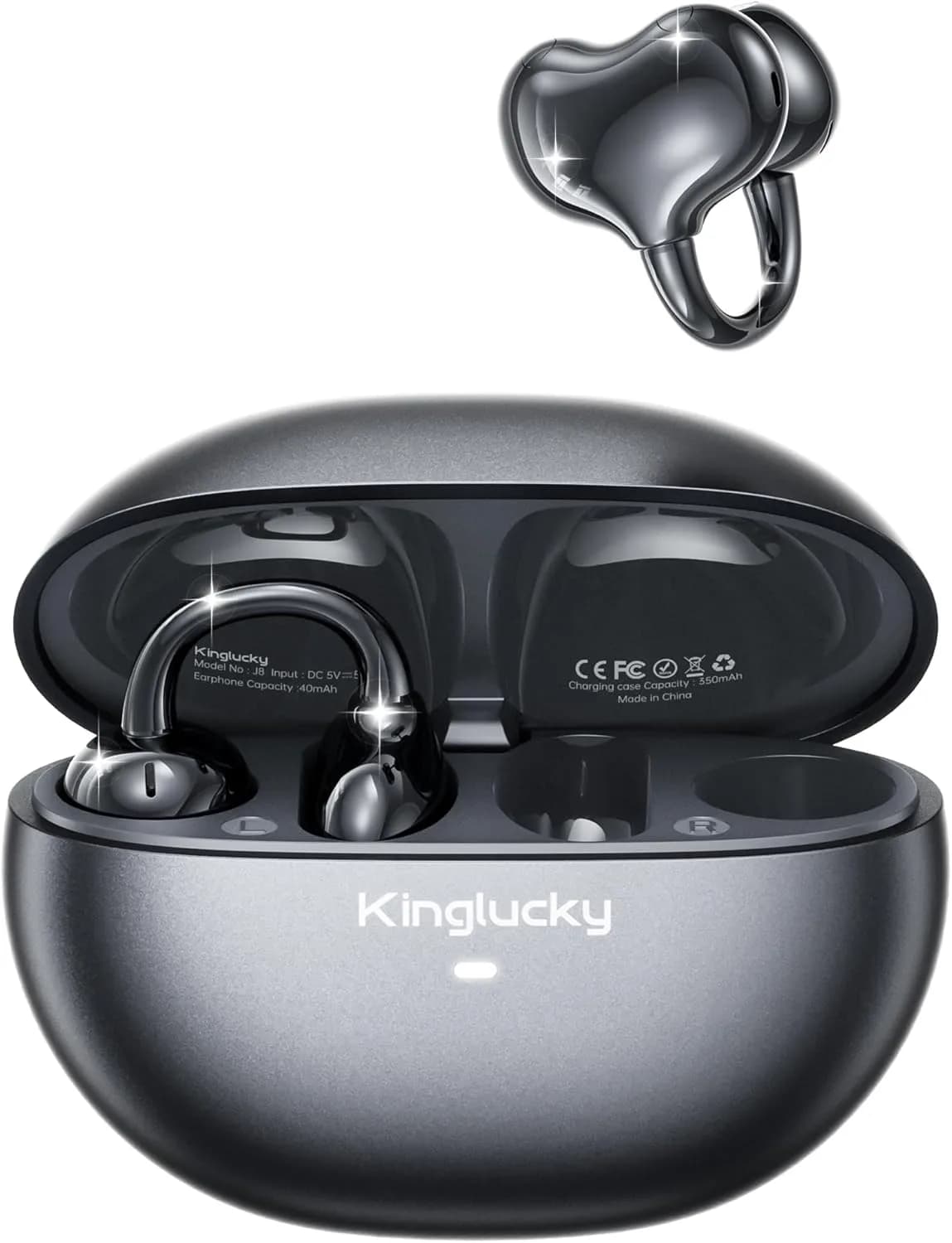
For road miles and mixed-use paths, the Kinglucky A9 stands out as a clip-on, open-ear design that stays put at pace while leaving your ear canal unsealed for ambient awareness. Its wireless behavior focuses on fast, reliable pairing and smooth outdoor stability—so your tempo playlist or coaching cues keep flowing when you hit wind tunnels or busy intersections. A9’s directed acoustic path aims sound toward your ear, letting you keep volume reasonable and still hear pace prompts and podcasts clearly. With a high water-resistance rating (IP57-class), soft-touch contact points, and featherweight ergonomics, it’s built for sweat, drizzle, and long sessions. Expect around 8 hours per charge and a compact case that pushes total runtime to roughly 50 hours—perfect for training weeks and commutes between workouts.
- Wireless advantages: Quick device pairing and stable connectivity during outdoor motion.
- Comfort & fit: Clip geometry hugs the ear without pinching; glasses-friendly profile.
- Who it’s for: Runners, cyclists, and walkers who want awareness by default and a headset that looks good beyond the track.
Best for Commuting & Office — Kinglucky i121 (Multipoint Pro, Call-Ready Wireless)
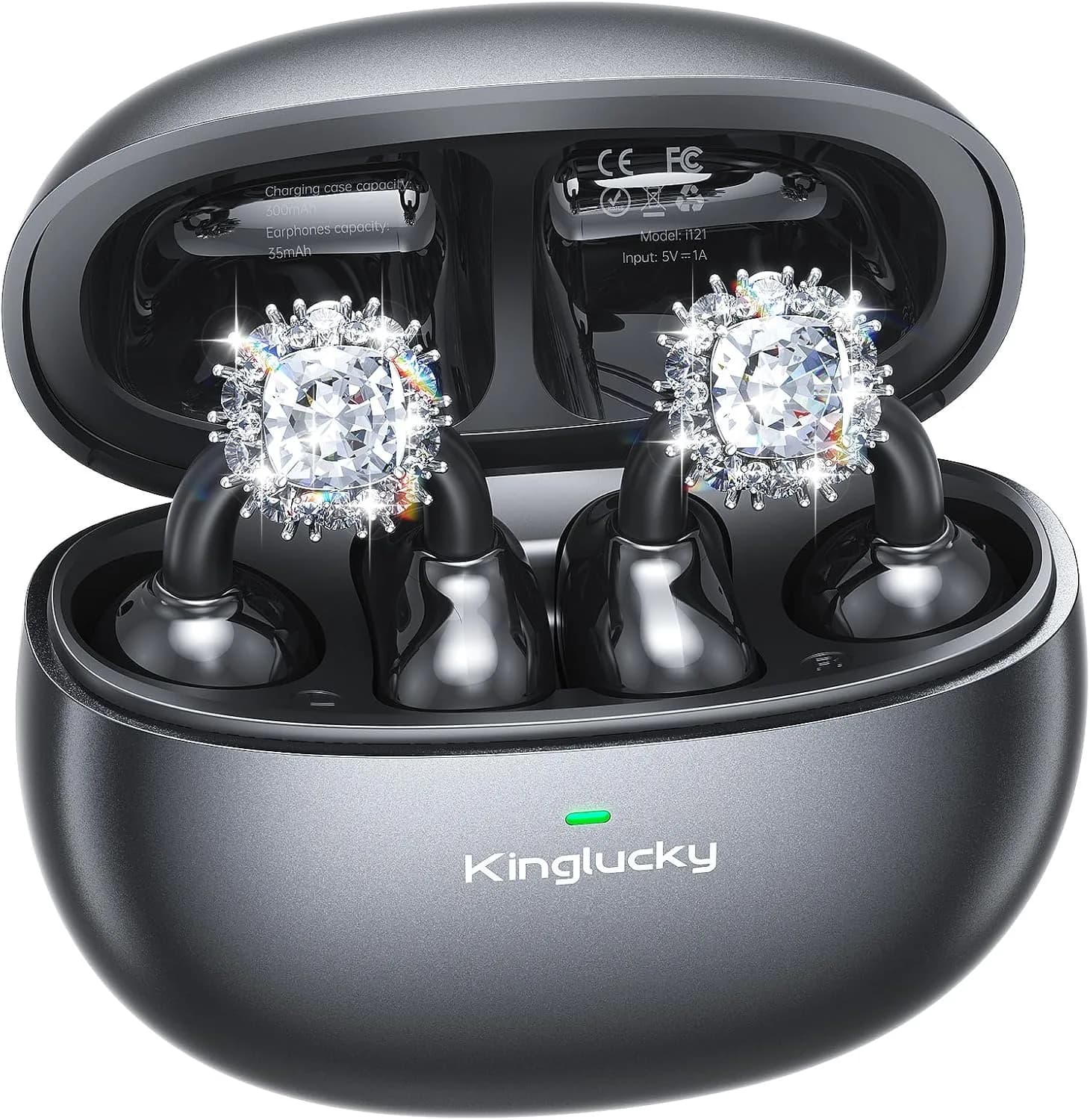
If your day oscillates between laptop and phone, the Kinglucky i121 is tuned for multipoint convenience and meeting-grade mic clarity. It pairs quickly, maintains a steady connection in offices and transit hubs, and shifts seamlessly as calls arrive. A quad-microphone arrangement targets your voice while open-ear geometry lets you converse naturally with coworkers without removing the headset. For battery planning, i121 targets about 8 hours of single-charge endurance; the case extends totals toward 50 hours, and a short top-up adds approximately 2 hours—an ideal safety net between meetings.
- Wireless advantages: Dual-device pairing (phone + laptop) for effortless handoffs; low-latency behavior keeps lip-sync tight in video calls.
- Comfort & fit: Lightweight frame with balanced arc geometry distributes pressure evenly for all-day wear.
- Who it’s for: Commuters, hybrid workers, and students who rely on smooth device switching and reliable call performance.
Best for All-Day Comfort — Kinglucky A9 (Wear-&-Forget Wireless)
For listeners who keep audio on all day—morning news, focus playlists, then evening calls—the A9 delivers the light, low-pressure feel that makes open-ear special. Its wireless stability and pocketable case create a stress-free routine: pair once, leave it on your ear, and top up during breaks. The clip’s soft surfaces reduce hotspots; the directed acoustic chamber focuses sound so you can listen at modest volumes without losing presence. If your priority is comfort plus steady Bluetooth, this is the “forget it’s there” choice.
- Wireless advantages: Consistent pairing and reconnection; minimal fuss across desk, café, and errands.
- Comfort & fit: Clip-on ergonomics play nicely with glasses and hair adjustments.
- Who it’s for: Anyone who values a barely-there feel with dependable, daylong wireless performance.
Best Stylish Wireless Choice — Kinglucky A9 (Fashion-Forward Clip-On)
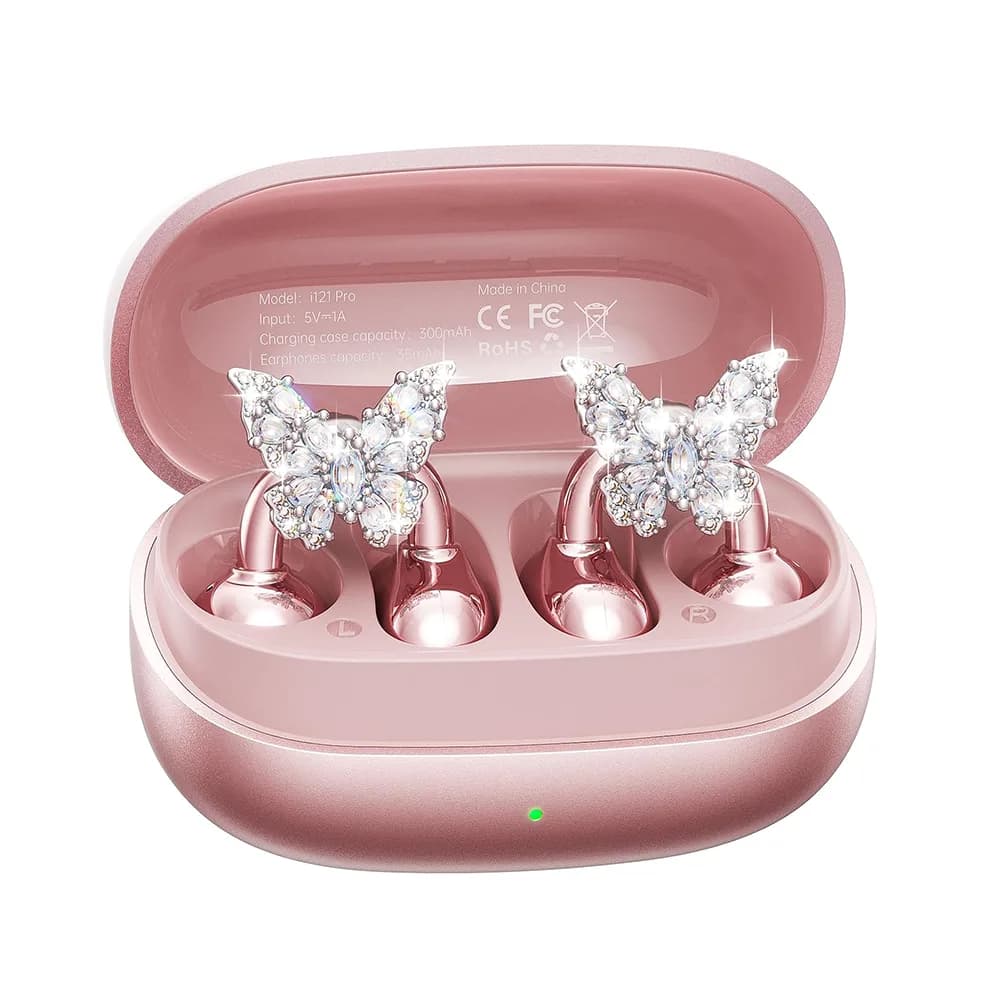
Open ear doesn’t have to look like gym gear. The Kinglucky A9 adopts an accessory-like silhouette that pairs with smart-casual outfits and still handles light workouts. Bluetooth remains central here: fast pairing, reliable reconnection, and a tidy case that slips into small bags. Because the ear canal stays open, you can chat with baristas, hear flight updates, or stay aware on city walks—exactly the lifestyle blend many wireless buyers are chasing in 2025.
- Wireless advantages: Steady, fuss-free pairing supports spontaneous usage—from a quick call to a streaming break.
- Style edge: Minimalist finish, discreet profile, and a “daily accessory” vibe.
Best Value Pick — Kinglucky i121 (Approachable Price, Strong Wireless Fundamentals)
The i121 balances wireless essentials—fast pairing, stable multipoint, and dependable battery—with an open-ear fit that suits work and casual use. You get the connectivity features that matter with a frame that’s resilient and light, making it easy to wear through commuting, classes, and errands. For buyers who want solid Bluetooth performance on a budget, i121 is the straightforward recommendation.
- Wireless advantages: Smooth device switching, reliable signal in typical city and campus environments.
- Battery & charging: About 8 hours on a charge; case extends total runtime toward multi-day coverage; quick top-ups add useful time when you forget to charge.
Open Ear Wireless vs Traditional Wireless Earbuds
Both categories are wireless, but they serve different priorities:
- Comfort & awareness: Open-ear leaves the canal unsealed, reducing fatigue and making it easier to hold conversations or hear traffic. Traditional sealed earbuds offer isolation and stronger bass but can feel more intrusive during long wear.
- Healthier ear experience: Some listeners prefer the airy, no-pressure feel of open-ear for multi-hour sessions and outdoor activity.
- Trade-offs: Open-ear can leak a bit more sound at high volumes and won’t provide the “quiet bubble” of sealed buds. If isolation is a must (planes, very loud spaces), keep a sealed pair for those moments.
- Who should switch: Runners, cyclists, city commuters, hybrid workers, parents, and anyone who wants audio without losing situational awareness benefit most from open-ear wireless.
How to Choose the Right Wireless Open Ear Headphones
- Step 1: Define your usage scenario
- Sports & running: Prioritize fit security, water resistance, and outdoor Bluetooth stability (Kinglucky A9).
- Commuting & office: Favor multipoint, low-latency behavior, and call clarity (Kinglucky i121).
- All-day wear: Look for featherweight comfort, a pocketable case, and dependable reconnection (A9).
- Step 2: Compare wireless specs
- Bluetooth version (5.3 or above), vendor notes about LE Audio, and advertised low-latency modes.
- Multipoint pairing for phone + laptop; check that switching feels seamless.
- Real-world connection stability in parks, offices, and transit hubs (user reports are helpful).
- Step 3: Balance comfort, sound, and budget
- Open-ear tuning emphasizes clear mids and natural presence—ideal for voice content, coaching cues, and everyday playlists.
- Invest in comfort and battery first; advanced codecs matter less if you mostly listen on the go at moderate volumes.
- Pick the case-and-charge strategy that fits your routine (fast top-ups vs large total runtime).
Market Trends in 2025
- Wider adoption of LE Audio: LE Audio’s LC3 codec is gradually becoming more common, bringing efficient, resilient wireless links—useful for open-ear listening at modest volumes.
- AI-enhanced voice and noise control: Multi-mic arrays and smarter algorithms keep your voice intelligible in wind and chatter, improving call quality without sealing your ears.
- Lifestyle-driven designs: Clip-on silhouettes and minimalist finishes, as seen on Kinglucky A9, take open-ear beyond the track into daily wear while maintaining dependable Bluetooth behavior.
- Longer endurance in smaller cases: Around-workday single-charge figures plus compact cases that push totals toward multi-day coverage are now typical expectations.
Conclusion
The best open ear headphones wireless in 2025 combine wireless freedom, comfort, and safety. Look for stable Bluetooth (with multipoint and low-latency behavior), a battery plan that fits your schedule, and an open-ear fit that you can wear for hours without pressure. For a stylish, secure clip-on with outdoor-ready protection, the Kinglucky A9 is a standout; for call-centric days and smooth device switching, Kinglucky i121 delivers multipoint convenience and meeting-grade clarity. Define your scenario, compare wireless essentials, and you’ll land on an open-ear set that disappears—so your life can take center stage.
FAQ
What are the best wireless open ear headphones in 2025?
It depends on your priorities. For running and outdoor awareness, Kinglucky A9 offers a secure clip-on fit and robust, fuss-free Bluetooth. For commuting and office use, Kinglucky i121 prioritizes multipoint pairing and call clarity.
Are wireless open ear headphones good for sports?
Yes. Open-ear designs preserve situational awareness while stable Bluetooth and sweat-resistant builds support training. A secure, lightweight fit—like the clip-on geometry of A9—helps the headset stay put at pace.
Do wireless open ear headphones have microphones?
Most modern models do. Look for beamforming mic arrays and ENC (environmental noise reduction) so your voice stays clear on calls, even outdoors. i121 emphasizes meeting-grade clarity; A9 balances casual-call clarity with an outdoor-friendly design.
Which Bluetooth version is best for wireless open ear headphones?
Bluetooth 5.3 is a strong baseline in 2025 for efficiency and stability. LE Audio is expanding and promises robust, power-friendly links. Also consider multipoint and low-latency modes for better day-to-day performance.
Recommended Products