What Age Is a Kids Microphone Good For? A Parent’s Guide
What Age Is a Kids Microphone Good For? A Parent’s Guide to Confidence, Learning, and Fun
From toddlers to tweens, here’s how to match the right microphone—and the right features—to your child’s stage of growth.
Jump to:- Introduction — why parents look for kids microphones
- Understanding age & development
- Recommended age ranges
- Safety, durability & sound quality
- Fun features kids love
- How karaoke builds confidence & learning
- Choosing the right mic by age
- Real-life usage scenarios
- Example product: family-friendly K88 kids karaoke machine
- Conclusion
- FAQ
Introduction: Why parents look for kids microphones
If you’ve watched your child turn a spoon into a “mic” and your living room into a stage, you already know how naturally kids gravitate toward music. A well-designed kids microphone channels that spark into something constructive: clearer speech, stronger rhythm, better memory, and a joyful way to connect with family—without relying on screens. Parents often ask, “What age is a kids microphone good for?” because they want to support creativity while staying mindful of safety and developmental readiness.
In this guide, we break down age-appropriate recommendations—from toddlers to later elementary years—along with safety checks, sound-quality basics, and the fun extras (like echo, voice effects, and LED lights) that keep practice playful. We’ll also show how a compact kids karaoke machine with two microphones can transform birthdays, playdates, and rainy afternoons into memory-making moments.
Understanding kids’ age and musical development
Every child is unique, but certain patterns are common:
- 18 months–3 years Toddlers imitate sounds and enjoy call-and-response. Musical play supports language and turn-taking.
- 3–5 years Preschoolers love simple lyrics and pretend “performer” play. A microphone encourages clear articulation and confidence.
- 6–8 years Early elementary kids memorize full songs, experiment with pitch, and can use basic controls like volume and echo.
- 9–12 years Later elementary kids stage “shows,” try harmonies, and enjoy more realistic audio features and duet modes.
So, what age is a kids microphone good for? With toddler-safe designs, you can begin as early as ~18 months. As children grow, you can add features gradually, ensuring the device stays empowering—never overwhelming.
Recommended age ranges (with practical tips)
Toddlers (18 months–3 years)
What to look for: A safe microphone for children with soft edges, limited volume output, sealed battery compartments, and simple one-button operation. Labels like “best microphone for toddlers” should match real safety details: robust build, non-toxic materials, and easy-to-hold shapes.
How they’ll use it: Repeating words, singing short lines, and imitating animal sounds. Keep sessions short and playful so confidence grows naturally.
Preschoolers (3–5 years)
What to look for: A sturdy mic with basic volume control and a few fun extras—gentle echo, cheerful LED lights, and maybe a couple of voice effects. A compact kids karaoke machine with one or two microphones is perfect for siblings and playdates.
How they’ll use it: Nursery rhymes, theme songs, and group sing-alongs where turn-taking and encouragement become part of the game.
Early Elementary (6–8 years)
What to look for: Better sound quality, Bluetooth pairing, and playful effects (robot, chipmunk, monster) that keep practice fun. A two-mic setup encourages duets and develops listening skills.
How they’ll use it: Memorizing full songs, paying attention to timing, and experimenting with pitch and stage presence. Simple recording options can be motivating.
Later Elementary (9–12 years)
What to look for: Cleaner amplification, smarter DSP, stable Bluetooth, and flexible controls. Multi-mic setups and LED “party modes” support mini-concerts and school-talent-show prep.
How they’ll use it: Choreographing performances, emceeing, or creating duets and harmonies. They’re ready for gear that feels “grown-up” while staying safe.
Safety, durability, and sound quality considerations
Safety checklist
- Volume limiting: Prefer mics with safe max volume or parental control.
- Materials: Smooth edges, non-toxic plastics/coatings, and sturdy housings.
- Power: Sealed batteries/compartments; certified chargers and cables.
- Cords: Short or detachable to reduce tangling risks for younger kids.
- Age ratings: Follow manufacturer guidance and supervise toddlers.
Durability & audio basics
- Drop resistance: Kids will be kids—look for reinforced frames and grills.
- Buttons & dials: Large, tactile, and clearly labeled.
- Mic capsule quality: Even entry-level mics can offer clearer voices with decent tuning.
- DSP/echo: Light processing helps voices sound fuller without overwhelming.
Fun features kids love: echo, voice effects, and LED lights
Features aren’t just bells and whistles—they’re motivation. A sprinkle of echo makes even shy singers sound “stage-ready.” Voice effects invite pretend play. LED lights reinforce rhythm and create a celebratory mood. Consider the following:
- Gentle echo: Adds warmth without masking lyrics. Great for 3+.
- Voice effects: Robot, chipmunk, or monster voices are perfect ice-breakers.
- LED modes: Slow pulse for lullabies; beat-sync for party energy.
- Two microphones: Duets build turn-taking, listening, and confidence.
- Bluetooth & simple pairing: Allows playing karaoke tracks or kids’ playlists.
How karaoke helps confidence and learning
Beyond fun, karaoke is a multi-skill workout. Children practice projection (being heard), pronunciation (clear words), timing (rhythm and pause), and memory (lyrics). Singing also improves mood and reduces stress—kids learn to self-regulate while expressing emotions. Performing for family, even informally, fosters resilience: they try, get applause, and try again. That loop turns “I can’t” into “I can.”
If you’re wondering again, “What age is a kids microphone good for?”—remember that confidence building is a journey, not a single moment. Starting early with a supportive, safe microphone for children helps shy voices blossom at their own pace.
Choosing the right microphone for your child’s age
Match features to stage—not the other way around.
- Toddlers: Big buttons, safe volume, short sessions. Prioritize durability and simplicity.
- Preschoolers: Add echo, gentle LEDs, and maybe 1–2 voice effects. Keep controls intuitive.
- Early Elementary: Introduce Bluetooth pairing, more effects, and a two-mic setup for duets.
- Later Elementary: Look for cleaner sound, DSP assistance, and flexible control over echo/effects.
Whichever path you take, keep supervision age-appropriate and check audio levels regularly—especially for younger ears.
Real-life usage scenarios
- Home concert night: Family members take turns singing favorite songs. Two mics keep siblings engaged.
- Birthday parties: A kids karaoke machine becomes the party game—choose short, upbeat tracks and rotate singers quickly.
- Playdates: Build a “mini talent show.” Duets, emcee roles, and clapping for each other encourage kindness and teamwork.
- Outdoor picnics: Portable speaker + microphones = sing-along in the park (mind neighborhood sound levels).
- Language practice: Karaoke lyrics help with pronunciation and vocabulary for bilingual families.
- School prep: Practice poems, reading with expression, or class presentations using the mic as a confidence tool.
Example product mention: a family-friendly K88 kids karaoke machine
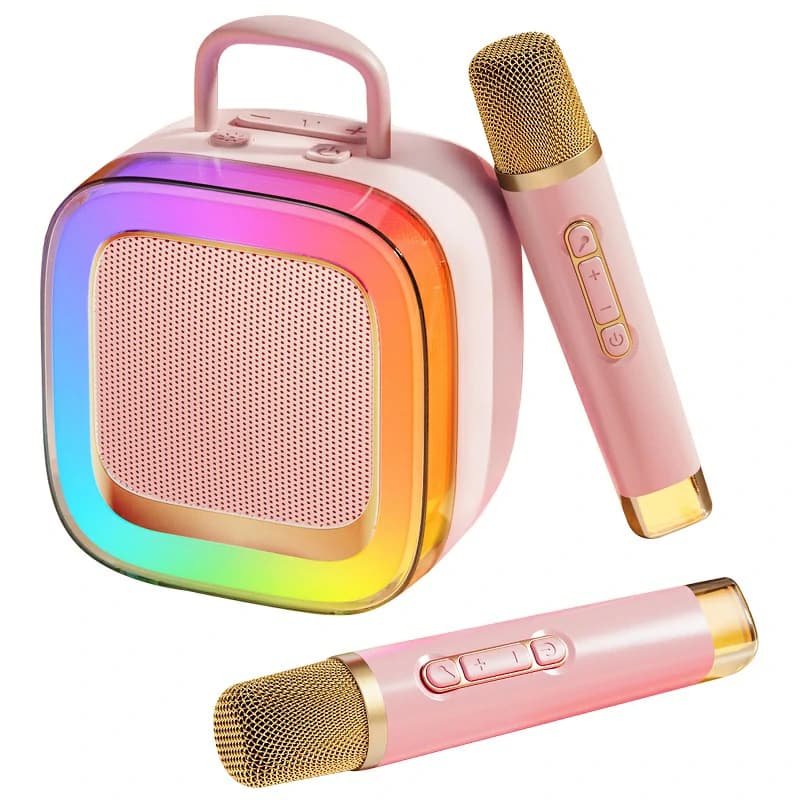
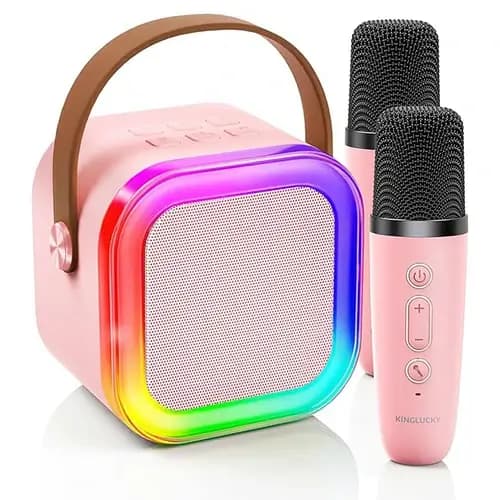
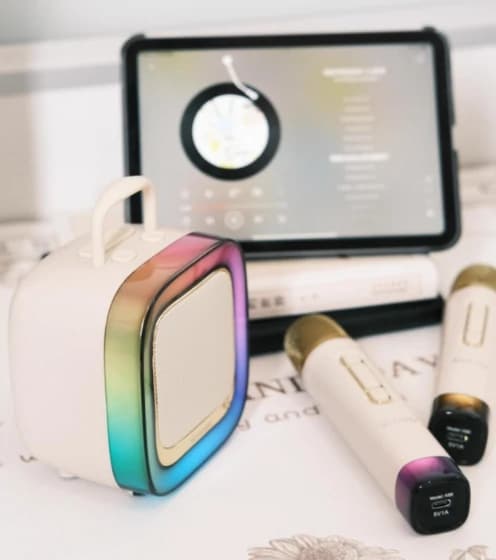
When you want something more than a standalone toy mic, a compact kids karaoke machine can help. For example, the Kinglucky K88 (often used in family settings) combines portable speaker performance with two wireless microphones, simple pairing, and playful effects designed for children. Parents appreciate the volume controls and the option to keep effects subtle for younger singers while older kids can explore echo and voice modes. The two-mic setup is especially helpful for duets and turn-taking, and the carry-friendly design makes it easy to bring the fun to birthday parties or weekend gatherings.
This kind of all-in-one device meets kids where they are: safe enough for younger children when supervised, and versatile enough to stay interesting as skills grow. If your main question is still “What age is a kids microphone good for?”—a flexible system like K88 can serve a wide span from preschool through later elementary, letting you scale features gradually.
Conclusion: Start simple, grow features, keep it joyful
The simplest answer to “What age is a kids microphone good for?” is: start in the toddler years with safety-first designs and then expand features as your child’s needs evolve. Look for durable builds, kid-safe volume, and age-appropriate fun (echo, LEDs, effects). A kids karaoke machine with dual microphones brings the social magic that keeps practice going—and confidence growing.
- Toddlers: Safety and simplicity above all.
- Preschoolers: Add gentle echo, lights, and fun effects.
- Elementary: Bluetooth, two mics, cleaner sound, and more control.
With a safe microphone for children and supportive encouragement, you’re not just buying a gadget—you’re opening the door to expression, learning, and family memories.
FAQ
Is a microphone safe for a 3-year-old?
Yes—if you choose a model designed for toddlers and supervise. Look for rounded edges, sealed battery compartments, and kid-safe volume. Keep sessions short and cheerful.
What features do kids microphones have?
Common features include volume control, gentle echo, simple voice effects, LED lights, and Bluetooth for playing tracks. As children grow, two microphones and cleaner sound quality become especially valuable.
What is the best microphone for toddlers?
The best microphone for toddlers is one that is safe, simple, and sturdy. Prioritize soft edges, limited volume, and big, easy buttons. Add more features later as your child becomes ready.
Do I need a full kids karaoke machine or just a mic?
If your child enjoys duets, parties, or performing for family, a kids karaoke machine with two mics can be worth it. For early exploration, a single safe mic is fine—upgrade when your child wants more features or better sound.
Keywords used naturally: “What age is a kids microphone good for?”, “kids karaoke machine”, “safe microphone for children”, “best microphone for toddlers”.
Recommended Products