Portable Karaoke Machine with 2 Microphones: Buyer’s Guide

Portable Karaoke Machine with 2 Microphones — A Practical Guide for Duets, Parties & On-the-Go Singing
A strong Portable Karaoke Machine with 2 Microphones should deliver duet-ready performance, a quick start you can complete in minutes, stable wireless mics that pair reliably, and a low-latency path that keeps voices aligned with on-screen lyrics—while remaining compact, battery-friendly, and durable enough to travel. Compared with larger living-room systems, portable rigs trade deep bass and complex EQ for speed, simplicity, and mobility. Outdoors, wind handling and surface placement matter; indoors, neighbor-friendly loudness and clear mic etiquette keep sessions fun. This guide covers practical scenarios, portable system archetypes, a weighted scoring rubric, repeatable home tests, plug-and-play setup blueprints, and a neutral feature-based example. Use it to evaluate options logically and build a portable, duet-capable setup that works in apartments, patios, classrooms, and quick office socials without the bulk.

Who Actually Needs a Portable 2-Mic Rig (Real Scenarios)
Apartment or Small Living Room (10–20 m²)
- Constraints: limited space, shared walls, quick teardown.
- Portable-first features: conversation-plus volume, two auto-connecting mics, compact cabinet that parks on a shelf, clear front-panel labels.
Kids’ Birthday / Family Game Night (10–25 m²)
- Constraints: frequent mic hand-offs, playful effects, sticky fingers.
- Portable-first features: dual mics with on-mic mute, light echo and simple voice effects, windscreens for hygiene, robust grille/knob construction.
Tailgate / Picnic / RV / Camping (open or semi-open)
- Constraints: battery power, wind, uneven surfaces.
- Portable-first features: USB-C charging, carry handle/strap, stable feet, foam windscreens, quick phone pairing, weather-sensible placement.
Office Social / Classroom Talent Day (meeting room or hall)
- Constraints: rapid setup/teardown, speech intelligibility, mixed users.
- Portable-first features: clear speech at moderate volume, two mics for host+speaker, intuitive controls, easy mute before passing.
Backyard Patio (Short Sessions, 15–30 m²)
- Constraints: neighbors, breeze, reflective hard surfaces.
- Portable-first features: moderate SPL with midrange clarity, windscreens, speaker positioned in front of singers, fast relocation when needed.
System Archetypes (Portable-Focused Pros/Cons)
- All-in-One Box (Portable): speaker + mixer/effects + dual wireless mics + battery. Fastest start, fewest cables; least deep-dive tweaking.
- Soundbar + Dual-Mic Hub (Semi-Portable): clean look, typically AC-powered; check ARC/eARC/optical for lyric video; not ideal for field use.
- Compact PA + Mini Mixer: higher headroom and control outdoors; heavier; more setup time, stands, and cables.
- Tablet/Phone + Dual Wireless Mics: ultra-portable source; verify app processing and latency; ensure simple parental or content controls when needed.
The Portable Scoring Rubric (Weighting)
Score each category 0–5, multiply by the weight, and add totals for an at-a-glance comparison.
- Wireless Mic Performance & Stability — 25% (RF robustness, range through a room, on-mic mute, handling noise). Validate by walking test and hand-off swaps.
- Connectivity & Latency Path — 20% (lyrics sync, app routing). Validate by clap-sync and comparing ARC/optical vs phone→Bluetooth.
- Ease of Setup & Portability — 15% (start time, carry, weight, case/strap). Time the process from power-on to first chorus.
- Vocal Clarity at Social Volumes — 15% (intelligibility, tasteful echo). Use a pangram read and a talk-sing passage.
- Battery & Charging — 15% (USB-C, runtime at conversation-plus level, quick top-up). Track percentage drop over 30 minutes.
- Durability & Family-Proofing — 10% (enclosure, grilles, knobs, mic windscreens). Inspect build and simulate gentle mishandling.
Two Microphones Matter — Duets, Turn-Taking & Guest-Proofing
- Duet dynamics: set both mic gains conservatively; bring up master volume last so each singer stays clear without feedback.
- RF bands: modern 2.4 GHz or UHF both work in small spaces; keep the receiver away from metal, and avoid stacking it behind the speaker.
- Mic etiquette: 5–8 cm from the mouth, don’t cup the grille, mute before passing, and use foam windscreens for hygiene and plosive control.
Connectivity & Latency — Keep Lyrics and Voice Together
- TV → speaker Bluetooth delay: common source of lip-sync issues. Prefer ARC/eARC or optical from the TV when using on-screen lyrics.
- Purely portable paths: with phone/tablet as the source, test the karaoke app in advance; some add processing delay—move closer to the unit and minimize background apps.
- Mic path basics: wireless receiver → unit DSP (echo/EQ) → speakers. Place the speaker in front of singers to reduce the feedback loop.
Portable Features That Pay Off
- Two wireless microphones (ideally auto-connect) with mic volume and echo knobs on the device.
- Bluetooth input for backing tracks; USB-C (Type-C) charging; battery operation for unplugged sessions.
- Multiple inputs (AUX/USB/TF; optional guitar/PC/TV) for flexible sources and offline playback.
- Physical design: quick on/off, clear labels, carry handle or strap, compact and rugged enclosure that tolerates frequent moves.
- For families: optional LED lights and simple voice effects—keep them tasteful to preserve intelligibility.
Portable vs Mini vs Standard — Quick Comparison
| Aspect | Portable All-in-One (Battery) | Mini Box (Ultra-Compact) | Standard All-in-One (AC) | Compact PA + Mixer |
|---|---|---|---|---|
| Mobility | High | Highest | Medium | Low–Medium |
| Setup Speed | Fast | Fastest | Fast | Slowest |
| Vocal Clarity @ low vol | High | High | High | High |
| Max Loudness/Headroom | Moderate | Low–Moderate | Moderate–High | Highest |
| Battery | Yes | Yes | Rare | Optional |
| Duet (2 Mics) | Common | Common | Common | Flexible |
| Best Use | Parties, patios, travel | Apartments, kids, travel | Living rooms | Basements, larger gatherings |
At-Home Portable Test Plan (5–10 Minutes)
- Lip-Sync Test: play a karaoke video; do a single clap on camera; compare ARC/optical vs phone→Bluetooth paths for delay.
- Mic Feedback Walk: raise mic gain slowly; walk a loop; rotate the box so speakers face away from mics; note the volume at which ringing starts.
- Clarity Read: speak a pangram and a verse; set light echo so consonants stay crisp and words intelligible.
- Battery Reality: run 30 minutes at “conversation-plus” level and record percentage drop to estimate practical runtime.
- Outdoor Check: sing a short chorus facing light wind; use windscreens; angle mics ~45° to the breeze.
A Neutral, Portable Example (Feature Illustration)
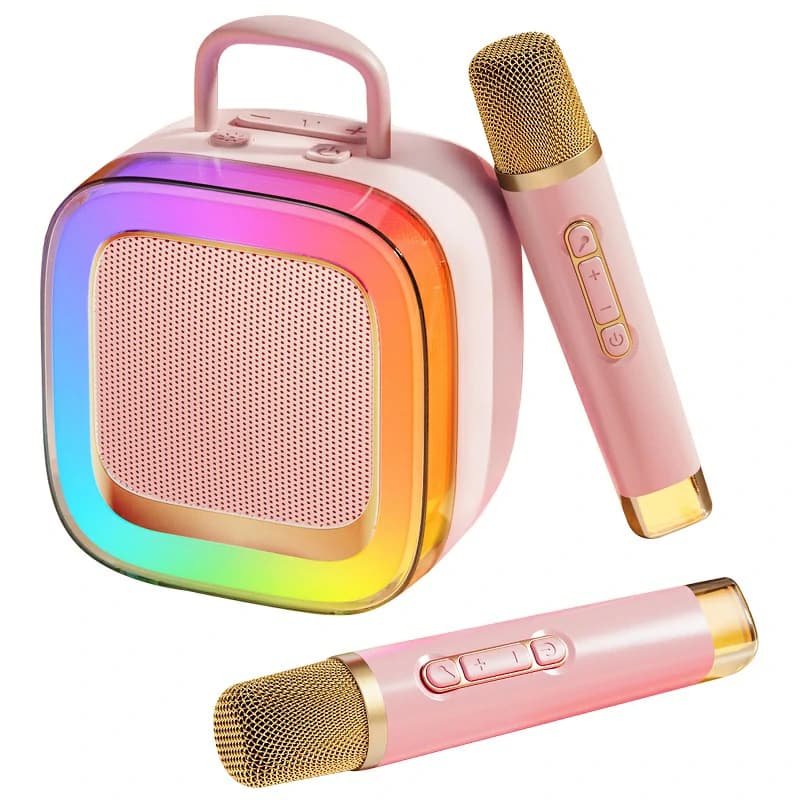
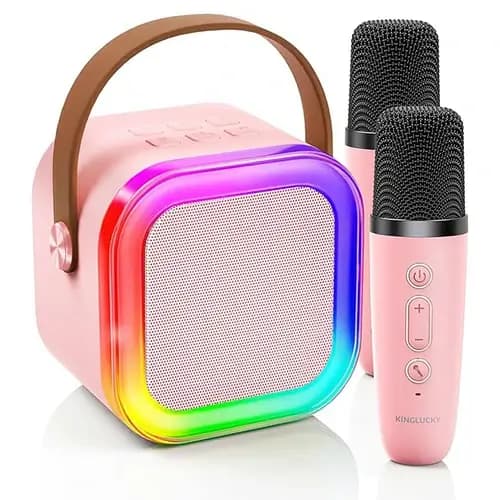
A typical battery-powered portable all-in-one for family or patio use includes two wireless microphones (auto-connect if available), Bluetooth input for backing tracks, USB-C charging, basic echo per mic channel, straightforward master volume, simple voice effects (e.g., female/male/monster/chipmunk), optional TF card playback for offline use, and small party touches like LED lights. A unit such as the Kinglucky K88 can serve as an illustration of how these features combine for quick duets and turn-taking, cable-light setup, easy carry, and parent-friendly controls. This is a feature example, not a recommendation; the goal is to map real-world implications (setup time, mic stability, latency path, battery behavior) to the attributes that matter in portable scenarios.
10/30-Minute Portable Setup Blueprints
10-Minute Grab-&-Go
- Components: portable all-in-one + 2 wireless mics + phone.
- Steps: power on → auto-pair mics → Bluetooth pair phone → start karaoke app → set mic volume first, then master → light echo → windscreens on.
- Check: quick lip-sync test; keep the speaker in front of singers.
30-Minute Patio/Living Room
- Components: add TV via ARC/eARC or optical if available; simple stand or shelf isolation.
- Steps: connect TV → set a neighbor-friendly ceiling volume → run the 5–10 minute test plan → save preferred levels.
- Pack-away: mute mics → power down → coil charging and AUX cables → store in a dry bag or case.
Buying Checklist (Portable + Two Mics)
- Dual wireless mics with independent volume/echo; stable RF band with channel agility or auto-scan.
- Latency path that matches your lyrics source (ARC/optical > TV→Bluetooth); pre-test app routes.
- USB-C charging and practical battery runtime at social volumes; note behavior during quick top-ups.
- Inputs: Bluetooth + AUX/USB/TF; optional guitar/PC/TV; clear on/off and labeled knobs.
- Handling & Durability: carry handle/strap, protected grille, kid/guest-proof layout, non-slip base.
- Care: windscreens, disinfect routine, cable management, dry storage away from heat and moisture.
FAQs
Are portable karaoke machines loud enough for outdoor patios? Yes—for short social sessions. Aim for midrange clarity over bass; position the speaker toward singers and away from neighbors. How do I avoid lip-sync delay without a full home theater? Prefer ARC/eARC or optical from the TV. If using a phone via Bluetooth, test in advance and keep the device close to the unit. Can two wireless mics stay clear in a Wi-Fi-heavy apartment? Usually—choose systems with channel agility/auto-scan, keep the receiver clear of metal, and set gains moderately. Do I need a subwoofer for portable karaoke? No. Karaoke benefits most from midrange intelligibility; extra bass often adds spill without improving clarity. What’s a realistic battery runtime at conversation-plus volume? Expect focused sessions. Verify by a 30-minute rehearsal at your typical level and extrapolate from the percentage drop. Which effects are fun but still intelligible for duets? Light echo and simple character voices kept subtle. Keep tails short so consonants remain crisp for both singers.Conclusion
A Portable Karaoke Machine with 2 Microphones shines when you need fast setup, duet-ready performance, and battery-powered mobility at neighbor-friendly volumes. Favor rigs with reliable dual wireless mics, a tested low-latency path (ARC/optical when video lyrics matter), USB-C charging, practical inputs, and simple, durable controls. Validate your choice with the quick tests above, keep volumes modest, and make portability work for patios, parties, classrooms, or quick living-room sessions—without the bulk.
Recommended Products