Is Karaoke Good for Kids
Is Karaoke Good for Kids?
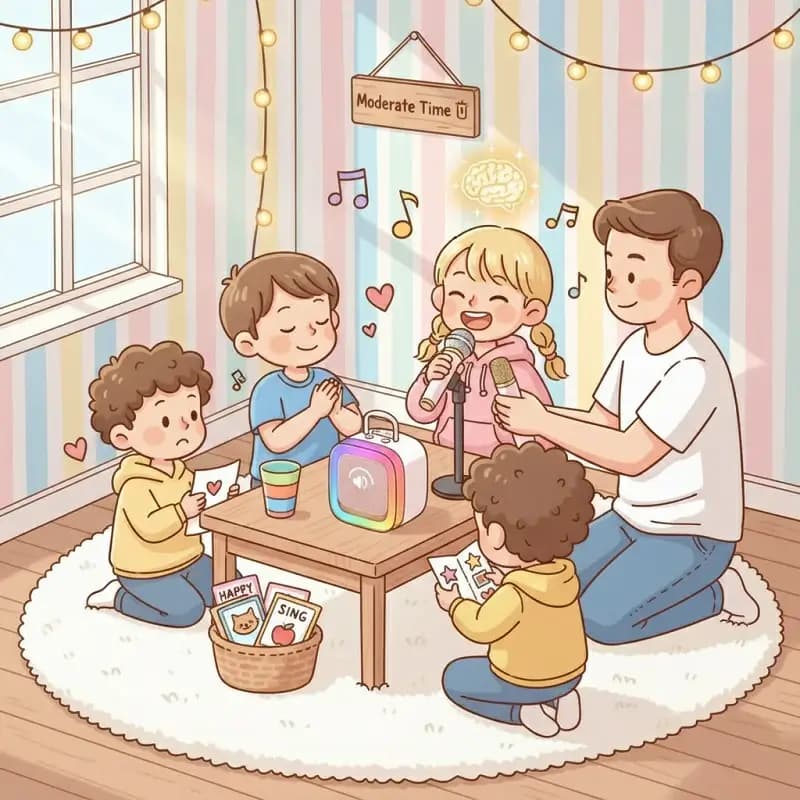
Short answer: yes—when families use age-appropriate songs, safe volume, simple controls, and supportive routines. Done thoughtfully, home karaoke can build confidence (taking turns on a mic), strengthen language (lyrics and pronunciation), and deepen bonding (duets and round-robin singing). The main caveats are manageable: protect hearing by keeping levels modest and sessions short; vet content for clean lyrics; safeguard online privacy if recording; and prevent mic feedback by placing speakers in front of microphones and teaching basic mic etiquette. With a predictable flow and kid-friendly gear—dual mics, clear knobs, gentle echo—karaoke becomes a playful, developmentally supportive part of family life rather than a noisy free-for-all.
What Kids Actually Gain
Language & Literacy
Singing slows speech into rhythm and rhyme, which helps children notice sound patterns and syllables (often called phonological awareness). Reading lyrics on a TV or tablet links print to sound, growing vocabulary and clearer pronunciation. For multilingual families, alternating languages or using call-and-response sections provides gentle practice without pressure.
Confidence & Social Skills
A living-room “stage” is a low-stakes performance space. Kids learn turn-taking, duet collaboration, and how to give specific compliments (“I liked your clear words in the chorus”). These skills transfer to show-and-tell, assemblies, and group projects.
Rhythm & Breath Control
Counting in (“1-2-3-4”), keeping a steady clap, and choosing breath points at line breaks improve timing and phrasing. Brief cues (“breathe before the chorus”) introduce body awareness without formal voice training.
Emotion & Self-Regulation
Songs let kids label feelings (“proud,” “nervous,” “brave”) and practice calming routines (two deep breaths, then sing). Ending with a familiar “win song” provides predictable closure and a positive last memory.
Executive Function
A simple session sequence—warm-up → song → water break → song → cool-down—strengthens planning and working memory. Sharing microphones develops responsibility and inhibition (“wait until the intro finishes before singing”).
Risks & How to Reduce Them
Hearing Health
- Keep master volume conservative. Aim for “indoor voice” levels; if it’s loud in the hallway with the door closed, it’s too high.
- Short sets + quiet breaks. Alternate songs with water or drawing time; ears need rest just like muscles do.
- Distance helps. Sit a little farther from speakers, and avoid pointing microphones at them.
Content Quality
- Use clean-lyrics versions and skip suggestive themes for younger kids.
- Display large-font lyrics or on-screen bouncing cursors to support emergent readers.
Online Safety
- Supervise any livestreaming or uploads. Use private sharing, and avoid names, school logos, or location tags.
- Discuss the difference between personal (likes, favorite songs) and private (address, school, phone) info.
Equipment Safety
- Speaker placement: put speakers in front of the mics, facing the audience, not the microphones.
- Trip hazards: tidy cables and stands; choose battery power when possible to reduce clutter.
- Hygiene: use foam windscreens; wipe microphones after sessions, especially when sharing.
Age-Based Guide
Ages 3–5 (Pre-K)
- Format: call-and-response, action songs, visual prompts; big-font or picture cues.
- Time: 10–15 minutes total; one quiet break in the middle.
- Technique: adult helps hold the mic; effects off or very light; clap on 2 & 4.
Ages 6–8 (Early Elementary)
- Format: duets, echo phrases, simple gestures.
- Mic distance: 2–3 inches from the mouth; “mic down when not singing.”
- Time: 15–20 minutes; keep volume modest and consistent.
Ages 9–12 (Upper Elementary)
- Format: beginner harmony (drone or simple thirds), tempo practice with a metronome tap.
- Self-monitoring: kids help set the master volume and echo; try a lower key if a song feels shouty.
Teens
- Format: audition-style practice, optional recording and review.
- Sharing rules: ask consent before posting others; avoid location tags; respectful comments only.
Family Setup & Safe-Listening
- Speakers in front of mics. Aim speakers toward listeners; keep microphones behind the speaker line.
- Soften the room. Rugs, curtains, and cushions reduce shrill echoes and make lower volumes feel fuller.
- Mic etiquette. Don’t cup the grille; use windscreens; mute before passing the microphone.
- Session design. Solo → duet → round-robin; celebrate effort over any app “scores.”
- Quiet habits. Encourage indoor-voice singing; build regular ear breaks into your routine.
Choosing a Kid-Friendly Arrangement (Not a Product List)
All-in-One Box
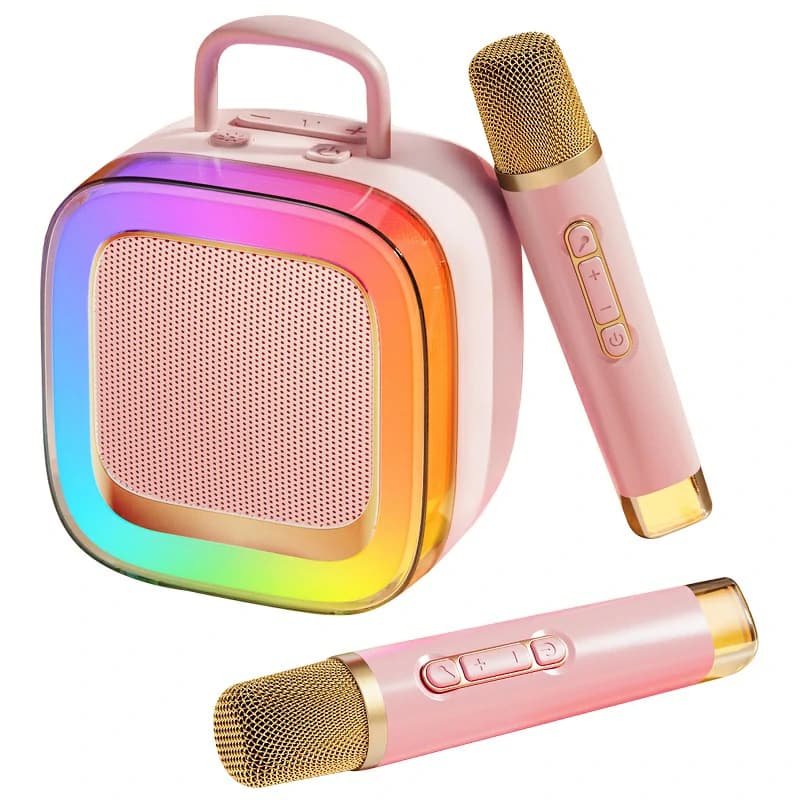
Fastest family-night option: dual mics, gentle echo, simple knobs, a few LEDs. Great for casual living-rooms.
Soundbar + Mic Hub
Pairs with TV and looks tidy. Verify the audio path (ARC/optical) for lip-sync before a big sing-along.
Tablet/TV Apps + External Mics
Flexible libraries and playlists; enable parental controls and check latency so words match voices.
What Helps Kids (Any Brand)
- Simple on/off and clear knobs
- Dual microphones for duets and turn-taking
- Gentle echo; easy to toggle off
- Bluetooth input to play clean versions
- Battery portability for cable-light sessions
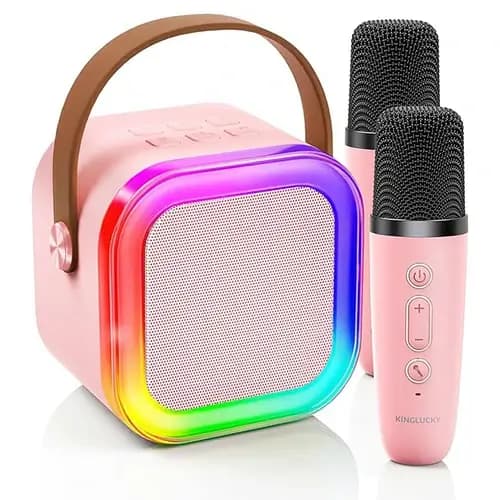
Kids-Friendly Example: Kinglucky K88
This example highlights kid-suitable features families can look for in any brand; it is not a sales pitch.
- Two wireless microphones: smoother turn-taking and authentic duets without cable tangles.
- Bluetooth 5.3 input: stream clean-lyrics tracks from a parent’s phone or tablet with stable connectivity.
- Type-C charging & battery power: portable, cable-light sessions that reduce trip hazards in living-rooms.
- Switchable echo & “Magic Voice” effects: playful sound (female/male/monster/chipmunk) that kids can toggle on/off; keep it gentle for clarity.
- DSP-based HIFI/stereo playback: straightforward volume control so adults can set and keep a safe ceiling.
- LED lights: fun, party mood—use moderately for younger children.
- TF card option: offline playlists for controlled, ad-free sessions.
- 5V DC power & home-friendly scenarios: birthday corners, backyard picnics, or cozy family karaoke night.
Quick Comparison Table — Family Karaoke Paths
| Setup Type | Best For | Pros | Watch-outs | Parent Tip |
|---|---|---|---|---|
| All-in-One Box | Quick family sing | Simple, portable, easy knobs | Limited deep mixing | Use light echo only |
| Soundbar + Mics | Movie-night crossover | Clean living-room look | Check lip-sync path | Test ARC/optical before kids sing |
| Tablet + Mics | Playroom practice | Flexible apps & playlists | Ads/online risks | Lock parental controls |
| Compact PA | Teens/music club | More headroom & control | Louder potential | Set a volume ceiling |
At-Home Mini Test Plan (5–10 Minutes)
- Lip-Sync: play a karaoke video, clap on camera, and confirm mouth–sound alignment; adjust TV/app delay if off.
- Volume Check: sing one chorus at indoor-voice level; step into the hallway—if it’s still loud, turn down 1–2 notches.
- Mic Hygiene & Handling: fit windscreens; show on/off and mute; wipe grilles after use.
- Feedback Prevention: keep speakers in front of mics; reduce echo if a squeal appears; never aim mics at speakers.
Content & Digital Wellbeing
- Choose age-appropriate, positive-theme songs; rotate picks among siblings so everyone feels heard.
- Set time windows (e.g., after homework, before 8 pm) and mix on- and off-screen activities (drawing, dancing, water breaks).
- If recording, keep files private; celebrate progress over perfection; co-author captions that avoid personal details.
Parent Checklists
Readiness & Safety (Pre-Session)
- Clean-lyrics playlist loaded
- Master volume set low; ear breaks planned
- Adult supervision for recording or sharing
- Cables tidied; stands stable; speakers in front of microphones
- Windscreens on mics; disinfecting wipes ready
Session Flow (During & After)
- Warm-up: gentle humming + two deep breaths
- Two songs → water break → two songs
- Compliment exchange (“I liked your steady timing”)
- Cool-down track: calm, familiar closer
- Clean-up: power down, wipe mics, coil cables
FAQs
Is karaoke safe for kids’ hearing?
Yes—if you keep volume modest and sessions short. Children’s ears are more sensitive; aim for indoor-voice levels and build quiet breaks into your routine.
How long should a session last for young children?
For ages 3–5, 10–15 minutes is plenty; for ages 6–8, try 15–20 minutes with a short water break. The goal is enjoyment and confidence, not endurance.
Which effects are OK for kids, and what should we avoid?
A gentle echo can help pitch confidence; avoid heavy effects that boost overall loudness or blur diction. Keep microphones 2–3 inches from the mouth, and don’t cup the grille.
Can karaoke support language learning?
Yes. Rhythm, rhyme, and repeated lyrics strengthen vocabulary, pronunciation, and reading fluency. Large-font lyrics and call-and-response parts are especially helpful.
How can we prevent mic feedback scares?
Put speakers in front of microphones, lower the master volume, reduce the number of open mics, and soften reflective rooms with rugs or curtains.
What’s a good plan for shy kids?
Start with duets or echo-singing, dim the lights slightly (while keeping the room safe), pick familiar songs, and adopt a family rule: cheer for effort over perfection.
Conclusion
Is karaoke good for kids? Yes—when families manage volume, content, and simple routines. The developmental upside—confidence, language practice, and social turn-taking—appears quickly in a supportive home setup. Keep speakers in front of microphones, run brief sessions with quiet breaks, and treat recordings as private by default. A portable, dual-mic, easy-control arrangement (like the feature example above) helps you deliver a safe, fun, and confidence-building family karaoke night without overcomplicating the tech. Use the checklists and mini test plan to keep every session playful, respectful, and hearing-safe.
Recommended Products