Good Karaoke Machines for Home
Good Karaoke Machines for Home: Simple Picks by Budget and Room Size
Short answer: a good home karaoke machine gives you two clear microphones, a lip-sync-friendly connection for TV lyrics, and clean vocals at indoor-voice volume. That’s it. Pick a size that fits your room. Keep controls simple. Do a quick test before guests arrive. This guide gives you a fast budget plan, room-fit tips, a home checklist, and easy tests anyone can run.

Quick Answer by Budget
Budget (entry)
-
Compact all-in-one with two mics, Bluetooth for backing tracks, and simple echo. Ideal for apartments and quick setup.
-
Clear at low volume. Easy teardown and storage. Great for weeknight songs and family use.
Midrange
-
Better clarity and headroom for open-plan living rooms.
-
ARC/eARC or optical from TV for lyrics. Two wireless mics with separate mic volume for duets.
Upper home tier
-
More inputs and control (Bluetooth, AUX, USB/TF; often line-out).
-
Stronger feedback resistance for larger rooms or party corners. Useful if you host often.
Room & Neighbor Fit (pick by your space, not by wattage)
Apartments / Small living rooms
-
Target low-volume clarity. You want words to be easy to understand at “conversation-plus.”
-
Place the speaker in front of the mics and face it away from walls to reduce reflections.
-
Prioritize quick setup/teardown and a tidy footprint.
Medium rooms
-
Use ARC/eARC or optical from TV to keep lips in sync with the screen.
-
Set light echo. Keep two mic volumes separate for proper duet balance.
-
Soft furnishings help: a rug, curtains, and a couch tame harsh echoes.
Large rooms / party corners
-
Consider a unit with more headroom or a compact PA-style design.
-
Plan stands and cable management. Tape cables if kids will be around.
-
Keep intelligibility first. If the words blur, turn down the low-end and lower the echo.
Connectivity That Keeps Lyrics in Sync (keep it simple)
-
TV→speaker Bluetooth often adds delay. The lips on the TV will look late or early.
Prefer HDMI ARC/eARC or optical (TOSLINK). These paths keep video and audio aligned. -
Phone/tablet only? Test the app path before guests arrive. If the app sends video to the TV and audio over Bluetooth, do a quick clap test to confirm sync.
-
Signal chain basics: mic receiver → machine’s echo/EQ → speakers.
Keep gain moderate. Too much gain creates feedback. Too little gain buries the vocals.
What to Look For (Home checklist)
-
Two microphones (ideally wireless) + separate mic volume.
-
Clear vocals at “conversation-plus” volume. Favor intelligibility over deep bass.
-
Lip-sync-friendly TV inputs: ARC/eARC or optical (better than TV→Bluetooth).
-
Inputs you’ll use: Bluetooth for tracks, AUX for a cable, USB/TF for offline files.
-
Guest-proof controls: big on/off, labeled knobs, and fast pairing.
-
Optional: USB-C charging and a battery if you move rooms or sing on the patio.
Good Picks by Budget & Use Case (feature-based, neutral)
Best Budget Apartment Pick
Choose a compact all-in-one with two microphones and a basic echo knob. Look for clear vocals at low volume and quick Bluetooth pairing for backing tracks. It should fit on a shelf and tuck away easily. If you entertain on weeknights, fast setup matters more than power.
Best Midrange Living-Room Pick
Aim for a machine that supports ARC/eARC or optical from your TV. This keeps lyrics and lips in sync. Ask for two wireless mics with their own volume knobs and a tasteful echo that stays subtle. You want a clean look, short cables, and a remote that makes sense to guests.
Best Family/Kids-Friendly Pick
Prioritize simple, labeled controls and durable microphones with replaceable windscreens. A few gentle voice effects can be fun—use them lightly so words stay clear. Keep Bluetooth plus USB/TF for offline tracks. Make it easy to go from cartoons to karaoke with minimal steps.
Best Patio/Move-Around Pick
Pick a battery-powered unit with a carry handle and decent runtime. Add windscreens for outdoor breeze and pops. Keep levels neighbor-friendly. Shade the unit from direct sun. If you often move between rooms, USB-C charging saves time.
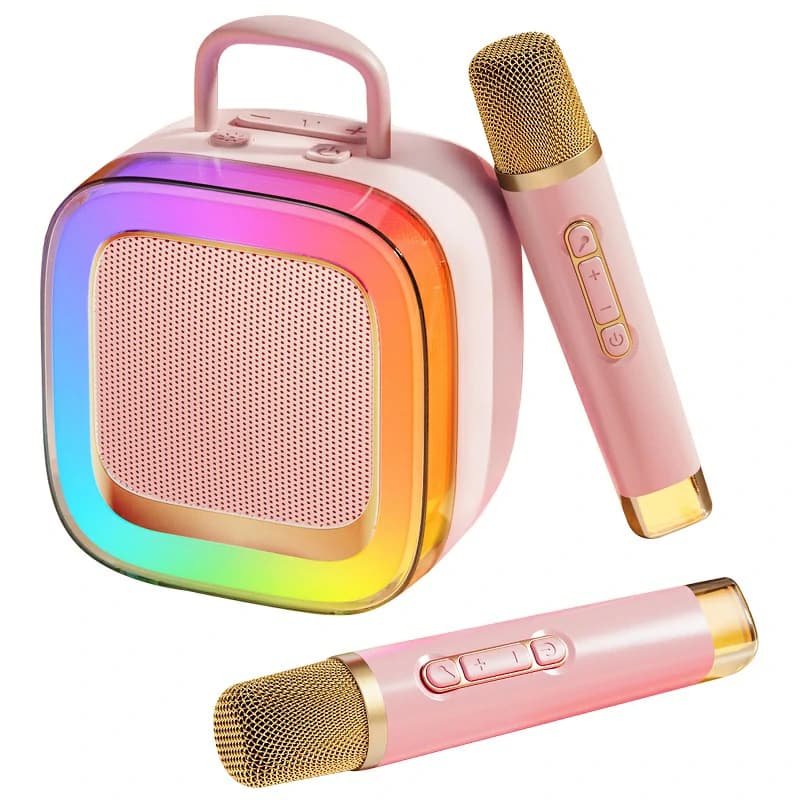
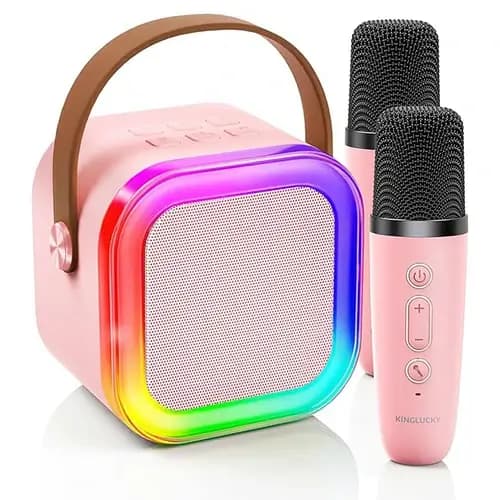
Example reference (neutral): a compact, battery, dual-mic unit like Kinglucky K88 shows the idea of “small all-in-one + two wireless mics + Bluetooth + Type-C + simple echo.” Treat this as a feature example, not a requirement.
Sing Better at Home (tiny section that beats competitors)
Pop/R&B belting
Keep echo light. If vocals feel boomy, reduce low-mid (around the “muddy” body of the voice) and keep mids clear. Focus on crisp consonants. That’s what makes lyrics understandable.
Duets
Balance two mic volumes so both singers sit on top of the track. Stand slightly off-axis to each other so mics don’t face directly. Don’t cup the grille. It raises feedback and muddies sound.
Apartment late-night
Aim for “conversation-plus” sound pressure. Soft furnishings help a lot. Close doors. Keep echo subtle. If you can understand words in the hallway, turn it down a notch.
5-Minute Home Test (do this before a party)
Clap test for lip-sync
Play a karaoke video on your TV. Use ARC/eARC or optical if possible. Clap on screen or along with a visible beat. Watch your hands and listen. If the sound lags, switch away from TV→Bluetooth.
Duet check
Use both mics at normal indoor volume. Bring one singer up, then the other. Each should remain clear without raising the overall volume too high. If one disappears in the mix, turn that mic up a bit or lower music level.
Feedback walk
Raise mic gain slowly while holding a mic in a normal singing stance. Walk a small loop in front of the speaker and slightly to the side. Stop at the first squeal. That’s your limit. Turn echo down a touch, or rotate the speaker a few degrees.
Neighbor check
Open your door and step into the hall or onto the porch. You should hear barely intelligible speech, not full lyrics. If words are too clear, reduce overall volume and echo.
FAQs
Do I need high wattage for a medium room?
No. Focus on clarity at indoor volume. A clean midrange and controlled echo matter more than a large watt number.
How do I avoid TV Bluetooth delay?
Use HDMI ARC/eARC or optical from TV to machine. These paths keep video and audio in step. Avoid TV→speaker Bluetooth for lyric playback.
Are two wireless mics stable at home?
Yes, with sensible gain and speaker placement in front of the singers. Keep a little distance. Windscreens help reduce pops and hiss.
Do I need a subwoofer for karaoke?
No. Karaoke is about intelligible vocals. Extra bass can mask words. If the lyrics blur, lower bass and echo.
How long will a battery unit last at indoor-voice levels?
It varies. Do a 30-minute test at conversation-plus volume and check the battery indicator. Use that drop to estimate total runtime for your space.
Conclusion
The best good karaoke machines for home are the ones that match your room and your lyrics path. They keep two microphones clear, stay in sync with your TV, and deliver clean vocals at indoor-voice levels. Pick a budget tier that fits, follow the room-fit tips, and run the 5-minute tests. Start simple. Add features only when they improve clarity, comfort, and ease.
Recommended Products