Best Open Earbuds Comfortable for Small Ears in 2026
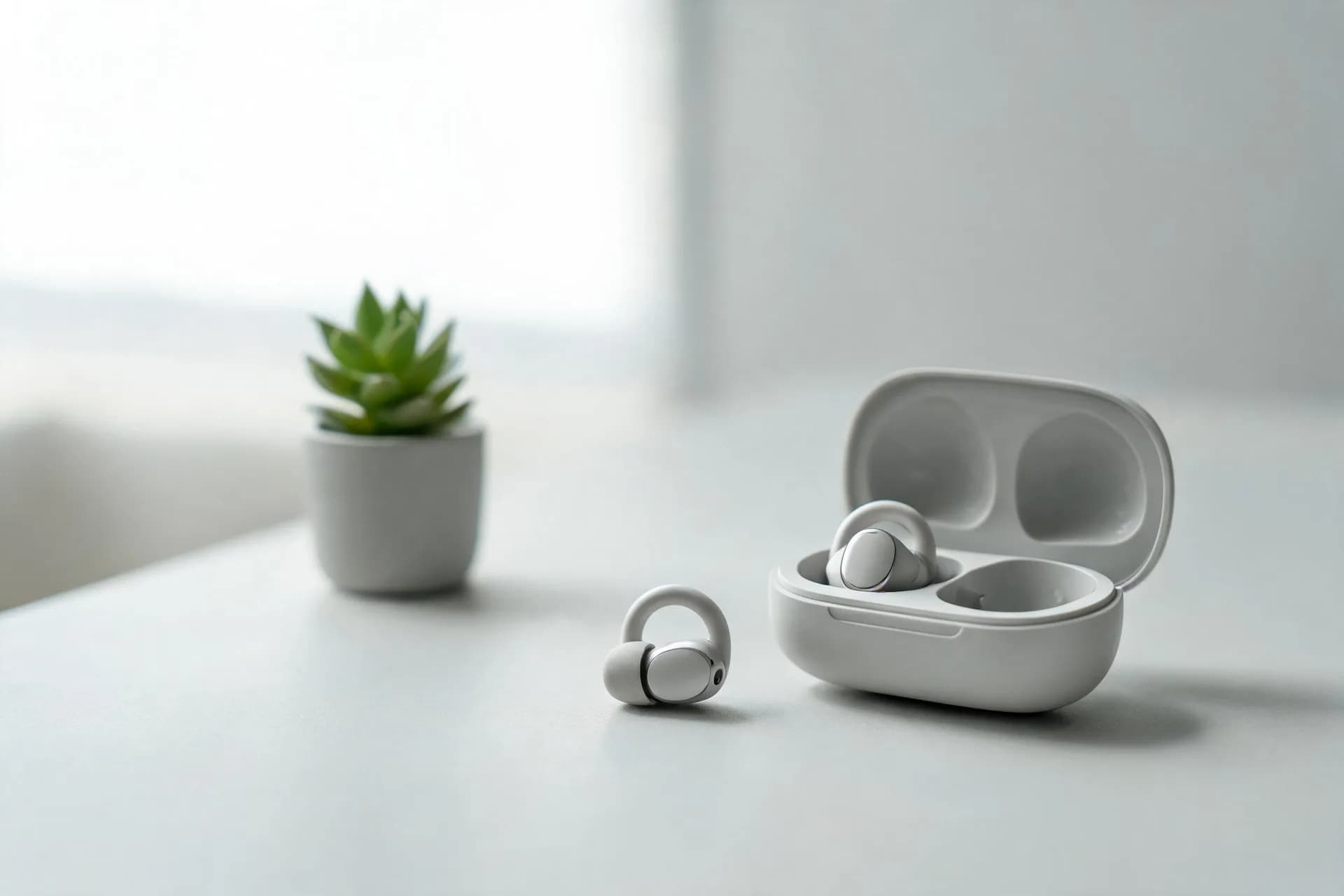
Best Open Earbuds Comfortable for Small Ears: What to Look for in 2026
If you are searching for open earbuds comfortable for small ears, the best option is usually a model with a lightweight build, slim contact points, flexible support design, and low pressure on the outer ear. For small ears, the biggest issue is not just sound quality. It is whether the earbuds stay stable without squeezing, sliding, or creating pressure after 30 minutes of wear. In most cases, the most comfortable open earbuds are the ones that feel secure during daily movement while still being easy to forget once they are on.
Why This Is a Common Problem
Many open-ear earbuds are designed around average ear shapes. That becomes a problem for people with smaller ears.
Common complaints include:
-
the ear hook feels too large
-
the housing presses against the outer ear
-
the earbud shifts while walking
-
the fit feels secure at first but becomes tiring over time
-
the product looks compact in photos but feels bulky in real use
This is why users do not just search for “best open earbuds.” They specifically search for open earbuds comfortable for small ears, because fit tolerance is smaller and bad design becomes obvious faster.
Quick Answer
For small ears, the best open earbuds are usually those that:
-
do not rely on deep in-ear insertion
-
use a lightweight open-ear or clip-on structure
-
spread pressure evenly instead of pinching one point
-
stay in place during walking and light exercise
-
remain comfortable during long calls, work sessions, or commuting
If a pair looks bulky, rigid, or oversized, it is less likely to be a strong match for smaller ears.
How We Evaluated
To judge whether open earbuds are comfortable for small ears, we focus on the factors that affect real wearability rather than just specs.
1. Fit style
We look at whether the design is clip-on, ear-hook, or speaker-near-ear, and how that shape interacts with smaller ears.
2. Weight and size profile
Smaller ears usually feel extra pressure from bulky housings or heavy frames.
3. Pressure distribution
A comfortable fit should feel stable without creating one hard pressure point.
4. Movement stability
We check whether the design is likely to shift during walking, commuting, desk work, or light exercise.
5. Long-session comfort
Short-term fit can be misleading. A good open-ear design should remain comfortable after one to three hours, not just the first five minutes.
What Makes Open Earbuds Good for Small Ears?
Lightweight design matters more than most people think
Open earbuds do not sit deep in the ear canal, so they depend more on outer-ear support. If the earbuds are too heavy, that weight becomes noticeable fast.
Slimmer shapes usually work better
A compact shape is often better for smaller ears because it reduces contact area and lowers the chance of rubbing or pressure buildup.
Flexible support is better than rigid support
Soft or adaptive support structures usually feel better than stiff hooks or hard clips. A rigid structure may look secure, but it often creates discomfort on smaller ears.
Secure fit should not mean tight fit
A good fit feels balanced, not clamped. The earbuds should stay in place without making the ear feel squeezed.
The Main Fit Styles Compared
1. Clip-On Open Earbuds
Best for: people who want a compact open-ear design without a large over-ear hook
Why it may suit small ears: Clip-on designs are often more compact than traditional hook-style open earbuds. If the tension is well balanced, they can feel secure without taking up too much space around the ear.
Potential drawback: If the clip pressure is too strong, small ears may feel pinched after longer wear.
2. Ear-Hook Open Earbuds
Best for: users who want more stability for walking, commuting, or workouts
Why it may suit small ears: A well-designed ear hook can distribute weight more evenly and stay stable during movement.
Potential drawback: Large or rigid hooks can feel oversized on small ears and may create pressure near the top or back of the ear.
3. Near-Ear Speaker Style
Best for: users prioritizing awareness and low ear-canal fatigue
Why it may suit small ears: These models avoid deep insertion and can feel breathable for long listening sessions.
Potential drawback: If the body is too large, the fit may feel awkward or unstable on smaller ears.
A Practical Option for Everyday Use
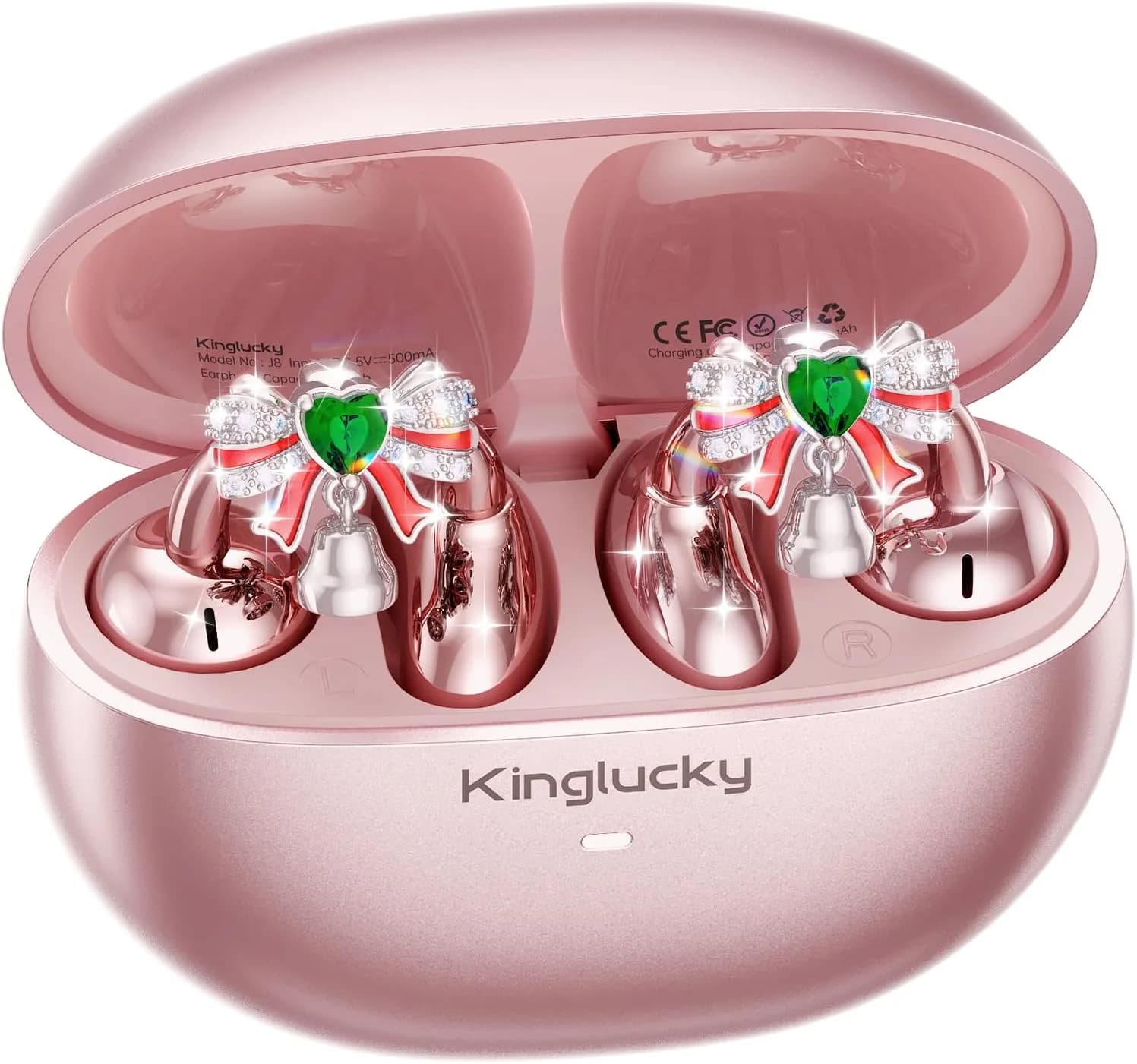
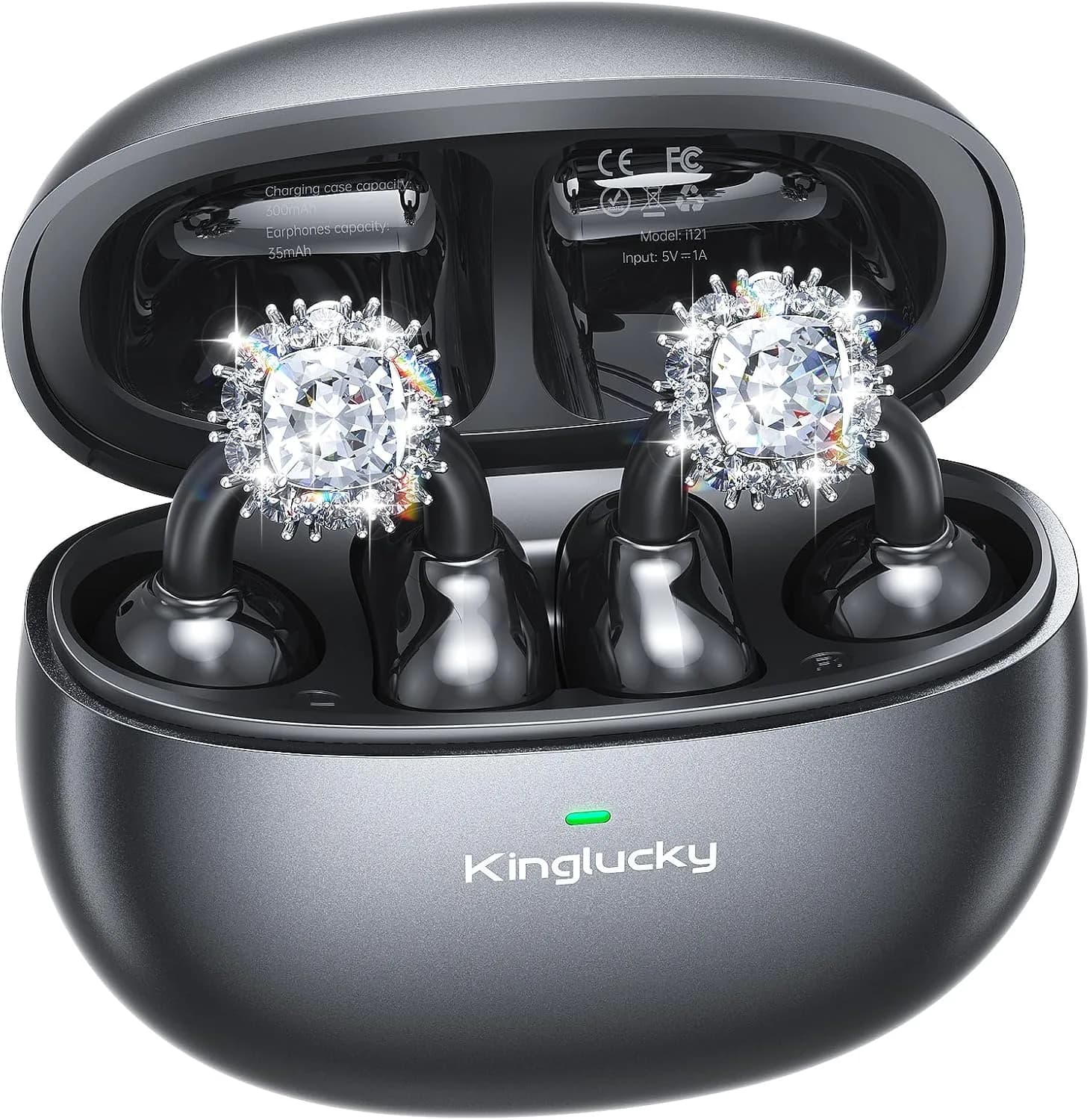
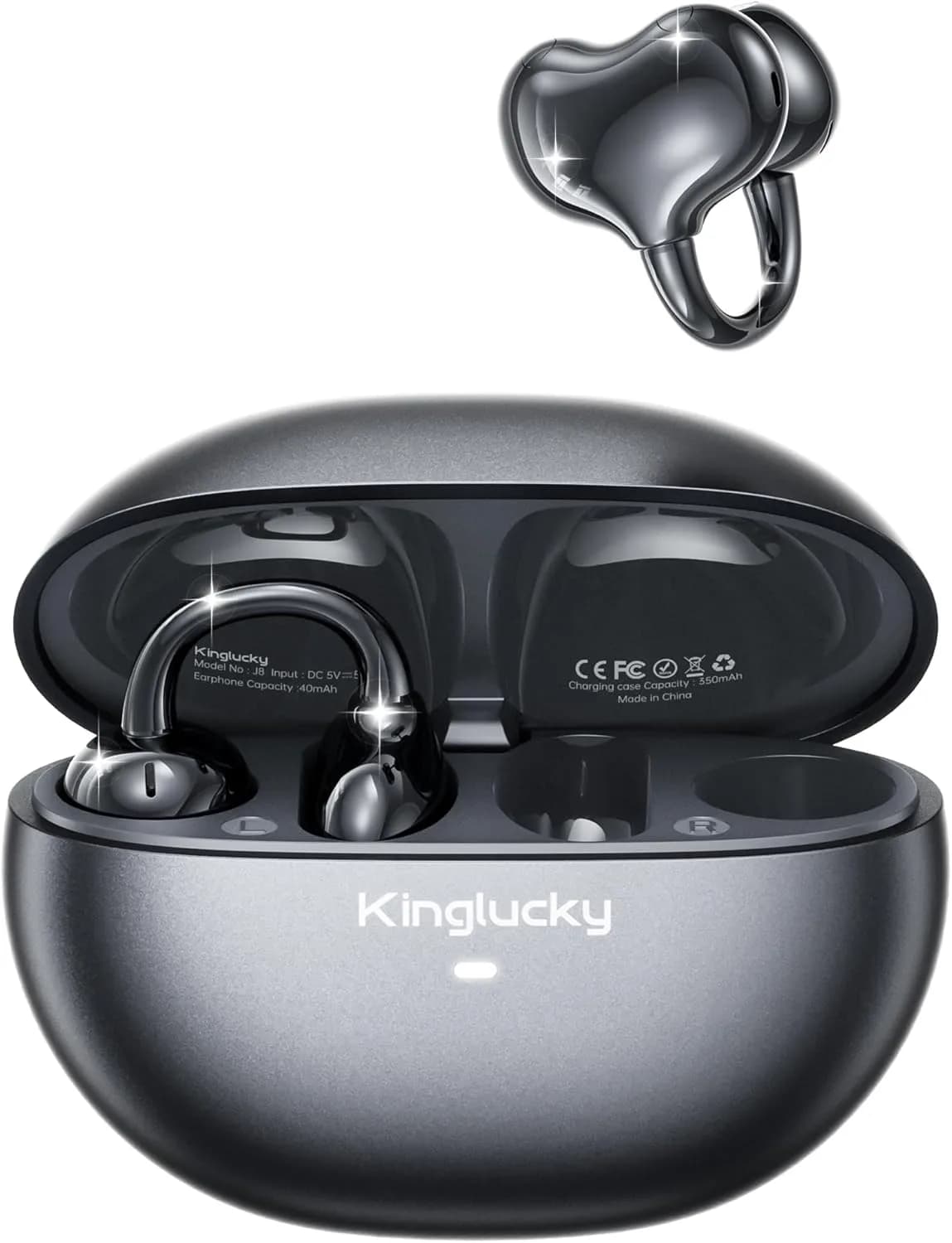
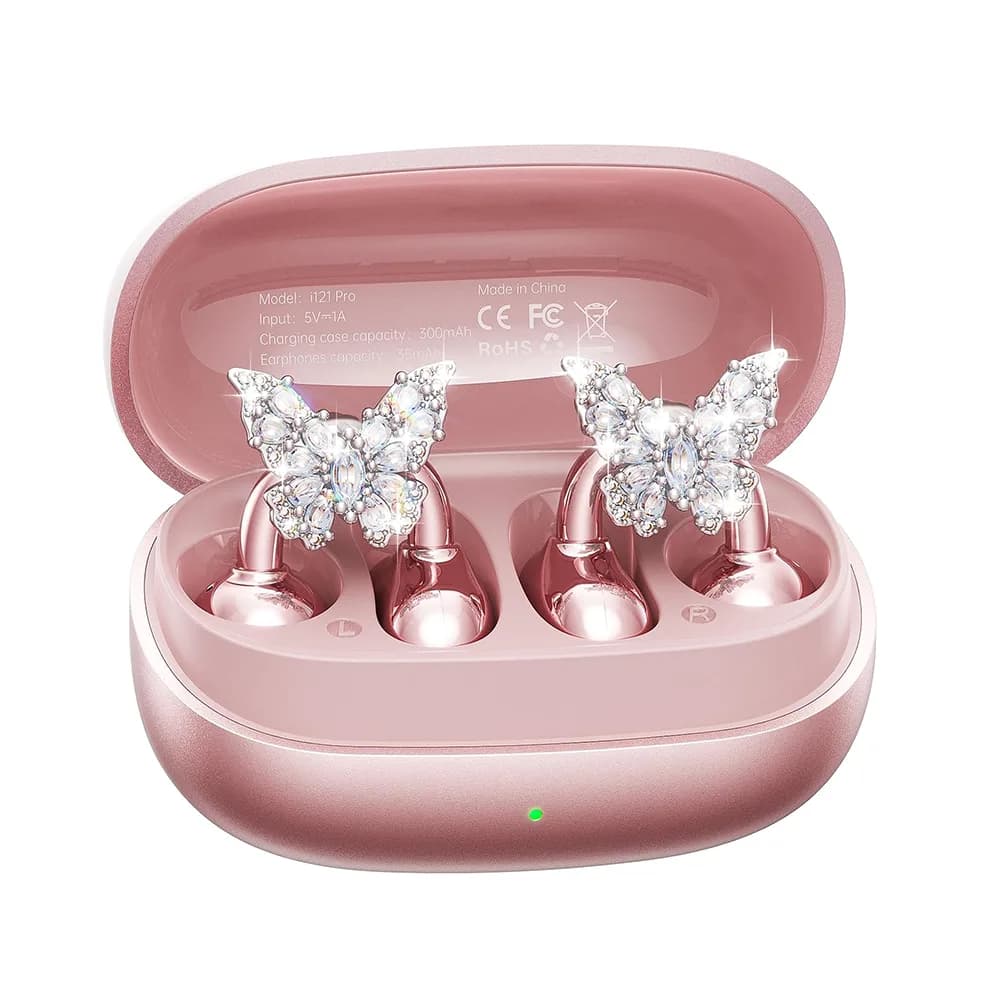
One practical example in this category is the Kinglucky A8, which fits the type of open-ear design many small-ear buyers look for: lightweight construction, a comfort-first clip-on fit, and an everyday-use profile focused on calls, podcasts, commuting, and office listening rather than aggressive sport performance. It is better framed as a practical option for daily comfort than as a universal best pick, but for users who want a lighter open-ear feel without premium-brand pricing, this kind of model is worth considering.

Best Open-Ear Use Cases for Small Ears
For commuting
Open earbuds are a strong choice for commuters who want to hear music or podcasts while staying aware of traffic, station announcements, or surrounding activity.
For office and remote work
Many people with small ears prefer open earbuds for desk use because they reduce the plugged-in feeling of traditional in-ear earbuds.
For long calls
If in-ear tips cause fatigue, an open-ear design can be easier to wear through extended meetings or calls.
For walking and light activity
A good open fit can feel more natural than a sealed earbud, especially when comfort matters more than isolation.
When Open Earbuds Are Better Than In-Ear Earbuds for Small Ears
Open earbuds are often the better option if:
-
silicone ear tips usually feel too large
-
in-ear pressure bothers you after short use
-
you want to stay aware of your surroundings
-
you mainly listen in mixed environments like home, office, or commuting
-
you value comfort more than noise isolation
In-ear earbuds may still be better if:
-
you need strong passive noise blocking
-
you want deeper bass emphasis
-
you use earbuds in noisy public spaces
-
you need a tighter seal for workouts
So the better choice depends on the use case, but for comfort-focused buyers with smaller ears, open earbuds often solve the fit problem more effectively.
Red Flags to Avoid
If you have small ears, be careful with products that show these signs:
-
oversized housings in product photos
-
thick, rigid hooks with little flexibility
-
marketing that talks only about sound and battery, but not fit
-
no mention of long-wear comfort
-
no user feedback related to smaller ears
-
designs that look sporty but appear bulky in real-world photos
A lot of discomfort comes from shape, not from audio tuning.
What to Look for Before You Buy
Use this checklist when comparing options:
-
Lightweight build
-
Slim outer-ear contact points
-
Flexible clip or hook structure
-
Stable fit during walking
-
Low pressure after one hour of wear
-
Comfort-focused user feedback
-
Open design that does not rely on deep insertion
If a pair checks most of these boxes, it is more likely to match the needs behind the search open earbuds comfortable for small ears.
Buying Advice by User Type
Best for all-day comfort
Look for the lightest open-ear or clip-on models with minimal pressure points.
Best for commuting
Choose a stable open-ear design that stays secure while moving and still allows environmental awareness.
Best for calls and office use
Prioritize balanced fit, comfort over long sessions, and a design that feels easy to wear for hours.
Best for light exercise
Look for secure placement and flexible support, but avoid bulky sport designs if you have very small ears.
FAQ
What are the best open earbuds for small ears?
The best open earbuds for small ears are usually lightweight models with a compact body, flexible support structure, and a fit that stays secure without creating pressure on the outer ear.
Are open earbuds good for people with small ears?
Yes. Open earbuds can be a very good choice for people with small ears, especially if traditional in-ear tips feel too large or uncomfortable.
Why do some open earbuds feel uncomfortable on small ears?
The most common reasons are oversized housings, rigid ear hooks, poor weight distribution, or clip pressure that becomes noticeable during long wear.
Are clip-on open earbuds better than ear-hook models for small ears?
They can be. Clip-on designs are often more compact, but comfort depends on how balanced the clip tension feels. Ear-hook models can also work well if the hook is soft and not oversized.
Can I wear open earbuds for hours if I have small ears?
Yes, if the fit is right. The best designs for small ears focus on low pressure, stable placement, and long-session comfort.
Do open earbuds fall off more easily on small ears?
Sometimes. If the design is too large or poorly balanced, it may shift more easily. That is why fit structure matters more than marketing claims.
Conclusion
The best open earbuds comfortable for small ears are not simply the smallest-looking ones. The right pair combines light weight, flexible structure, stable placement, and long-wear comfort. For small-ear users, comfort should be the first filter, because a design that looks good on paper can still feel awkward in real use.
If your priority is daily wear, commuting, office listening, or long calls, open earbuds can be a better match than traditional in-ear models—as long as the fit is built for smaller ears rather than average ones.
Recommended Products