Best Open Ear Bluetooth Headphones
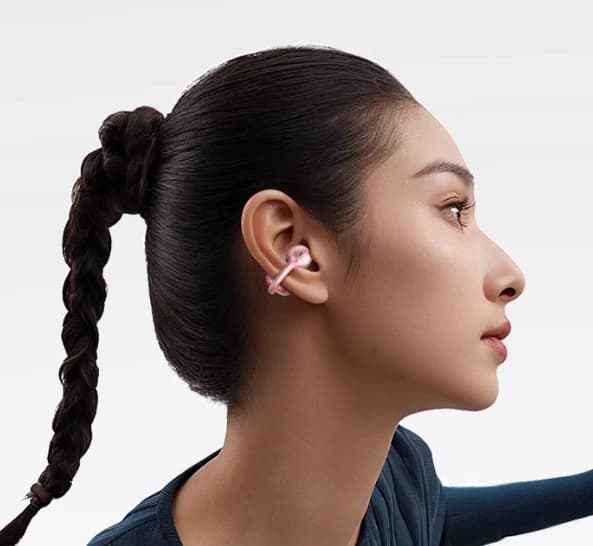
Best Open Ear Bluetooth Headphones (2025 Buyer’s Guide)
If you’re comparing the best open ear bluetooth headphones, prioritize wireless behavior: stability in busy RF spaces, low latency for video, clean calls with wind noise under control, dependable multipoint, and battery that lasts. This guide explains how we test, how we score, and which use-case profiles perform best for commuting, office calls, online classes, and workouts.
How We Test Bluetooth on Open-Ear Headphones
Use this repeatable protocol and the weighting below to judge any model at home.
Stability Stress
- Range: Walk 10–12 m line-of-sight; log stutters.
- Walls: Repeat through one and two interior walls.
- Pocket: Phone in front/back pocket; squat/turn; note micro-dropouts.
- Crowded 2.4 GHz: Test near an active router plus a second device.
Latency Checks
- 60–90 s lip-sync video; rate 0 (perfect) to 5 (distracting).
- Casual game trial; note action-to-sound lag.
- Record the negotiated codec (SBC/AAC/aptX family/LC3) and phone/OS.
Multipoint Switching
- Music on laptop → answer phone call; time the handoff.
- End call → resume laptop stream; verify auto-return.
- Check if either device “steals” audio or drops connection.
Mic & Wind
- Fan at ~45°; record a voice memo.
- Play 65–70 dB café/office noise; re-record the same script.
- Far-field pickup at 50–70 cm; judge intelligibility.
Interference & Battery
- Call within 1–2 m of a router; try a treadmill/gym and a busy intersection.
- Measure music-time vs talk-time; 15-minute fast-charge top-up yield.
Scoring Rubric (100%)
- Stability: 25%
- Calls (mic + wind): 20%
- Multipoint reliability: 15%
- Latency: 15%
- Battery & fast charge: 15%
- Comfort/controls (BT usability): 10%
Bluetooth Tech Cheat Sheet (2025)
- Bluetooth 5.x vs LE Audio/LC3: 5.x is baseline for range; LE Audio + LC3 improves efficiency and often multipoint smoothness; benefits depend on phone/OS support.
- Codecs: SBC is universal; AAC common on iOS and many Androids; aptX/Adaptive can lower latency on supported Android; LC3 targets efficient, robust voice and stable quality at lower bitrates.
- Beamforming/ENC/AI voice isolation: Reduces outgoing noise for calls. Open-ear rarely seals, so don’t expect music ANC.
- IP ratings & materials: Aim for IPX4+ (sweat/splash), IP55 for dust trails. Titanium/Ni-Ti frames and soft silicone improve comfort and mic stability.
Top Picks by Use Case (Wireless-Centric Profiles)
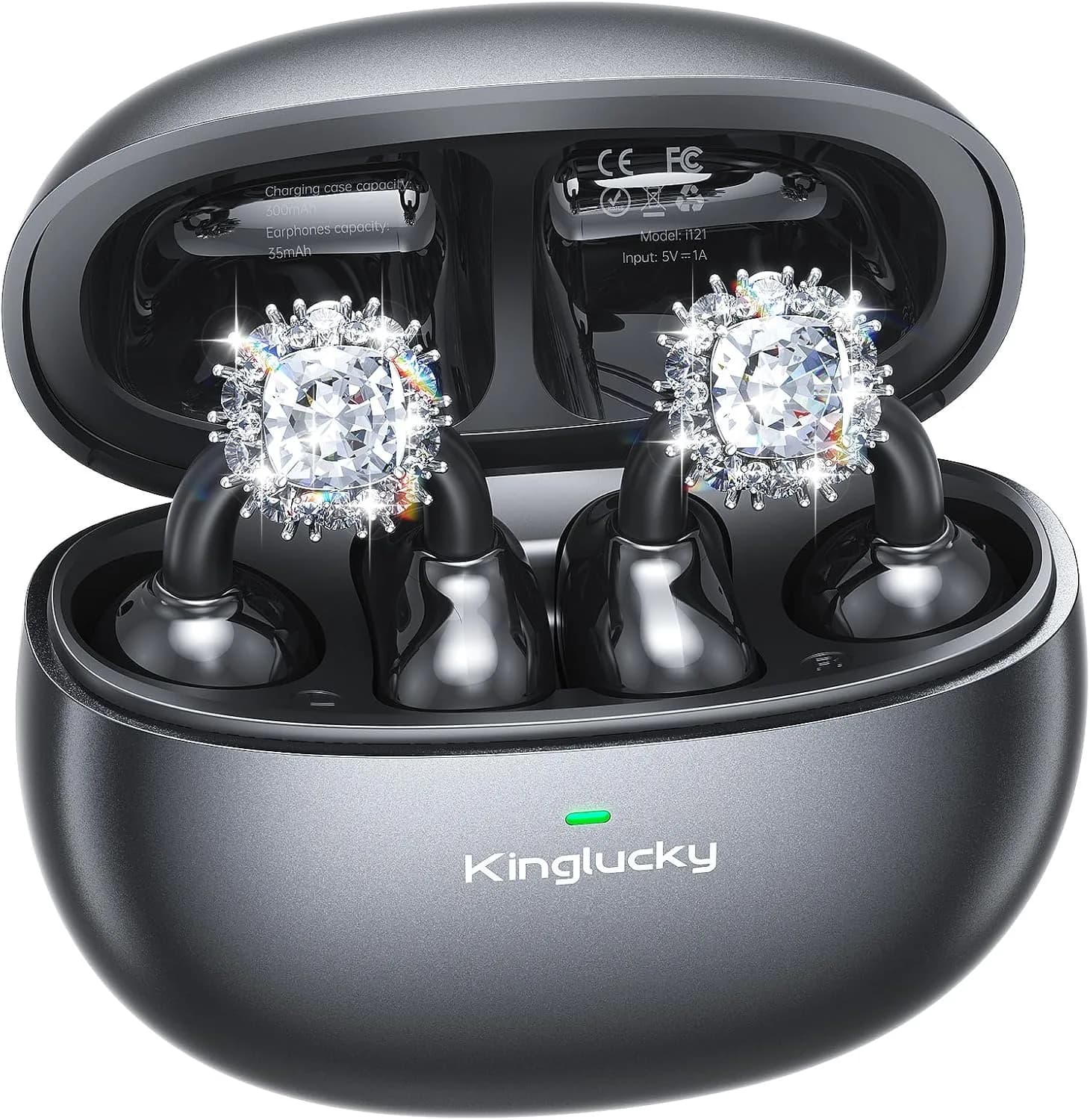
Best for Commuting & Office Calls
Why: Clear speech in café noise and breeze, quick multipoint handoffs, few pocket-to-ear dropouts near routers. Trade-offs: Some leakage at high volumes; not for aircraft isolation.
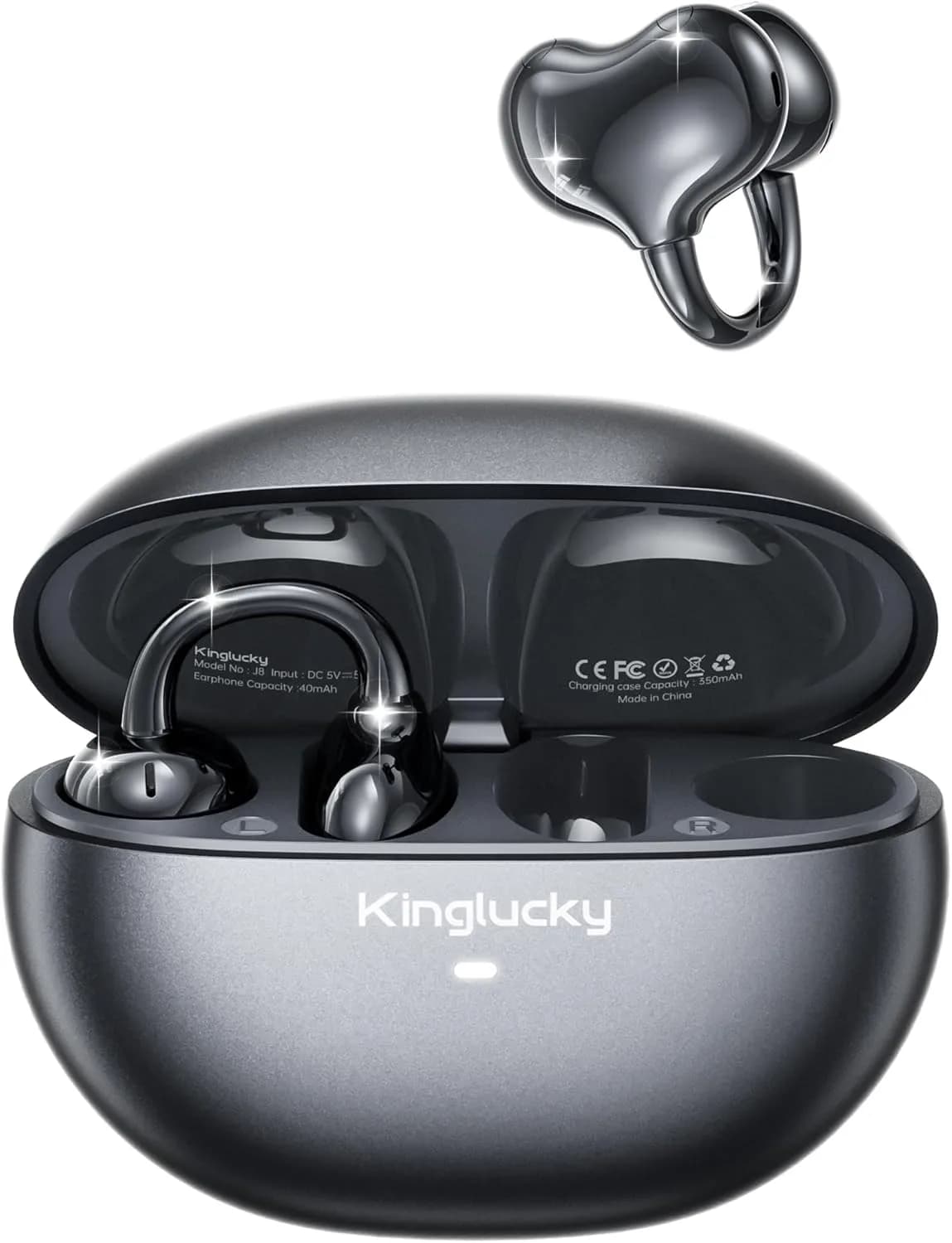
Best for Running & Outdoor Fitness
Why: Secure hooks/headband, IP55+, wind-tuned mics, stable connection near treadmills and intersections. Trade-offs: Less sub-bass than sealed buds; strong headwinds still challenge mics.
Best All-Day Comfort & Battery
Why: 8–12 h per charge with case top-ups to 30–50 h, featherweight clips/hooks, steady multipoint for long workdays. Trade-offs: Neutral-light bass; prioritize mids for calls.
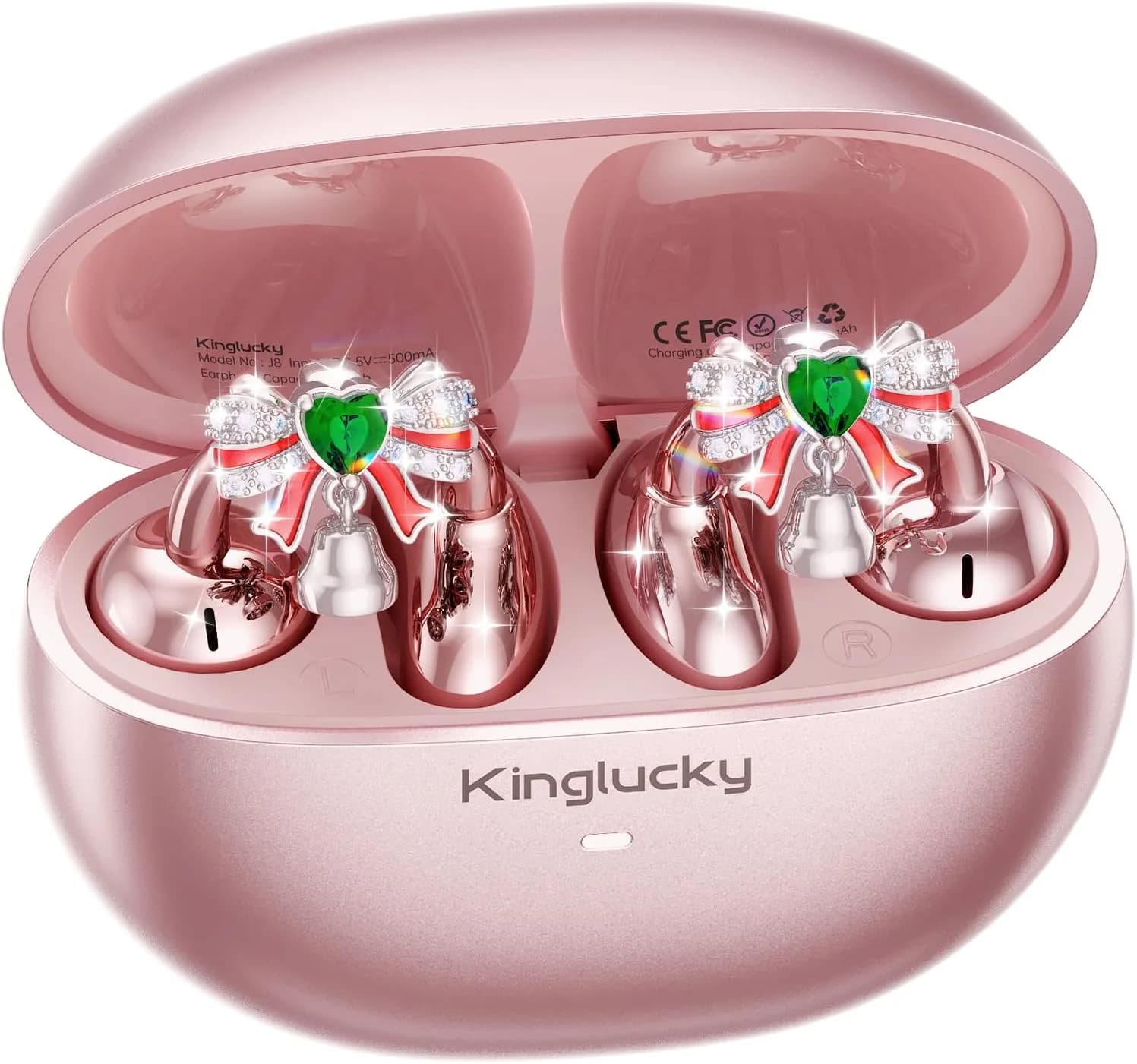
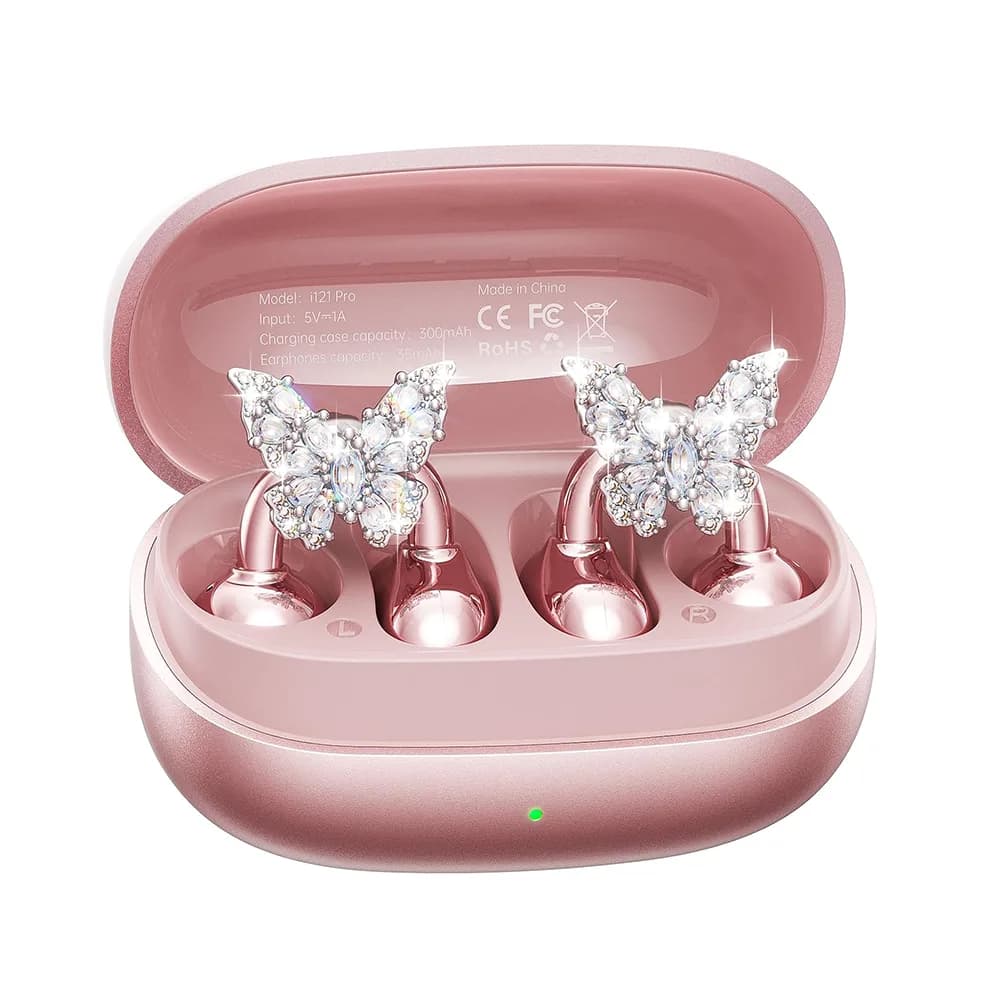
Best Stylish Lifestyle Pick
Why: Quick pairing, dependable dual-device connection, directional air path to limit spill at sensible volumes, strong ENC for sidewalks. Trade-offs: Clip-ons are discreet but may be less stable than headbands for sprints.
Best Value Choice
Why: Solid SBC/AAC basics, stable range, usable mics indoors, functional multipoint even if slower. Trade-offs: Modest wind suppression, fewer codecs, shorter single-charge time.
Comparison Table — Wireless Essentials
| Model (Profile) | Weight | BT Version | Codec Highlights | Multipoint | Wind/ENC | Rated Battery | IP | Notable Trade-off |
|---|---|---|---|---|---|---|---|---|
| Commuter/Office Winner (air-clip) | ~12–16 g | 5.x / LE-ready | SBC/AAC/LC3 | Fast, reliable | Strong beamforming + wind mesh | 8–10 h (+30–40 h case) | IPX4–IP54 | Some leakage at high volume |
| Running/Fitness Winner (hook/headband) | ~24–30 g | 5.x | SBC/AAC | Yes | Wind reduction tuned for speed | 7–9 h | IP55–IP57 | Larger footprint with glasses |
| All-Day Battery Winner (light clip) | ~10–14 g | 5.x / LE-ready | SBC/AAC/LC3 | Stable | Clear speech indoors | 10–12 h (+40–50 h case) | IPX4–IP54 | Bass is moderate |
| Stylish Lifestyle Pick (clip-on) | ~12–15 g | 5.x | SBC/AAC | Quick swap | Quad-mic ENC, directional air path | ~8 h (+≈50 h case) | IP54 | Sport stability < headbands |
| Value Choice (basic air-clip) | ~14–18 g | 5.x | SBC (maybe AAC) | Usually | OK indoors; wind modest | 6–8 h (+24–32 h case) | IPX4 | Slower handoffs, fewer codecs |
Open-Ear vs Traditional Bluetooth Earbuds
- Pros (open-ear): Awareness, comfort, easier hygiene, natural speaking on calls.
- Cons: Less isolation, possible leakage, and call ENC ≠ music ANC.
Buying Checklist
- Environment: Subway/office (ENC + multipoint) vs windy runs (wind meshes + secure hooks).
- Calls vs music: Pick beamforming/ENC for calls; codec support for media.
- Device mix: Daily phone + laptop? Demand reliable multipoint and fast, glitch-free handoff.
- Battery routine: 8–12 h single charge + case top-ups vs frequent quick charges.
- Fit & eyewear: Clip-on vs hook vs bone conduction; check temple pressure with glasses.
- Durability: IP rating for sweat/rain; clean salt/sweat regularly.
At-Home Bluetooth Reality Tests (5 Minutes Each)
- Dropout walk: Phone in pocket; walk 0–12 m through a wall; note stutters.
- Wind call: Speak beside a fan; record a memo; assess hiss and pumping.
- Lip-sync check: 60 s video; rate delay 0–5.
- Multipoint swap: Music on laptop → answer phone call; count seconds; verify auto-return.
- Quick charge: 10–15 min top-up → minutes gained for music and calls.
Care & Battery Longevity
- Charge between ~20–80% when possible; avoid hot cars.
- Wipe sweat/salt after workouts; dry before charging.
- Store without compressing clips/hooks.
The 2025 Trendline
- LE Audio adoption and smoother multipoint.
- Better wind rejection and smarter beamforming.
- Lighter frames with wider fit ranges.
- “Best” now emphasizes wireless reliability + clear speech over raw bass.
Conclusion
The best open ear bluetooth headphones are the ones that stay connected in crowded spaces, keep calls intelligible in wind and café noise, switch devices seamlessly, and remain comfortable for hours. Use the rubric, table, and at-home tests above to match stability, latency, multipoint, calls, and battery to your routine.
FAQ
Do open-ear Bluetooth headphones have ANC for music?
Typically no. Expect call noise reduction, not sealed-ear ANC.
Is LE Audio/LC3 worth it now?
Yes if your phone/OS supports it—often better efficiency and smoother multipoint.
How do they work for Zoom/Teams?
Well when beamforming/ENC is strong and multipoint is stable; test on your laptop OS.
Are they good for windy runs?
Choose models with wind meshes and tuned DSP; strong headwinds still challenge any mic.
Do they leak sound?
Air-conduction can leak at higher volumes; directional designs help. Bone conduction leaks less acoustically.
What IP rating suits sweaty workouts?
IPX4 is the floor; IP55 is better for sweat and dust.
Clip-on vs bone conduction for calls?
Clip-ons often have fuller timbre; bone conduction offers maximum awareness with typically lighter bass.
Recommended Products