Para Que Sirve Power Bank? Why Do You Need a Power Bank?
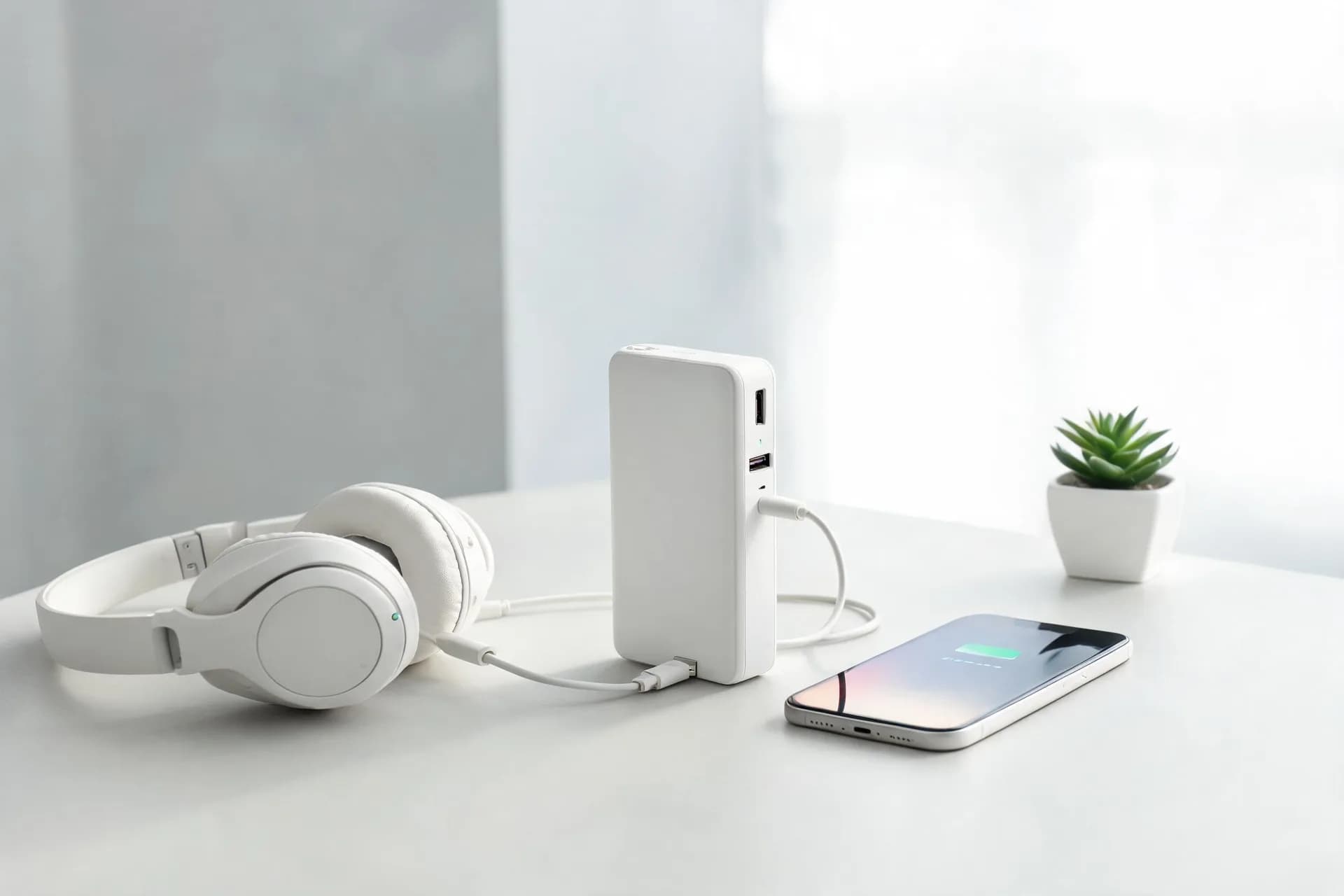
We've all experienced it - a day away from a charger, and the dreaded low battery alert appears. In today's digital era, staying connected is paramount, and power banks have emerged as saviors countless times. But what exactly is a power bank? Why do we require one? We delve into the specifics of these mobile chargers, exploring their role, usefulness, and how they add considerable peace of mind to our digital lifestyles.
Power banks, essentially, are portable batteries designed to rejuvenate your gadgets while on the move. Their primary tasks include:
Portable Charging: Ideal for travelers, campers, or anyone on the move, a power bank offers a swift energy boost to smartphones, tablets, or other devices.
Emergency Backup: During unexpected power failures, power banks ensure connectivity or facilitate calls for assistance.
Convenience: Carrying a power bank eliminates the need for wall sockets or multiple charging cables, offering convenience in a compact form.
Therefore, why do we need a power bank? Simply put, it ensures connection when required the most.

We inhabit a world where our phones serve as our lifelines. They facilitate communication, navigation, and even entertainment. Losing battery at an inconvenient juncture can disrupt plans, induce stress, and occasionally result in hazardous situations. Here are instances where a power bank becomes indispensable:
1. Traveling and Commuting
Picture this: Navigating a foreign city, relying on your phone's GPS. Suddenly, your battery falls below 10% causing alarm. A power bank can be a life-saver, preventing your phone from dying when you need it the most. Be it a lengthy flight, train ride, or walking exploration, a power bank serves as your travel companion, ensuring connectivity.
2. Outdoor Adventures
For outdoor enthusiasts, staying connected is vital for safety. From hiking to camping to extreme sports, a charged phone can be essential in emergencies. A power bank assures you can always seek aid, consult maps, or document your adventures without battery concerns.
3. Business and Work
In the corporate sphere, time equals money. Missed calls, emails, or video conferences due to a drained battery can have severe consequences. Power banks enable professionals to remain productive on the move, ensuring their devices are always operational.
4. Social Media and Entertainment
Admittedly, we're all somewhat engrossed by our screens. From scrolling through social media to viewing videos or gaming, these activities deplete your battery rapidly. A power bank allows you to indulge without incessant power worries.
5. Natural Disasters and Emergencies
During natural disasters, a fully charged phone is crucial for receiving emergency alerts, contacting relatives, and accessing crucial data. A power bank can literally be a lifesaver in such scenarios, providing necessary power during power grid outages.
1. Basic Power Banks
Basic power banks, typically ranging from 5,000 to 10,000mAh, cater to daily mobile device recharges.
2. High-Capacity Power Banks
High-capacity power banks, capable of reaching 20,000mAh or beyond, serve heavy users or those needing to recharge multiple devices.
3. Solar Power Banks
Solar power banks, eco-friendly and suitable for outdoor activities, harness solar energy for self-charging.
4. Wireless Power Banks
Wireless power banks utilize cutting-edge technology enabling wireless charging.
5. Laptop Power Banks
Laptop power banks, larger and more potent, offer multi-port capability and high wattage output.

What are the different certification standards for power banks?
When it comes to power banks, different certification standards exist to ensure the safety and quality of the product. One of the most widely recognized standards is the CE certification issued by the European Union. CE stands for Conformité Européenne and ensures that the product meets all safety and environmental requirements set by the EU.
Another certification standard is the RoHS certification, which stands for Restriction of Hazardous Substances. This certification ensures that the power bank does not contain any harmful substances, such as lead, mercury, and cadmium, that can be harmful to human health and the environment.
The FCC certification, issued by the Federal Communications Commission in the United States, ensures that the power bank does not interfere with radio frequencies and does not cause any interference to other electronic devices.
The UL certification, issued by the Underwriters Laboratories, is another important certification standard for power banks. This certification ensures that the product meets all safety requirements and is safe for use.
In addition to these certification standards, some power banks may also carry certifications from other organizations, such as the CCC certification issued by the China Compulsory Certification in China.
It is important to note that not all power banks carry all certification standards. It is essential to check the certification of the power bank before purchasing to ensure that it meets all safety and quality requirements.

1. Charging Time
Power bank charging duration varies based on capacity and power input, typically taking 2 to 8 hours.
2. Phone Use During Charging
Phones can be used during power bank charging, albeit potentially slowing the process due to concurrent power consumption.
3. Fully Charged Indicator
LED indicators or digital displays indicate full power bank charging status.
4. Simultaneous Device Charging
Multiple devices can be charged simultaneously via multi-USB ports, though this may deplete the power bank quicker.
5. Airplane Carry Policy
Power banks are generally permitted as carry-on luggage, subject to airline restrictions on maximum capacity (usually up to 100Wh).

During power bank procurement, assess your individual requirements:
Capacity Specifications: A compact size suffices for occasional charging needs; extended usage necessitates capacity amplification.
Portability Considerations: Opt for light-weight, pocket-sized models for daily use, whereas larger, robust versions may be preferable for travel or outdoor pursuits.
Charging Efficiency: Fast-charging power banks equipped with USB-C ports and Quick Charge technology expedite device rejuvenation.
Brand and Safety: Opt for trusted brand names for assurance of safety and dependability. Certifications and user opinions form strategic purchasing decisions.
Why utilize a power bank? To maintain device functionality irrespective of location. Ideal for frequent travelers, outdoor enthusiasts, or those averse to wall outlets. Offering convenience, security, and peace of mind, power banks cater to diverse needs. Select the ideal match based on lifestyle, ensuring battery anxiety remains at bay. Remain powered up, connected, and in command!
The Principal Role of a Power Bank
Power banks, essentially, are portable batteries designed to rejuvenate your gadgets while on the move. Their primary tasks include:
Portable Charging: Ideal for travelers, campers, or anyone on the move, a power bank offers a swift energy boost to smartphones, tablets, or other devices.
Emergency Backup: During unexpected power failures, power banks ensure connectivity or facilitate calls for assistance.
Convenience: Carrying a power bank eliminates the need for wall sockets or multiple charging cables, offering convenience in a compact form.
Therefore, why do we need a power bank? Simply put, it ensures connection when required the most.
The Urgent Need for Charging
We inhabit a world where our phones serve as our lifelines. They facilitate communication, navigation, and even entertainment. Losing battery at an inconvenient juncture can disrupt plans, induce stress, and occasionally result in hazardous situations. Here are instances where a power bank becomes indispensable:
1. Traveling and Commuting
Picture this: Navigating a foreign city, relying on your phone's GPS. Suddenly, your battery falls below 10% causing alarm. A power bank can be a life-saver, preventing your phone from dying when you need it the most. Be it a lengthy flight, train ride, or walking exploration, a power bank serves as your travel companion, ensuring connectivity.
2. Outdoor Adventures
For outdoor enthusiasts, staying connected is vital for safety. From hiking to camping to extreme sports, a charged phone can be essential in emergencies. A power bank assures you can always seek aid, consult maps, or document your adventures without battery concerns.
3. Business and Work
In the corporate sphere, time equals money. Missed calls, emails, or video conferences due to a drained battery can have severe consequences. Power banks enable professionals to remain productive on the move, ensuring their devices are always operational.
4. Social Media and Entertainment
Admittedly, we're all somewhat engrossed by our screens. From scrolling through social media to viewing videos or gaming, these activities deplete your battery rapidly. A power bank allows you to indulge without incessant power worries.
5. Natural Disasters and Emergencies
During natural disasters, a fully charged phone is crucial for receiving emergency alerts, contacting relatives, and accessing crucial data. A power bank can literally be a lifesaver in such scenarios, providing necessary power during power grid outages.
1. Basic Power Banks
Basic power banks, typically ranging from 5,000 to 10,000mAh, cater to daily mobile device recharges.
2. High-Capacity Power Banks
High-capacity power banks, capable of reaching 20,000mAh or beyond, serve heavy users or those needing to recharge multiple devices.
3. Solar Power Banks
Solar power banks, eco-friendly and suitable for outdoor activities, harness solar energy for self-charging.
4. Wireless Power Banks
Wireless power banks utilize cutting-edge technology enabling wireless charging.
5. Laptop Power Banks
Laptop power banks, larger and more potent, offer multi-port capability and high wattage output.
What are the different certification standards for power banks?
When it comes to power banks, different certification standards exist to ensure the safety and quality of the product. One of the most widely recognized standards is the CE certification issued by the European Union. CE stands for Conformité Européenne and ensures that the product meets all safety and environmental requirements set by the EU.
Another certification standard is the RoHS certification, which stands for Restriction of Hazardous Substances. This certification ensures that the power bank does not contain any harmful substances, such as lead, mercury, and cadmium, that can be harmful to human health and the environment.
The FCC certification, issued by the Federal Communications Commission in the United States, ensures that the power bank does not interfere with radio frequencies and does not cause any interference to other electronic devices.
The UL certification, issued by the Underwriters Laboratories, is another important certification standard for power banks. This certification ensures that the product meets all safety requirements and is safe for use.
In addition to these certification standards, some power banks may also carry certifications from other organizations, such as the CCC certification issued by the China Compulsory Certification in China.
It is important to note that not all power banks carry all certification standards. It is essential to check the certification of the power bank before purchasing to ensure that it meets all safety and quality requirements.
Common Questions About Power Banks
1. Charging Time
Power bank charging duration varies based on capacity and power input, typically taking 2 to 8 hours.
2. Phone Use During Charging
Phones can be used during power bank charging, albeit potentially slowing the process due to concurrent power consumption.
3. Fully Charged Indicator
LED indicators or digital displays indicate full power bank charging status.
4. Simultaneous Device Charging
Multiple devices can be charged simultaneously via multi-USB ports, though this may deplete the power bank quicker.
5. Airplane Carry Policy
Power banks are generally permitted as carry-on luggage, subject to airline restrictions on maximum capacity (usually up to 100Wh).
Effective Selection of Power Banks
During power bank procurement, assess your individual requirements:
Capacity Specifications: A compact size suffices for occasional charging needs; extended usage necessitates capacity amplification.
Portability Considerations: Opt for light-weight, pocket-sized models for daily use, whereas larger, robust versions may be preferable for travel or outdoor pursuits.
Charging Efficiency: Fast-charging power banks equipped with USB-C ports and Quick Charge technology expedite device rejuvenation.
Brand and Safety: Opt for trusted brand names for assurance of safety and dependability. Certifications and user opinions form strategic purchasing decisions.
Conclusion
Why utilize a power bank? To maintain device functionality irrespective of location. Ideal for frequent travelers, outdoor enthusiasts, or those averse to wall outlets. Offering convenience, security, and peace of mind, power banks cater to diverse needs. Select the ideal match based on lifestyle, ensuring battery anxiety remains at bay. Remain powered up, connected, and in command!
Recommended Products