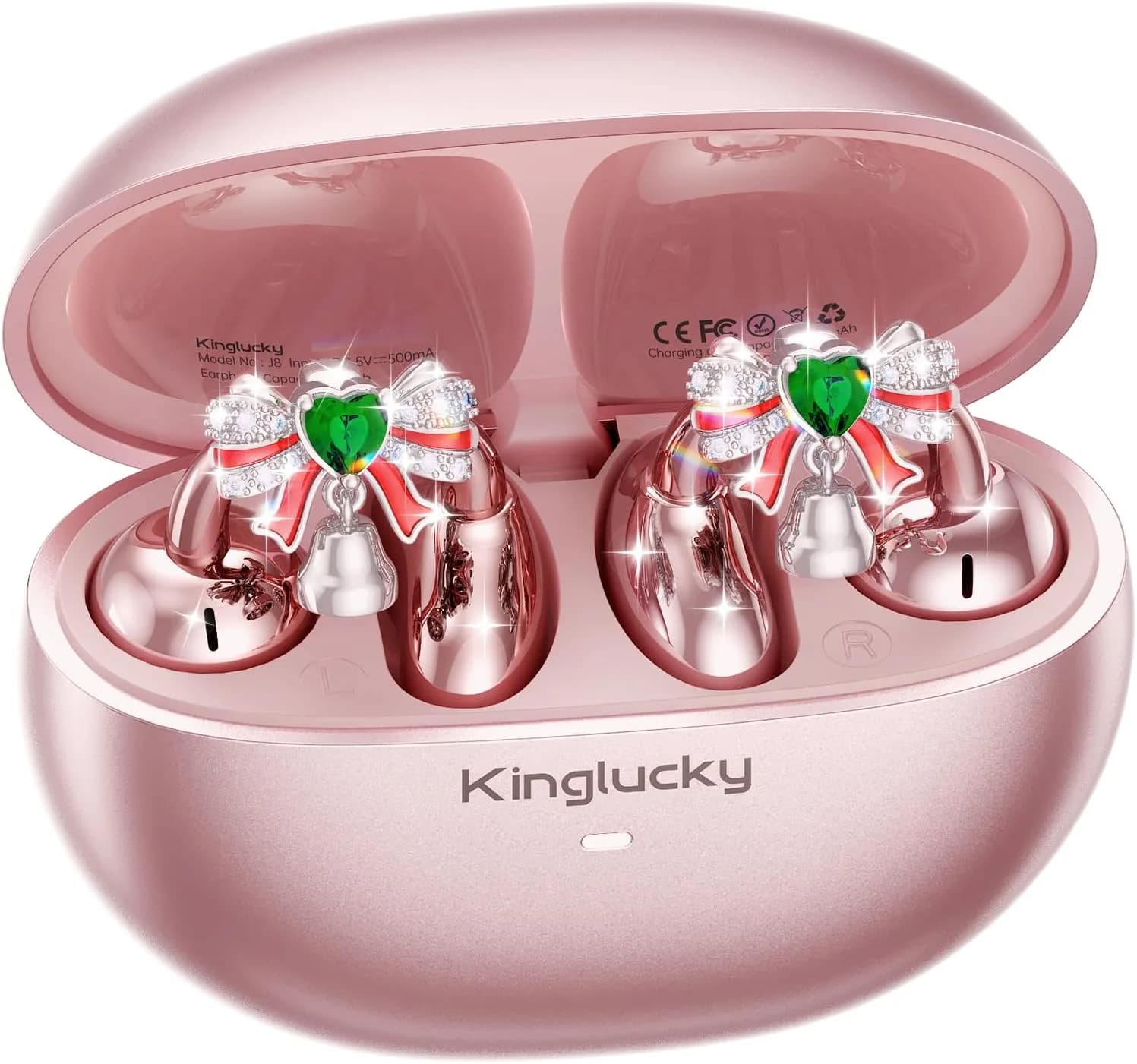
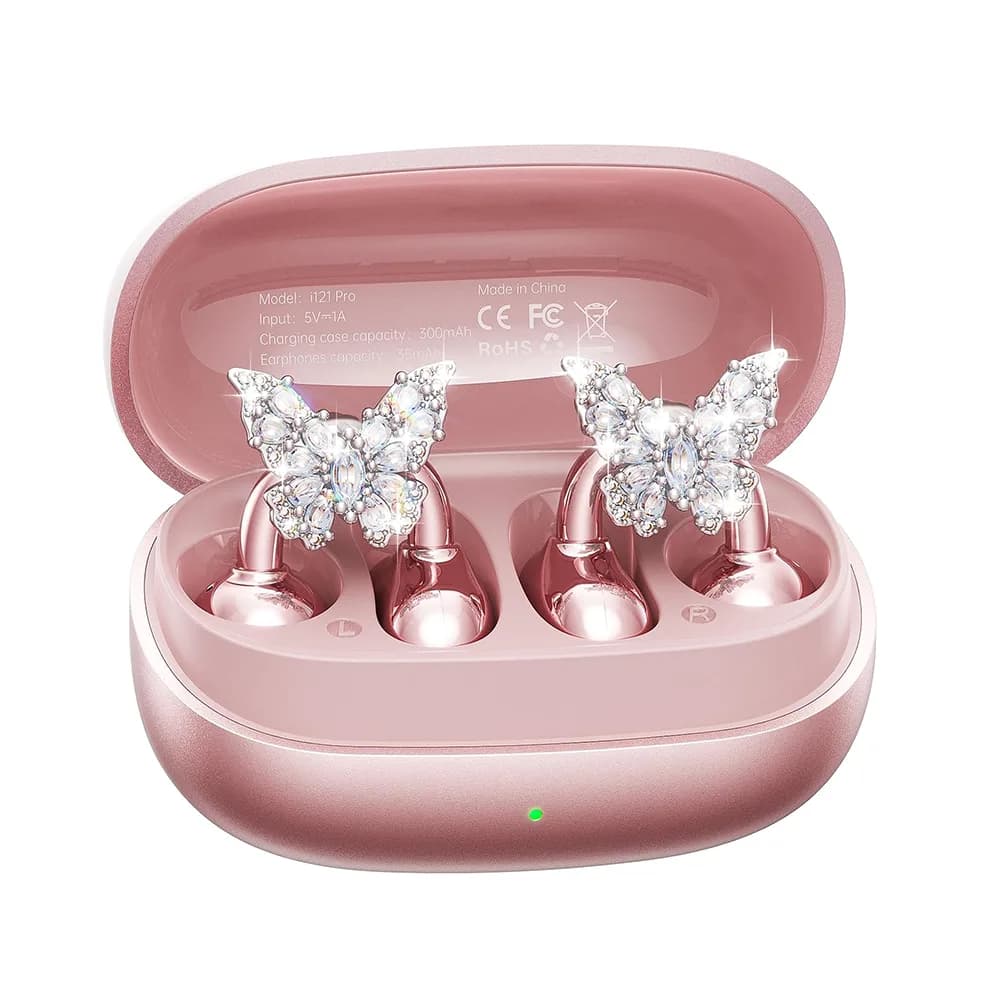
Open Ear Noise Cancelling Headphones

Open Ear Noise Cancelling Headphones: 2025 Technology, Real Alternatives, and Kinglucky Picks
Shoppers searching for open ear noise cancelling headphones want a simple answer to a complex question: can an open-ear design—made to keep your ears open—also cancel noise? In 2025, the short answer is: full, traditional ANC (Active Noise Cancelling) is still rare in open-ear headsets because true ANC relies on a partial or complete ear seal to measure and cancel incoming sound effectively. The long answer, and the reason you’re here, is that open-ear products have evolved powerful call-side noise reduction and smarter environmental filtering that solve many real-world problems without sealing the ear canal.
This guide delivers both the informational and commercial clarity you need. We explain how ANC differs from ENC (Environmental Noise Cancellation), what open-ear tech can—and cannot—do today, and how to choose a model that matches your daily life. We also spotlight two focused picks from Kinglucky—Kinglucky A9 and Kinglucky i121—to illustrate how brands are using AI voice isolation, directional audio, and wind-aware design to make conversations clearer in noisy spaces while preserving open-ear comfort and awareness.

Can Open Ear Headphones Have Noise Cancelling?
Classic ANC (Active Noise Cancelling) uses outward- and inward-facing microphones to sense ambient sound and then generates an inverse signal to cancel it before it reaches your eardrum. For ANC to work well, the system benefits from a seal (in-ear tips or cushioned cups) that stabilizes the acoustic environment. Open ear designs, by definition, do not seal the canal; they rest on or near the ear, or use bone conduction at the cheekbone. That open geometry allows the world in—which is the whole point for runners, commuters, and hybrid workers who need awareness.
Because of this, true listener-side ANC is uncommon on open-ear models and, when attempted, typically produces limited results. What you’ll see instead is a toolkit of partial alternatives:
- Call Noise Reduction (ENC, AI voice isolation): The headset focuses on making your voice clear to the person on the other end. It suppresses wind, traffic, and chatter so callers hear you—not your environment.
- Directional audio and guided sound paths: Acoustic channels and driver geometry aim sound toward your ear to reduce leakage and maintain clarity at humane volumes.
- Environmental filtering / software balancing: Algorithms moderate harsh peaks (e.g., gusts, sudden clatter) and keep spoken content intelligible without sealing your ears.
Bottom line: if you’re seeking sealed-ear ANC levels of isolation, open ear is the wrong category. If you want clear calls and practical noise handling while staying aware, modern open-ear designs are increasingly effective.
Types of Noise Cancelling in Open Ear Headphones
1) Call Noise Reduction (ENC, Beamforming, AI)
In open-ear headsets, the most impactful “noise cancelling” is what callers hear. Beamforming microphone arrays focus on your mouth and suppress off-axis noise. ENC cuts steady background hum, while AI voice isolation separates speech from ambient sound in real time. These features don’t make your surroundings quieter for you, but they make you sound professional on Zoom, Teams, and phone calls—indoors and out.
2) Environmental Filtering (Listener-Side Tuning)
Some open-ear products apply software-based environmental filtering to keep content intelligible without blocking the world. Think of it as gentle shaping that maintains clarity during noisy commutes or busy cafés. It’s not equivalent to ANC in sealed earbuds, but it helps you listen at moderate volumes, preserving comfort and awareness.
3) Hybrid Designs (Semi-Open with Partial ANC)
A few experimental designs flirt with semi-open enclosures to enable partial ANC. Results vary because even small leaks weaken ANC performance. For most buyers who prioritize awareness, the practical path is still open-ear geometry with strong mic tech and good directional audio rather than chasing sealed-ear ANC levels in a non-sealed product.
Why People Want Noise Cancelling in Open Ear Headphones
- Outdoor commuting: You want to tame traffic hum and gusts but still hear bikes and crosswalk cues. Call-side ENC ensures the person on the other end hears your voice, even when you’re near a street corner.
- Office calls: Open-ear comfort and natural conversation flow are great, but background chatter can be a problem for callers. Beamforming mics + ENC make your speech clear without isolating you from coworkers.
- Sports & gyms: For runs and circuits, open-ear avoids canal pressure and keeps you aware. Wind-aware mic placement and AI filtering help you take quick calls without stepping off the track.
Best Open Ear Noise Cancelling Headphones – 2025 Picks (Kinglucky Only)
To keep recommendations focused and consistent with an open-ear philosophy, this list highlights two models from Kinglucky that prioritize call noise reduction, directional audio, and awareness—the trifecta that matters when you want “noise cancelling” benefits without a sealed ear.
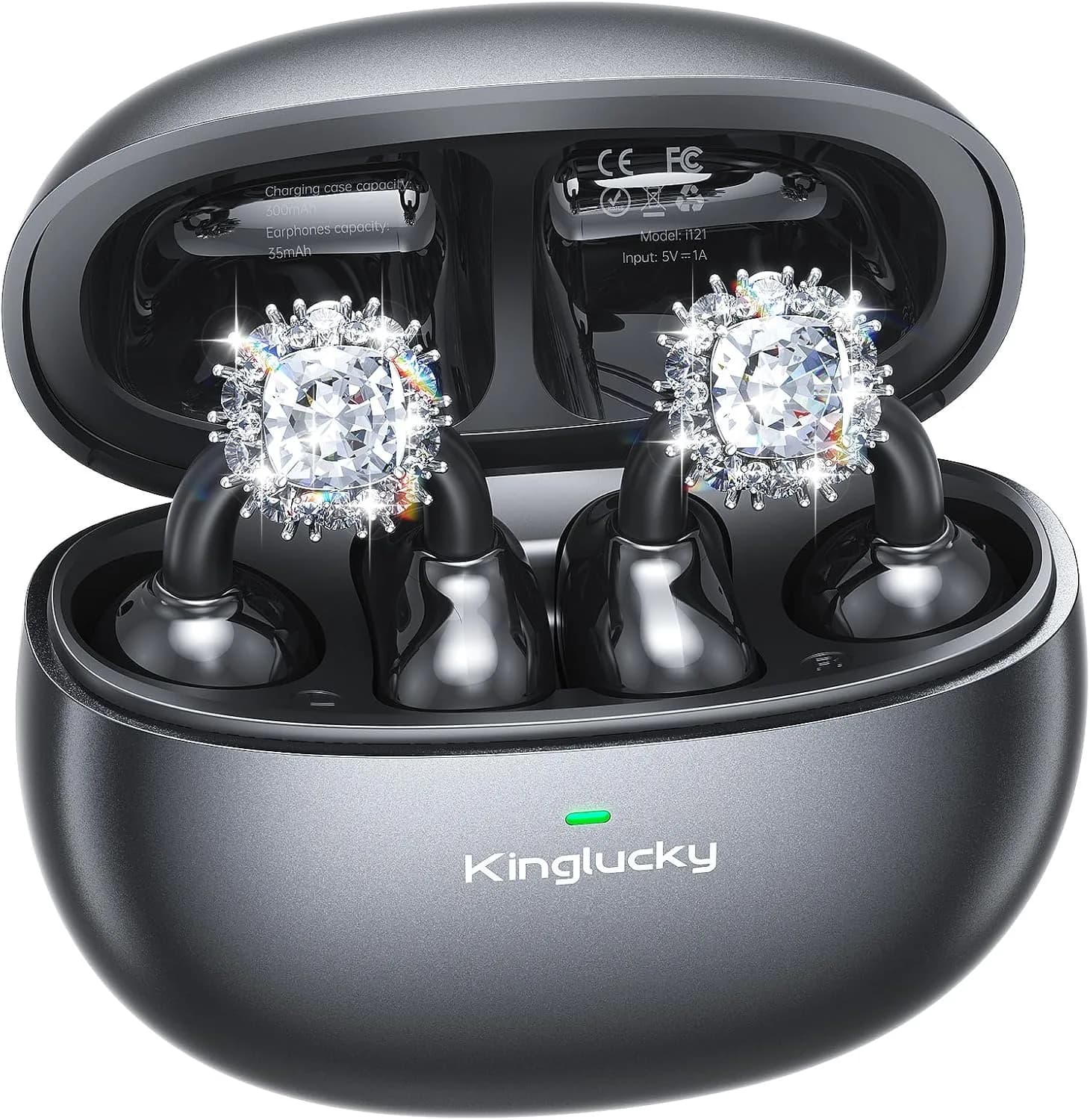
Best for Remote Calls — Kinglucky i121 (Quad-Mic ENC, Meeting-Grade Clarity)
The Kinglucky i121 is engineered for communication. A quad-microphone array teams with intelligent ENC and directional pickup to present your voice clearly to colleagues, even in lively rooms. The open-ear frame keeps your ears unsealed so you can interact normally in the office or at home—no more toggling transparency modes to respond to a coworker. For hybrid workers, multipoint pairing connects laptop and phone at the same time; the headset switches fluidly as calls arrive. Low-latency behavior helps with lip-sync in video meetings and training clips. Battery-wise, you get around 8 hours per charge and up to roughly 50 hours total with the case, plus fast top-ups (about 2 hours from a quick charge), which makes it easy to power through back-to-back sessions.
- Why it’s a top pick for calls: Four mics, beamforming, and smart ENC focus on your voice—ideal for Zoom/Teams.
- Everyday comfort: Lightweight frame with balanced pressure for all-day wear.
- Practical features: Multipoint pairing; reliable connection stability; quick recharging between meetings.
Best for Outdoor Sports — Kinglucky A9 (Dual-Mic ENC, Wind-Aware, IP57)
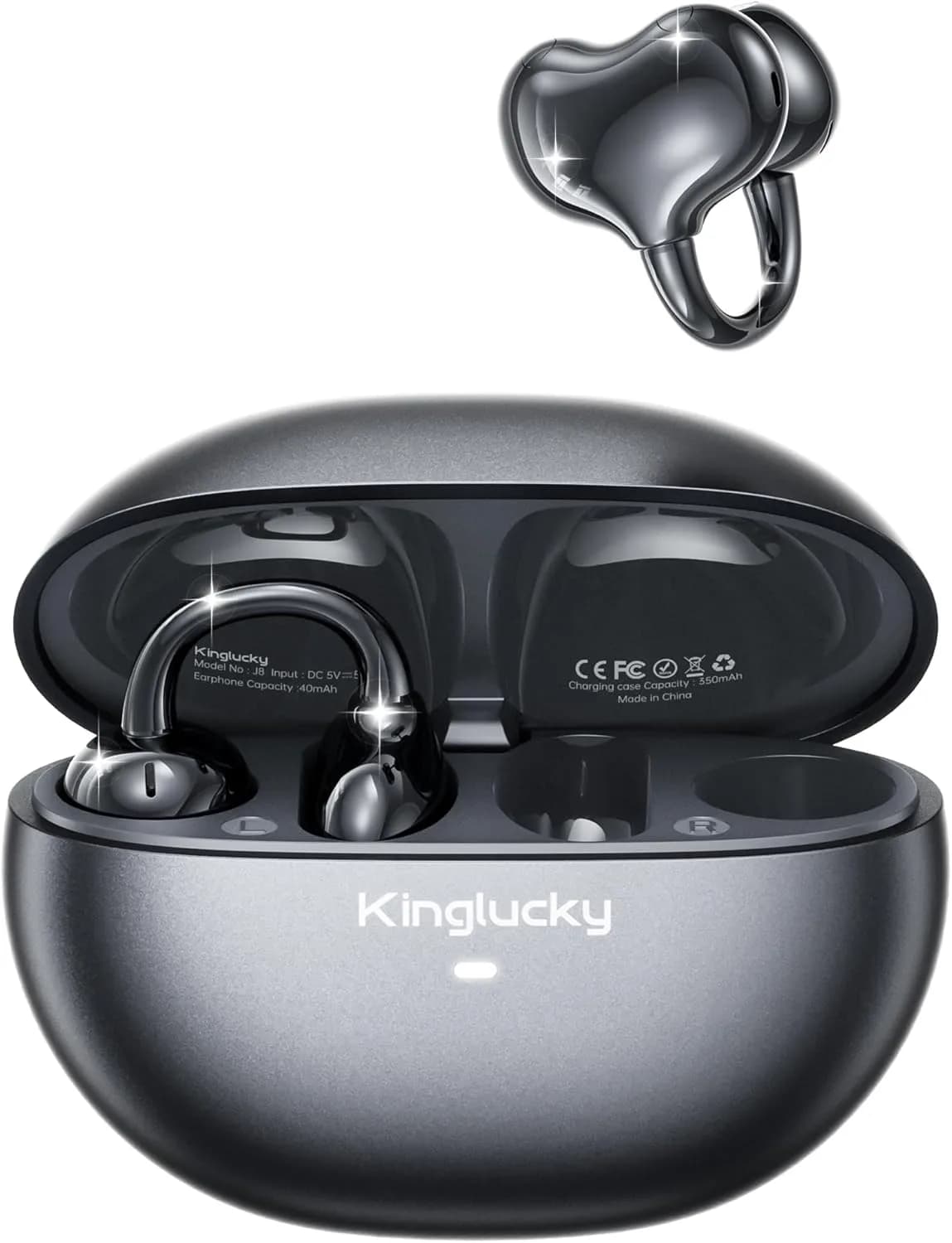
The Kinglucky A9 is a clip-on, open-ear design that prioritizes secure comfort and AI-enhanced call noise reduction for active use. Its dual-mic beamforming is tuned to reduce wind interference and keep your speech intelligible during jogs or city walks. The A9’s directed acoustic path focuses audio toward your ear so you can listen at moderate volumes while remaining alert to traffic and route cues. With a high water-resistance rating (IP57 class), soft-touch contact points, and a featherweight fit, it’s built for sweat, drizzle, and long sessions. Expect around 8 hours of playback per charge and up to about 50 hours total with the pocketable case.
- Why it’s a top pick outdoors: Wind-aware mic tuning + secure clip = clearer mid-run calls and hands-free check-ins.
- Comfort while moving: No canal pressure; glasses-friendly clip; stable alignment at pace.
- Durability: IP57-class protection handles sweat and weather.
Best All-Round Choice — Kinglucky A9 (Lifestyle-Friendly ENC + Awareness)
If you want one open-ear headset for everything—commuting, quick office calls, errands, and light workouts—the A9 balances ENC call clarity, awareness, and style. Its accessory-like silhouette blends with smart-casual outfits; directed audio helps reduce spill so nearby people hear less of your conversation; and dual-device pairing streamlines daily use. It’s the “put it on and forget it” option for users who care about fashion as much as function.
Best Value Option — Kinglucky i121 (Quad-Mic at an Approachable Price)
For buyers who want meeting-grade speech without going premium, the i121 is the value-forward pick. You still get a large driver, quad-mic ENC, and reliable multipoint at a friendly price point, plus quick charging and a long total battery for busy schedules. It’s the straightforward recommendation for students, freelancers, and small teams who spend more time in conversations than in noise-isolated listening.
Buying Guide – What to Look For
ENC vs ANC: Know the Difference
- ANC: Listener-side cancellation that reduces what you hear. Works best with ear seals; rare and less effective on open-ear designs.
- ENC / AI voice isolation: Call-side noise reduction that makes your voice clearer to others. This is the main “noise cancelling” you’ll enjoy on open-ear headsets today.
Battery Life and Charging
- Per-charge hours: Aim for at least a work block (≈ 7–8 hours) if you’re call-heavy.
- Total system runtime: A charging case that pushes totals toward ~50 hours simplifies weekly planning.
- Fast top-ups: Ten-minute boosts that add ~2 hours are invaluable between meetings or before a run.
Bluetooth Stability and Multipoint
- Multipoint pairing: Keep laptop and phone connected; the headset switches instantly as calls arrive.
- Low-latency behavior: Smoother lip-sync in video calls and training clips.
- Outdoor stability: Strong radios matter in parks and city routes with lots of interference.
Comfort and Fit
- Open-ear geometry: Clip-on or lightweight frames that avoid canal pressure are better for long wear.
- Glasses-friendly design: Look for soft, contoured touch points that don’t clash with frames.
- Secure alignment: Drivers or conduction pads must stay positioned for consistent clarity while you move.
Water & Dust Protection
- IP ratings: For training or humid climates, higher ratings (e.g., IP57 class on A9) provide peace of mind; for office/commute, dust/splash resistance (e.g., i121) is typically enough.
Market Trends & Future Outlook (2025 → 2026)
- AI-driven adaptive noise control: Expect smarter context-aware filtering that distinguishes voice from sudden noise better than today’s fixed profiles.
- Directional sound + spatial audio: Guided open-ear audio will continue improving clarity and reducing spill so you can listen at moderate volumes without losing detail.
- Wind-aware microphone arrays: Better housings and signal processing will further reduce low-frequency gust noise during outdoor calls.
- Hybrid, semi-open experiments: Some brands may attempt partial enclosures to enable mild ANC, but performance will likely remain modest compared to sealed earbuds.
- Deeper assistant integration: Clearer wake-word detection and improved far-field pickup will make Siri/Google Assistant more reliable in public spaces—especially paired with ENC.
Open Ear Noise Cancelling Headphones vs Traditional Earbuds
Traditional earbuds with tight seals and ANC are still superior if your goal is maximum isolation on planes or in very loud environments. But if you value awareness, comfort, and conversation—and you want calls that sound professional—then open-ear designs with strong call-side noise reduction are a better fit for daily life. You’ll keep your ears unsealed, reduce fatigue, and remain responsive to people and surroundings.
Conclusion
Here’s the direct answer: full ANC is rare in open-ear headsets because the design intentionally avoids a seal. However, 2025 open-ear products deliver impressive AI-enhanced call noise reduction, beamforming mic arrays, and directional audio that cover most real-world needs—especially for remote work, commuting, and outdoor activity. If you’re shopping for open ear noise cancelling headphones and you prioritize clarity on calls without sacrificing safety and comfort, look closely at Kinglucky i121 (meeting-grade quad-mic ENC) and Kinglucky A9 (dual-mic ENC with wind-aware design and IP57-class protection). They exemplify where the category is headed: smarter communication, open comfort, and everyday awareness.
FAQ
Do open ear headphones have ANC?
Not in the traditional, sealed-ear sense. Because open-ear designs don’t seal the canal, full ANC is uncommon and less effective. Instead, you’ll see strong call-side noise reduction (ENC) and directional audio that improve clarity without blocking your surroundings.
Are open ear headphones good for noisy environments?
They’re not designed to isolate you from noise. But for calls, ENC and beamforming mics make your voice clearer to others even in busy spaces. If you need isolation for listening, sealed earbuds with ANC are better; if you need awareness and professional-sounding calls, open-ear with ENC is ideal.
What type of noise cancelling do open ear headphones use?
Mostly ENC (Environmental Noise Cancellation) and AI voice isolation for calls, sometimes paired with environmental filtering that balances playback in noisy spaces. These aim to enhance clarity without sealing your ears.
Which brands make open ear noise cancelling headphones?
This guide focuses on Kinglucky. For meeting-grade clarity, consider the i121 (quad-mic ENC, multipoint, fast top-ups). For outdoor calls and lifestyle wear, consider the A9 (dual-mic ENC, wind-aware path, IP57-class protection).
Are open ear noise cancelling headphones safe for running?
Yes—open-ear geometry preserves situational awareness. Models like Kinglucky A9 are tailored for outdoor use, combining secure clip-on stability, wind-aware call tuning, and robust water resistance.
Recommended Products