Clip-On Earbuds for Glasses Wearers: The 2026 Comfort Guide
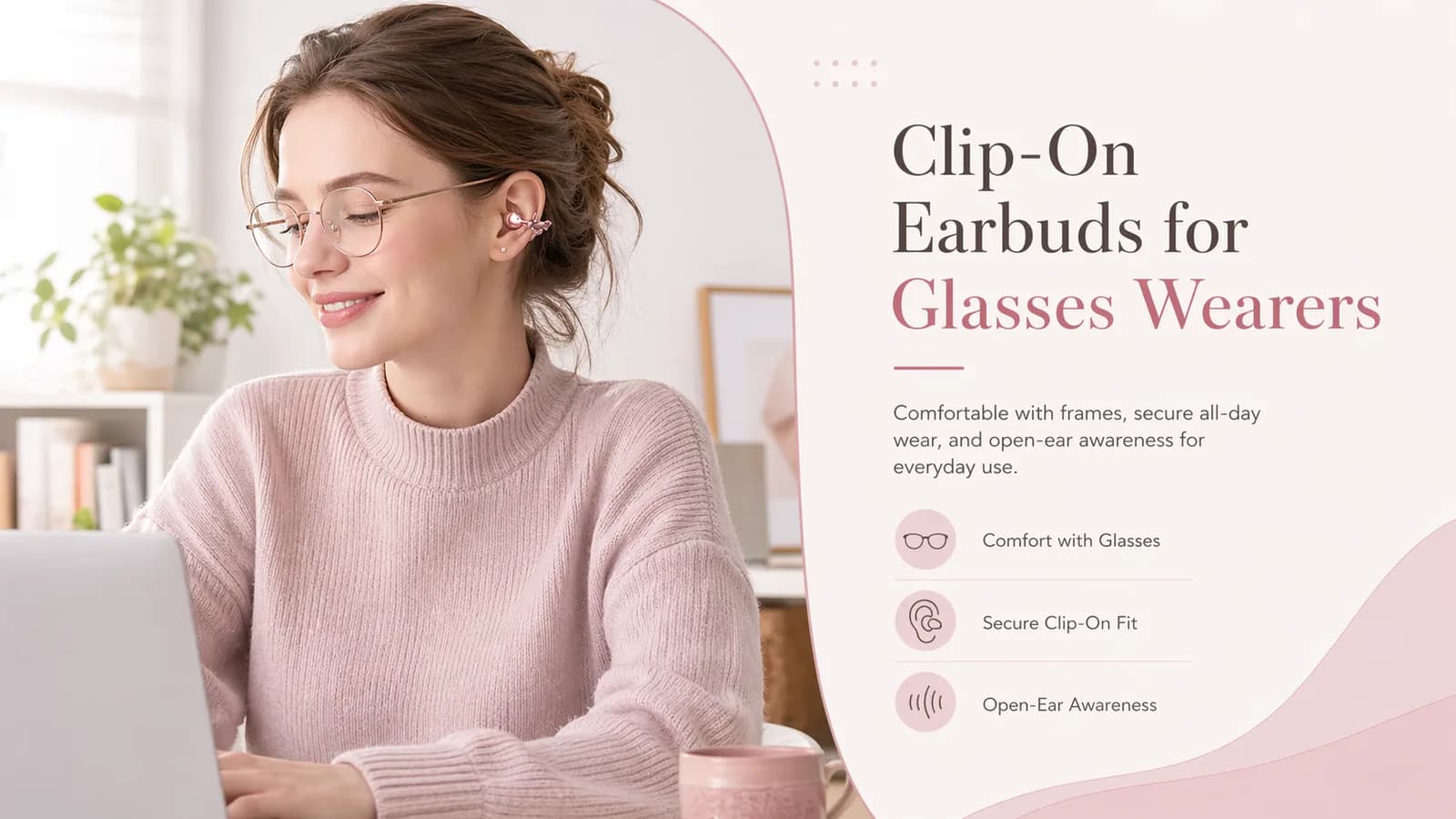
Clip-On Earbuds for Glasses Wearers: The 2026 Compatibility Guide
Are clip-on earbuds comfortable and practical for glasses wearers? Yes. For people who wear glasses daily, clip-on earbuds are arguably the most comfortable audio solution available. Unlike traditional over-ear headphones that press your ear into your glasses frame, or ear-hook earbuds that compete for the exact same space as the arm of your glasses, clip-on designs attach to the outer cartilage of the ear. This completely bypasses the "traffic jam" behind your ear, allowing for comfortable, all-day wear without pressure.
However, compatibility is not just about whether they fit—it is about how the earbud shares space with your glasses arm, how pressure builds over time, and whether your frames are thick acetate or thin metal.
Why Clip-On Earbuds Work Well for Glasses Wearers
If you wear glasses, you already experience physical fatigue on the bridge of your nose and the temples behind your ears. Clip-on earbuds succeed by targeting a completely different part of your anatomy.
-
No Over-Ear Competition: Traditional ear-hooks wrap over the top of the ear, exactly where the arm of your glasses rests. This leads to friction, pinching, and inevitable soreness. Clip-on designs grip the side (helix) of your ear, leaving the top of the ear completely free for your frames.
-
Zero Ear Canal Pressure: Glasses wearers are prone to sensory overload when their ears are plugged with silicone tips while wearing heavy frames. Clip-ons sit outside the ear, keeping your ear canal breathing and reducing overall head fatigue.
-
Stable Alignment: Because they clip directly to the ear rather than resting on top of it, the movement of your glasses (like pushing them up your nose) won't dislodge the earbuds.
Where They Still Fall Short (The Trade-Offs)
While clip-ons solve the primary physical conflict, they are not perfect for every situation:
-
The "Thick Frame" Angle Alteration: If you wear thick, chunky acetate frames, the glasses arm can push the top of your ear outward. This slight bend in your ear cartilage can sometimes alter the angle at which the clip-on speaker points into your ear canal, potentially affecting volume. Thin metal frames rarely cause this issue.
-
Weak Sound Isolation: Because clip-ons are an open-ear design, they do not block out background noise. If you are trying to concentrate in a loud environment, you will hear your surroundings.
-
Cartilage Sensitivity: While they avoid temple pressure, people with highly sensitive ear cartilage might feel a slight pinching sensation from cheap, rigid plastic clip-ons after several hours.
Clip-On vs. Ear-Hook vs. Bone Conduction for Glasses Users
| Feature | Clip-On Earbuds | Ear-Hook Earbuds | Bone Conduction |
| Interference with Glasses Arm | Low (Attaches to the side) | High (Competes for top of ear) | Medium (Wraps around back of head/temples) |
| Primary Pressure Point | Outer ear cartilage | Top of the ear / behind ear | Cheekbones and temples |
| Long-Wear Comfort (With Glasses) | High | Low to Medium | Medium |
| Best Frame Match | Both thick and thin frames | Thin frames only | Thin frames only |
What Glasses Wearers Should Look For Before Buying
To avoid the "cartilage pinch" and ensure long-term comfort, glasses wearers should evaluate clip-on earbuds based on these physical traits:
-
Flexible Materials (Not Rigid Plastics): The bridge of the clip must be able to expand and adapt to your ear thickness. Look for memory wire or specialized metal alloys.
-
Ultra-Lightweight Build: Heavy clip-ons will pull down on your earlobe, altering how your glasses sit on your face. Aim for earbuds that weigh under 5 grams.
-
Directional Sound: Because thick frames might slightly alter the earbud's angle, you need high-quality directional speakers to ensure the sound still funnels into your ear canal without leaking to the people around you.
Best Use Cases for Clip-On Earbuds
-
The Office: You can wear your computer glasses and your earbuds simultaneously for 8 hours without behind-the-ear soreness, all while remaining approachable to coworkers.
-
The Commute & Walking: They provide excellent situational awareness so you can hear traffic and subway announcements while wearing prescription sunglasses.
-
Casual Daily Wear: Perfect for transitioning between indoor reading glasses and outdoor sunglasses without having to readjust your audio gear.
A Practical Recommendation: Kinglucky A8
When searching for clip-on earbuds that prioritize long-term comfort alongside glasses, the Kinglucky A8 is a highly effective option. It is explicitly engineered for wear-all-day comfort.
The A8 addresses the specific pain points of glasses wearers through its physical construction:
Adapts to Your Anatomy: Instead of rigid plastic that pinches, the A8 is built with a flexible Ni-Ti alloy. Our flexible C-Bridge Design adapts to your ear's shape, offering a secure fit without pressure, no matter how long you wear it. This is ideal for sharing space with glasses frames.
Weightless Feel: The Kinglucky A8 is an ultra-lightweight open ear clip earbud. Each earbud weighs just 4.0g. Because it is so light, you'll forget it is even there, ensuring your ears aren't weighed down while supporting your frames.
Targeted Audio: Even if thick frames alter your ear's position slightly, the A8 uses dual-directional and reverse waves to minimize leakage and focus sound directly into your ears. This is powered by Hi-Pure Sound Gen 2 with a 12mm dynamic driver.
Frequently Asked Questions (FAQ)
Do clip-on earbuds interfere with glasses arms?
Generally, no. Because clip-on earbuds attach to the side cartilage (the helix/auricle) of your ear, they completely avoid the top of the ear where the arms of your glasses rest.
Does it matter if I wear thick acetate frames vs. thin metal frames?
It can. Thin metal frames barely interact with your ear's shape, making them perfect for clip-ons. Thick acetate frames can push the ear slightly outward, which might require you to adjust the clip-on earbud slightly to ensure the speaker points directly into your ear canal.
Are clip-on earbuds better than bone conduction for glasses wearers?
For many, yes. Bone conduction headphones require a band that wraps around the back of the head and rests on the cheekbones, often creating friction with the temples of your glasses. Clip-ons are entirely localized to the ear, keeping the temple and cheekbone area completely clear.
Recommended Products